Vorschau anzeigenVorschau anzeigen In AR erlebenIn AR erleben Handgemalte Reproduktion bestellen Handgemalte Reproduktion bestellenZum digitalen Bild wechseln Zum digitalen Bild wechseln VersendenVersenden
Details anzeigenDetails anzeigen Zu Favoriten hinzufügen Zu Favoriten hinzufügen HerunterladenHerunterladen Ähnliche ObjekteÄhnliche Objekte RöntgenaufnahmeRöntgenaufnahme DiashowDiashow StatistikenStatistiken

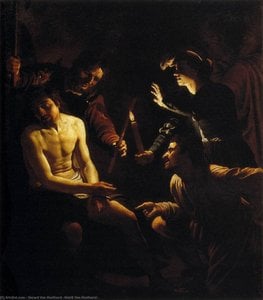
Susanna and the Elders

Experience Gerard van Honthorst’s ‘Susanna and the Elders’ (1655). A dramatic Baroque masterpiece featuring a captivating scene of vulnerability & intrigue. Hand-painted reproductions available.

Entdecken Sie Gerard van Honthorst (1590-1656), holländischen Goldenen Zeitalter Meister & Schlüsselfigur des Utrechter Caravaggismus! Dramatische Chiaroscuro, nächtliche Szenen & Barockkunst.

Giclée / Kunstdruck

Giclée- oder Leinwanddruck in Museumsqualität mit schneller Produktion und flexiblen Veredelungsoptionen. (Handgemalte Reproduktion bestellen Handgemalte Reproduktion bestellenZum digitalen Bild wechseln Zum digitalen Bild wechseln)

P118B $10
P118H $10
P118W $10
P438Z $10
P508JH $12
P508YH $12
P805H $10
P805Z $10
P919BZ $10
P919G $10
P919XJ $10
P959ZH $10
P968JZ $12
W106C $8
W218G $10
W218JH $8
W218Y $10
W307PJ $10
W316G $10
W316PJ $8
W316Y $10
W398PJ $8
W4111J $10
W500HY $15
W500JH $15
W692G $12
W849H $8
W940BG $15
W953PJ $8

Standardformat
individuell anpassbar
CM
INCH

Wählen Sie aus unseren vordefinierten Formaten, die den ursprünglichen Proportionen des Kunstwerks entsprechen.

Breite
Höhe

Sie können Ihre eigenen Maße eingeben, um ein bestimmtes Format oder einen speziellen Platz einzupassen. Wenn das von Ihnen gewählte Format nicht den Proportionen des Originalbildes entspricht, werden wir das Kunstwerk entweder beschneiden oder das Bild mit einem gespiegelten oder einfarbigen Rand erweitern. Ein digitaler Entwurf wird Ihnen zur Genehmigung zugesandt, bevor die Produktion beginnt.
Bitte beachten Sie, dass die Vorschau auf dem Bildschirm nicht den tatsächlichen Zuschnitt oder die Erweiterung widerspiegelt. Nur der Entwurf zeigt die endgültige Komposition präzise an.
Obwohl Sondermaße verfügbar sind, empfehlen wir die Auswahl eines Maßes aus der vordefinierten Liste, um die ursprünglichen Proportionen zu bewahren.

Weltweiter Versand () innerhalb von 2 Wochen statt der üblichen 4/5 Wochen. (11 September)

why_choose_icon
Kostenloser weltweiter Expressversand
why_choose_icon
Hochwertige Leinenleinwand
why_choose_icon
Umfassender Versicherungsschutz beim Versand
why_choose_icon
Zollgebühren-Rückerstattungsgarantie
why_choose_icon
Garantie für exakte Farbtreue
why_choose_icon
100-Tage-Rückgaberecht (nur bei Mängeln)
why_choose_icon
100% Geld-zurück-Garantie
why_choose_icon
Mengenrabatt verfügbar

Gesamtpreis

$ 68

reproduction

Susanna and the Elders

Giclée / Kunstdruck

Format der Reproduktion

-

Gesamtpreis

$ 68

Eckdaten

  • Subject or theme: Biblical Narrative
  • Movement: Baroque
  • Medium: Oil on canvas
  • Influences: Caravaggio
  • Title: Susanna and the Elders
  • Year: 1655
  • Artist: Gerard van Honthorst

A Masterpiece of Dramatic Light and Shadow: Gerard van Honthorst’s Susanna and the Elders

Gerard van Honthorst emerged from Utrecht in 1592, a pivotal figure poised to illuminate the Dutch Golden Age with his dramatic artistry. Initially guided by his father, a decorative painter, young Gerard’s talent blossomed under the tutelage of Abraham Bloemaert, establishing a solid foundation in draftsmanship and composition. However, it was a transformative journey to Rome that irrevocably altered the course of his artistic development. There, amidst the fervent energy of the Italian Baroque, he encountered the groundbreaking work of Caravaggio – an encounter that would define his signature style and earn him the evocative nickname “Gherardo delle Notti,” or Gerard of the Nights. The dramatic use of tenebrism, a technique employing stark contrasts between light and dark, became Honthorst’s hallmark, imbuing his canvases with a palpable sense of drama and emotional intensity. He wasn't merely imitating Caravaggi; he absorbed Caravaggio’s revolutionary approach to portraying human emotion and psychological complexity, adapting it to the conventions of Dutch portraiture. This fusion resulted in an unparalleled ability to capture fleeting expressions and convey profound narratives within meticulously crafted compositions.
  • Subject Matter: The painting depicts a biblical episode – Susanna and the Elders – recounting the tale of a woman falsely accused of adultery by two men who attempted to seduce her.
  • Style: Honthorst’s work firmly resides within the Baroque style, characterized by grandeur, theatricality, and an emphasis on emotional impact.
  • Technique: He skillfully employed tenebrism, Caravaggio's signature technique, creating a dramatic chiaroscuro effect that highlights key figures and amplifies the tension of the scene. The meticulous layering of paint—particularly in capturing skin tones and drapery folds—demonstrates exceptional draughtsmanship.

Historical Context: Rome and the Influence of Caravaggio

Honthorst’s formative years in Rome were instrumental in shaping his artistic vision. Witnessing Caravaggio's revolutionary approach to painting – prioritizing realism, emotional intensity, and dramatic lighting – profoundly impacted him. Caravaggio shattered traditional conventions by rejecting idealized depictions and favoring unflinching portrayals of human experience, capturing moments of vulnerability and psychological struggle with unprecedented honesty. Honthorst embraced this ethos, adapting Caravaggio’s techniques to the Dutch aesthetic while retaining his own distinctive flair for theatrical presentation. This encounter cemented his reputation as “Gherardo delle Notti,” reflecting his mastery of manipulating light and shadow to evoke powerful emotions in the viewer.
  • Caravaggio's Impact: Honthorst’s artistic sensibilities were fundamentally altered by Caravaggio’s rejection of idealized beauty and embrace of dramatic realism.
  • Roman Patronage: Cardinal Scipione Borghese, a prominent patron of the arts, commissioned numerous works from Honthorst during his Roman period, furthering his artistic development and establishing him as a leading figure in the Baroque movement.

Symbolism and Emotional Resonance

The painting transcends its biblical narrative to explore themes of innocence versus corruption, vulnerability versus deceit, and moral fortitude against manipulative pressure. Susanna’s unwavering refusal to succumb to temptation embodies virtue and resilience—a powerful message conveyed through Honthorst's masterful use of light and shadow. The Elders’ attempts to seduce Susanna represent the dangers of lust and ambition, highlighting the importance of ethical conduct. Furthermore, the dramatic composition itself contributes to the emotional impact of the artwork, drawing viewers into the scene and eliciting contemplation on themes of justice and righteousness. Honthorst's ability to convey complex psychological states through subtle gestures and facial expressions underscores his artistic genius.

Legacy and Reproduction

Gerard van Honthorst’s “Susanna and the Elders” remains a celebrated masterpiece, admired for its technical brilliance and profound emotional depth. Reproductions of this iconic artwork offer collectors and interior designers alike an opportunity to experience the grandeur and drama of Baroque painting in their homes. WahooArt.com presents high-quality reproductions that faithfully capture the original’s luminous palette and intricate detail—allowing admirers worldwide to appreciate the enduring beauty and artistic significance of Honthorst's seminal work.

Über den Künstler

Frühes Leben und Ausbildung

Gerard van Honthorst, ein bedeutender niederländischer Maler des Goldenen Zeitalters, wurde am 4. November 1590 in Utrecht geboren. Er war der Sohn eines dekorativen Malers und erhielt zunächst die Anleitung seines Vaters. Später setzte er seine künstlerische Ausbildung unter Abraham Bloemaert fort.

Karriere und Einflüsse

Van Honthorsts frühe Karriere umfasste einen Besuch in Rom, wo er stark von dem Stil Caravaggios beeinflusst wurde. Dieser Einfluss ist besonders in seinen späteren Werken erkennbar, vor allem durch die Verwendung künstlich beleuchteter Szenen, was ihm den Spitznamen "Gherardo delle Notti" oder "Gerard der Nachts" einbrachte. Nach seiner Rückkehr in die Niederlande wurde van Honthorst zu einem führenden Porträtmaler.

Wichtige Aufträge und Patrone

Van Honthorsts Arbeit war sehr gefragt, wobei er bedeutende Patrone hatte, darunter Vincenzo Giustiniani, der ihn beauftragte, "Christus vor dem Hohenpriester" zu malen, das sich heute in der National Gallery in London befindet. Er arbeitete auch für Cosimo II de' Medici, den Großherzog von Toskana, und genoss große Beliebtheit sowohl in der Republik als auch im Ausland.

Künstlerische Entwicklung und Vermächtnis

Im Jahr 1620 kehrte van Honthorst nach Utrecht zurück, wo er sich einen beträchtlichen Ruf erwarb. Bereits 1623, im Jahr seiner Hochzeit, war er Präsident der Zunft des Heiligen Lukas in Utrecht geworden. Sein Erfolg führte zu Empfehlungen von Sir Dudley Carleton für den Earl of Arundel und Lord Dorchester. Er entwickelte seinen eigenen Stil, der Elemente des Caravaggismo mit niederländischen Traditionen verband. Seine Fähigkeit, dramatische Lichteffekte einzusetzen und lebendige Szenen darzustellen, machte ihn zu einem gefragten Künstler. Van Honthorst starb 1656 in Utrecht und hinterließ ein bedeutendes Werk, das die Kunst des Goldenen Zeitalters bereicherte.

Wichtige Werke und Zusammenarbeit

  • Die Ölbergszene: Ein frühes Beispiel für van Honthorsts Caravaggismo mit starkem Lichtkontrast.
  • Christus vor dem Hohenpriester: Eine Auftragsarbeit von Vincenzo Giustiniani, die seine Fähigkeit zeigt, künstlich beleuchtete Szenen darzustellen.
  • Zusammenarbeiten mit anderen Künstlern wie Peter Paul Rubens: Diese Kooperationen zeugen von seinem Einfluss auf den flämischen Barockstil und demonstrieren seinen Stellenwert in der europäischen Kunstszene.

Künstlerische Bewegung und Stil

Van Honthorst war Teil der Utrechter Caravaggisti-Bewegung, die sich durch die Verwendung dramatischer Beleuchtung und intensiver emotionaler Tiefe auszeichnete. Seine Arbeit spiegelt den Einfluss des italienischen Barock wider, während er gleichzeitig zur Entwicklung des niederländischen Goldenen Zeitalters beitrug. Sein Stil zeichnete sich durch eine Kombination aus Caravaggios Licht- und Schattenspiel mit der Klarheit und Detailgenauigkeit der niederländischen Malerei aus.

Gerard van Honthorst

Gerard van Honthorst

1590 - 1656 , Niederlande

Kurzinfos

  • Beeinflusste Künstler:
    • Caravaggio
    • Abraham Bloemaert
  • Bemerkenswerte Werke:
    • Christus vor dem Hohenpriester
    • Die Abnahme Christi
    • Anbetung der Hirten
  • Geburtsdatum: 4. November 1590
  • Geburtsort: Utrecht, Niederlande
  • Künstlerische Bewegung: Utrechter Caravaggisten
  • Nationalität: Niederländisch
  • Sterbedatum: 27. April 1656
  • Vollständiger Name: Gerard van Honthorst
  • Von Ihm Beeinflusste Künstler:
    • Rembrandt van Rijn
    • Georges de la Tour
Entdecken Sie Kunstwerke, die nach Themen, Stilen und Merkmalen sortiert sind.