Acrylic On CanvasWallArtBaroque Painting
 1623
1623 125.0 x 157.0 cm
 Staatsgalerie
Giclée- oder Leinwanddruck in Museumsqualität mit schneller Produktion und flexiblen Veredelungsoptionen. ( Handgemalte Reproduktion bestellen Bild kaufen)





























Wählen Sie aus unseren vordefinierten Formaten, die den ursprünglichen Proportionen des Kunstwerks entsprechen.

Sie können Ihre eigenen Maße eingeben, um ein bestimmtes Format oder einen speziellen Platz einzupassen. Wenn das von Ihnen gewählte Format nicht den Proportionen des Originalbildes entspricht, werden wir das Kunstwerk entweder beschneiden oder das Bild mit einem gespiegelten oder einfarbigen Rand erweitern. Ein digitaler Entwurf wird Ihnen zur Genehmigung zugesandt, bevor die Produktion beginnt.
Bitte beachten Sie, dass die Vorschau auf dem Bildschirm nicht den tatsächlichen Zuschnitt oder die Erweiterung widerspiegelt. Nur der Entwurf zeigt die endgültige Komposition präzise an.
Obwohl Sondermaße verfügbar sind, empfehlen wir die Auswahl eines Maßes aus der vordefinierten Liste, um die ursprünglichen Proportionen zu bewahren.
Weltweiter Versand () innerhalb von 2 Wochen statt der üblichen 4/5 Wochen. (7 September)


Merry Company
Format der Reproduktion
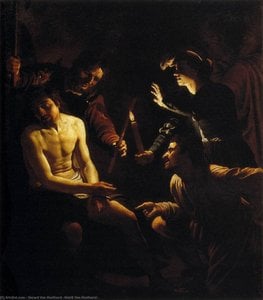
Gerard van Honthorst's "Merry Company," painted in 1623, isn’t merely a depiction of a tavern scene; it’s a carefully orchestrated tableau of light, social interaction, and the subtle drama inherent in human connection. This remarkable work, now residing within the Alte Pinakothek in Munich, offers a captivating glimpse into the vibrant heart of the Dutch Golden Age – a period defined by burgeoning wealth, artistic innovation, and a fascination with capturing the nuances of everyday life.
The painting immediately draws the eye with its masterful use of chiaroscuro, a technique borrowed directly from Caravaggio and central to Honthorst’s signature style. Deep shadows engulf much of the composition, creating an atmosphere of intimacy and drawing attention to the illuminated figures clustered around a table laden with goblets, wine glasses, and platters of food. This dramatic interplay of light and dark isn't simply aesthetic; it serves to heighten the sense of drama and immediacy, as if we are witnessing a fleeting moment frozen in time.
The scene unfolds within what appears to be a richly appointed tavern – though the specific location remains somewhat elusive. The details suggest a comfortable, well-established establishment, likely frequented by merchants and members of the local elite. Notice the carefully rendered furniture, the warm glow emanating from unseen candles, and the abundance of drinkware. The composition is deliberately crowded, reflecting the lively atmosphere of a social gathering. Several figures are seated, engaged in conversation or perhaps enjoying music – though the instruments themselves aren’t explicitly visible, their presence is strongly implied.
A key element to note is the inclusion of several women amongst the men. This was relatively uncommon in Dutch genre paintings of this era, and suggests a deliberate attempt by Honthorst to portray a more balanced and inclusive representation of social life. The women are not merely decorative; they actively participate in the conversation and revelry, contributing to the overall sense of merriment.
Honthorst’s debt to Caravaggio is undeniable. Like his Italian predecessor, he understood the power of light to shape perception and evoke emotion. The strong directional lighting casts dramatic shadows that sculpt the figures' faces and bodies, emphasizing their expressions and gestures. The use of a single, unseen light source creates a sense of immediacy and realism, as if we are present at this lively gathering ourselves.
Furthermore, Honthorst’s attention to detail is remarkable. From the folds of the clothing to the textures of the furniture, every element contributes to the overall sense of authenticity. The figures themselves are rendered with a subtle psychological depth – their expressions ranging from jovial amusement to quiet contemplation. This level of realism was highly valued by Dutch artists during this period and reflects Honthorst’s skill as a portraitist.
Beyond its immediate visual appeal, “Merry Company” offers subtle insights into the social dynamics of 17th-century Holland. The painting can be interpreted as a celebration of prosperity and leisure – hallmarks of the Dutch Golden Age. However, it also subtly hints at the potential pitfalls of excess and indulgence. The abundance of drink and merriment serves as a reminder of the importance of moderation and self-control.
The inclusion of figures like the older woman holding a candle is particularly intriguing. Her presence suggests a contemplation on time, beauty, and mortality – themes that were frequently explored in Dutch art during this period. The flickering candlelight symbolizes both love and vanity, highlighting the transient nature of earthly pleasures. “Merry Company” isn’t simply a depiction of a social gathering; it's a carefully constructed meditation on life, death, and the human condition.
Gerard van Honthorst’s “Merry Company” remains a captivating masterpiece – a testament to his artistic skill and his profound understanding of light, emotion, and the complexities of human interaction. Its dramatic chiaroscuro, rich detail, and subtle symbolism continue to resonate with viewers today, offering a glimpse into the vibrant world of 17th-century Holland.


1590 - 1656 , Niederlande

Explore the dramatic mastery of the Dutch Baroque era. Discover how masters like Rembrandt used chiaroscuro to manipulate light and shadow, creating profound emotional depth and timeless beauty in art history's most captivating masterpieces.

 Vorschau anzeigen
 Versenden
 Teilen
 Details anzeigen

 Herunterladen
 Ähnliche Objekte
 Röntgenaufnahme
 Diashow
 Weiterlesen







 Die Glasoption ist nur für Größen unter 110 cm verfügbar.