


 Oil On CanvasWallArtBaroque Dutch Painting
 1660Renaissance
 76.0 x 68.0 cm
 The National Trust
Handgemaltes Ölgemälde auf Leinwand in Ihrer Wunschgröße und mit Rahmen, auf Bestellung von unseren Künstlern angefertigt. ( Druck bestellen Bild kaufen)





























Wählen Sie aus unseren vordefinierten Formaten, die den ursprünglichen Proportionen des Kunstwerks entsprechen.

Sie können Ihre eigenen Maße eingeben, um einen bestimmten Rahmen oder Platz auszufüllen. Wenn die gewählte Größe nicht den Proportionen des Originalbildes entspricht, werden wir das Kunstwerk entweder beschneiden oder das Gemälde durch zusätzliche, handgemalte Elemente erweitern. Ein digitales Mockup wird Ihnen zur Genehmigung zugesandt, bevor die Produktion beginnt.
Bitte beachten Sie, dass die Bildschirmvorschau nicht die tatsächliche Beschneidung oder Erweiterung widerspiegelt. Nur das Mockup zeigt die endgültige Komposition exakt an.
Obwohl Sondermaße verfügbar sind, empfehlen wir, eine Größe aus der vordefinierten Liste zu wählen, um die ursprünglichen Proportionen beizubehalten.
Weltweiter Versand () in nur 3 bis 4 Wochen statt der üblichen 5 Wochen. (7 September). Keine Kompromisse bei der Qualität.


The Dancing Couple
Format der Reproduktion
Gerard ter Borch's "The Dancing Couple," painted circa 1660, offers a rare and intimate glimpse into the social life of the Dutch Republic during its golden age. Measuring a modest 76 x 68 cm, this seemingly simple portrait belies a profound depth of observation and technical mastery that firmly establishes ter Borch as a pioneer of Dutch genre painting – a movement dedicated to depicting everyday scenes and human interactions with unprecedented realism.
The scene unfolds within the confines of a richly furnished room, dominated by a dining table and several figures engaged in what appears to be a lively gathering. The central couple, a man impeccably dressed in a dark suit and the woman radiant in a flowing white gown, are caught in a moment of poised movement, suggesting an impromptu dance or perhaps a sophisticated conversation. Their proximity speaks volumes about social status and the carefully cultivated etiquette of the era. The inclusion of other figures – one on the left, two near the center, and another to the right – adds layers of narrative complexity, hinting at relationships, conversations, and the subtle dynamics of group interaction that were central to ter Borch’s artistic concerns.
Ter Borch’s skill lies not merely in depicting a scene but in rendering it with an almost photographic precision. His technique, honed through extensive travels across Europe – including London, Germany, France, Spain, and Italy – is characterized by meticulous attention to detail and a profound understanding of light and shadow. Note the subtle variations in texture: the worn fabric of the chair, the polished surface of the table, the delicate folds of the woman’s dress. These details are not mere decorative flourishes; they contribute significantly to the painting's overall sense of realism and immediacy.
The artist employs a muted palette – predominantly browns, grays, and creams – which further enhances the scene’s atmosphere of quiet contemplation. Light plays a crucial role, illuminating key elements while casting deep shadows that add depth and volume to the figures. This masterful manipulation of light is characteristic of ter Borch's approach and elevates the painting beyond a simple portrait into a study of form and perception.
"The Dancing Couple" transcends a mere depiction of social activity; it offers subtle commentary on the values and conventions of 17th-century Dutch society. The couple’s attire, particularly the man's formal suit, signifies wealth and status – hallmarks of the burgeoning merchant class that dominated the Dutch economy at the time. The act of dancing itself was a popular pastime among the upper classes, representing leisure, social connection, and refined taste.
Furthermore, ter Borch’s focus on capturing fleeting moments of human interaction reflects a broader trend in Dutch art during this period – a shift away from grand historical or mythological subjects towards more intimate and relatable scenes of everyday life. This emphasis on realism and psychological depth cemented ter Borch's legacy as one of the most important figures in the development of genre painting, influencing generations of artists to come.
WahooArt offers a meticulously crafted hand-painted reproduction of Gerard ter Borch’s “The Dancing Couple,” allowing you to bring this remarkable work of art into your home or office. Each reproduction is created using the highest quality materials and techniques, ensuring that it faithfully captures the original's beauty and detail. This artwork is more than just a decoration; it’s an investment in artistic heritage and a testament to the enduring power of ter Borch’s vision.

Gerard ter Borch, auch Gerard Terburg genannt, wurde am 16. Dezember 1617 in Zwolle geboren und starb am 8. Dezember 1681. Er war ein bedeutender niederländischer Barockmaler, der für seine Genre-Szenen bekannt ist, die das alltägliche Leben des 17. Jahrhunderts mit bemerkenswerter Detailtreue und Lichtbeherrschung darstellen.
Ter Borch stammte aus einer Künstlerfamilie; sein Vater, Gerard ter Borch der Ältere, war ebenfalls Maler und Dichter. Der junge Gerard erhielt eine ausgezeichnete Ausbildung von seinem Vater und zeigte schon früh Talent. Er reiste im Alter von 13 Jahren nach Amsterdam und später nach Haarlem, wo er ab 1634 bei Pieter de Molijn studierte. Seine Reisen führten ihn auch nach England, Deutschland, Frankreich, Spanien und Italien. Diese Erfahrungen erweiterten seinen künstlerischen Horizont und beeinflussten seinen einzigartigen Stil.
Ter Borch entwickelte einen unverwechselbaren Stil, der sich durch eine feine Beobachtungsgabe und eine meisterhafte Darstellung von Licht und Schatten auszeichnete. Seine Gemälde vermitteln oft eine Atmosphäre von Intimität und Ruhe.
Gerard ter Borch hatte einen bedeutenden Einfluss auf nachfolgende niederländische Maler wie Gabriel Metsu, Gerrit Dou, Eglon van der Neer und Johannes Vermeer. Seine innovative Herangehensweise an die Genre Malerei trug dazu bei, das Genre zu definieren und beeinflusste Generationen von Künstlern. Er gilt als einer der wichtigsten Vertreter des niederländischen Goldenen Zeitalters.
Werke von Gerard ter Borch sind in renommierten Museen weltweit zu finden:
Gerard ter Borch hinterließ ein bleibendes Erbe als Pionier der niederländischen Genre Malerei, dessen Werke bis heute Kunstliebhaber und -historiker begeistern.

1617 - 1681 , Niederlande

Entdecken Sie das Werk von Gerard ter Borch – Meister der niederländischen Malerei des Goldenen Zeitalters! Erfahren Sie mehr über seinen einzigartigen Stil, intime Genreszenen und sein Vermächtnis. Kunstgeschichte pur.

Explore the Dutch Golden Age of painting! Discover key artists like Vermeer & ter Borch, their innovative techniques, and the rich cultural context behind these Baroque masterpieces. Learn about collecting & appreciating this iconic art period.
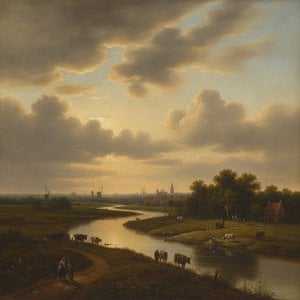
Discover the breathtaking beauty of Dutch Golden Age landscapes. Explore the mastery of light, chiaroscuro, and 17th-century realism through an expert art history lens, celebrating the enduring legacy of the Dutch Masters for discerning collectors and art lovers.

Entdecken Sie die 10 Meisterwerke des Niederländischen Goldenen Zeitalters! Von Rembrandt bis Vermeer – erleben Sie Kunstgeschichte, Techniken & Emotionen. Hochwertige Gemäldereproduktionen für Ihr Zuhause auf .

Embark on a cultural journey through the Dutch Golden Age. Explore the masterful interplay of light and shadow in 17th-century masterpieces, from Rembrandt to Vermeer, and discover how this era of profound realism continues to inspire fine art collectors today.

 Vorschau anzeigen
 Versenden
 Teilen
 Details anzeigen

 Herunterladen
 Ähnliche Objekte
 Röntgenaufnahme
 Diashow
 Weiterlesen







 Die Glasoption ist nur für Größen unter 110 cm verfügbar.


