A Moment Frozen in Time: Gerard ter Borch’s *Paternal Admonition*
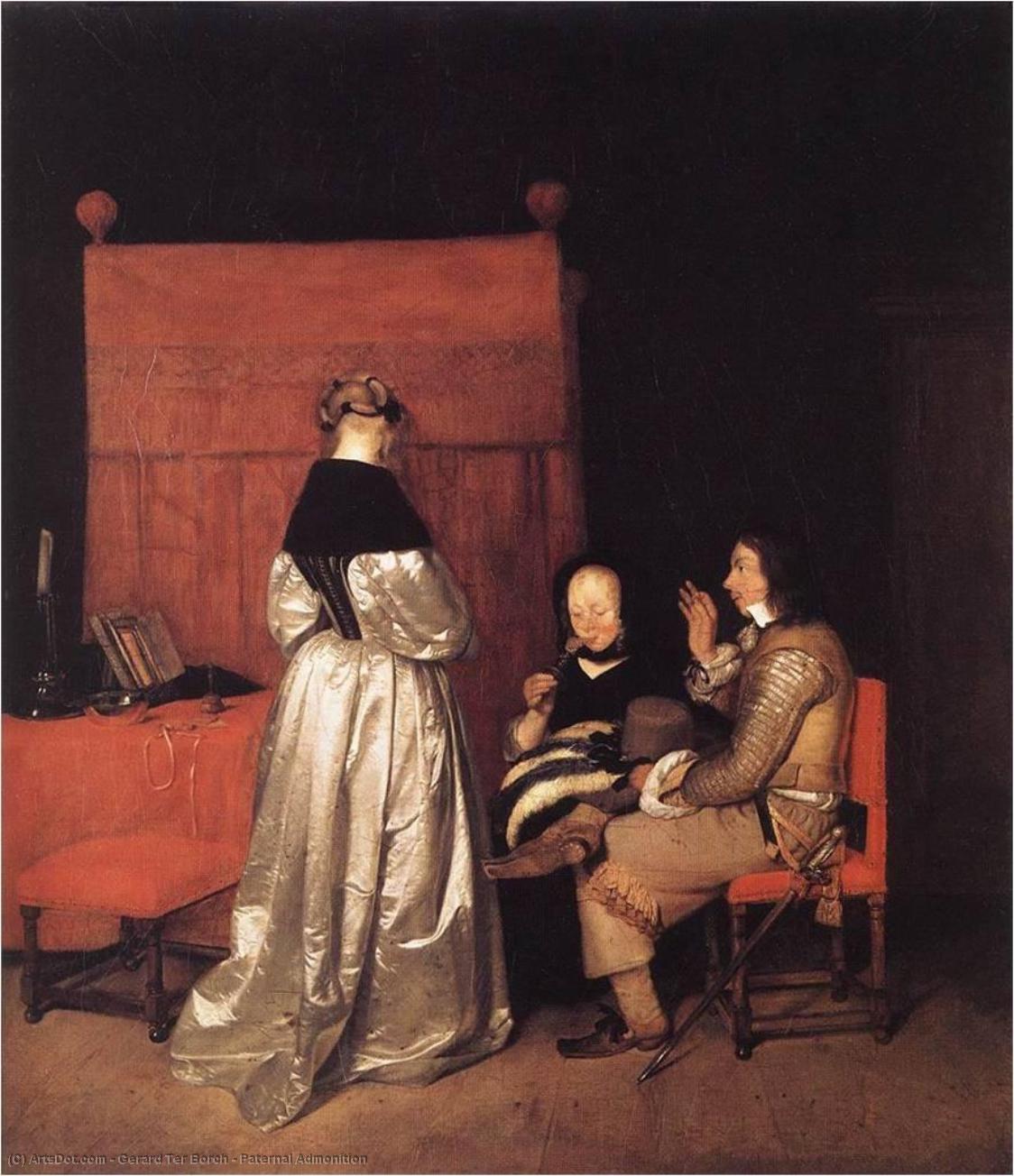
Gerard ter Borch's *Paternal Admonition*, painted around 1654, isn’t merely a portrait; it’s a meticulously crafted tableau of unspoken tension and veiled desire. Within the confines of a modestly furnished room—a subtle blend of domestic comfort and quiet restraint—three figures occupy a space brimming with psychological depth. The painting immediately draws the eye to the woman seated between two men, her posture suggesting both vulnerability and a carefully guarded composure. Her silver satin gown, shimmering with an almost ethereal light, acts as a focal point, demanding attention while simultaneously hinting at a hidden world of pleasure and intrigue.
Ter Borch’s genius lies not in dramatic gestures or overt displays of emotion, but rather in his ability to capture the subtle nuances of human interaction. The man, dressed in the formal attire of a military officer, holds a hat on his lap – a gesture that simultaneously conveys authority and a certain awkwardness. His gaze is directed towards the woman, yet his expression remains ambiguous, leaving us to ponder his intentions. The third figure, partially obscured behind the seated woman, adds another layer of complexity to the scene, suggesting a silent observer or perhaps even a participant in this unspoken exchange.
A Masterclass in Light and Texture
Technically, *Paternal Admonition* is a remarkable achievement. Ter Borch was a pioneer in Dutch genre painting, renowned for his unparalleled skill in rendering texture and light. He employed a technique of carefully layered glazes to create an astonishingly realistic depiction of fabrics – the luxurious sheen of the satin, the velvet upholstery, even the delicate folds of the woman’s dress are rendered with breathtaking detail. The use of chiaroscuro—the dramatic contrast between light and shadow—further enhances the painting's depth and atmosphere, drawing our attention to key elements while simultaneously creating a sense of mystery.
Notice how the light source seems to originate from an unseen window, casting soft shadows that accentuate the contours of the figures and their surroundings. This masterful manipulation of light not only adds visual interest but also contributes significantly to the painting’s overall mood—a blend of intimacy, restraint, and underlying tension.
Decoding a Silent Conversation
The initial interpretation of *Paternal Admonition* as a scene of paternal guidance has been largely superseded by more nuanced readings. While the man undoubtedly holds a position of authority, many scholars now believe that the painting depicts an amorous negotiation between a soldier and a prostitute within a brothel setting. The presence of the bed, the mirror, and the various objects of feminine beauty on the table all lend credence to this interpretation.
However, Ter Borch’s genius lies in his refusal to offer easy answers. He presents us with a scene pregnant with ambiguity, inviting us to interpret the unspoken dynamics between the figures. The woman's averted gaze and the man's hesitant posture suggest a delicate dance of power and desire—a silent conversation that transcends simple categorization.
A Window into 17th-Century Life
*Paternal Admonition* offers a fascinating glimpse into the social customs and moral sensibilities of 17th-century Holland. The painting reflects a society where appearances were carefully cultivated, and private interactions often concealed deeper desires. Ter Borch’s ability to capture this complex interplay of public and private life is what makes his work so enduringly captivating.
Reproductions of *Paternal Admonition* can bring this world into your own space, offering a subtle yet powerful reminder of the complexities of human relationships and the enduring allure of unspoken desires. Its quiet intensity and masterful technique make it a truly exceptional addition to any art collection or interior design scheme.


 Vorschau anzeigen
 Handgemalte Reproduktion bestellen
 Versenden
 Teilen
 Details anzeigen

 Herunterladen
 Ähnliche Objekte
 Röntgenaufnahme
 Diashow
 Statistiken


 Weiterlesen






































 Die Glasoption ist nur für Größen unter 110 cm verfügbar.