In echtem Maßstab anzeigen In AR an der Wand sehen Handgemalte Reproduktion kaufen Zum digitalen Bild wechseln Versenden als Grußkarte
Details anzeigen Leitfaden Zu Favoriten hinzufügen Herunterladen Ähnliche Objekte Röntgenaufnahme Diashow Besucherstatistiken

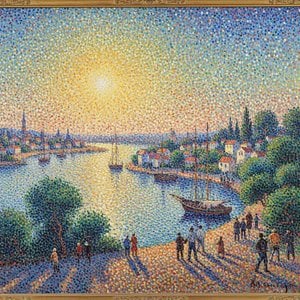
Studie für Le Chahut 1

Georges Seurat's 'Studie für Le Chahut 1': Ein faszinierendes Werk des Pointillismus! Entdecken Sie die Farbtechnik und die Lebensfreude dieser Meisterleistung. Handgemalte Reproduktionen erhältlich.

Erkunden Sie Georges Seurat (1859-1891), Pionier des Pointillismus und Neo-Impressionismus. Entdecken Sie 'A Sunday on La Grande Jatte' und seine revolutionäre Farbbtheorie, die das moderne Leben einfängt. Kaufen Sie handbemalte Reproduktionen!

Giclée / Kunstdruck

Giclée- oder Leinwanddruck in Museumsqualität mit schneller Produktion und flexiblen Veredelungsoptionen. ( Handgemalte Reproduktion kaufen Zum digitalen Bild wechseln)

P118B $10
P118H $10
P118W $10
P438Z $10
P508JH $12
P508YH $12
P805H $10
P805Z $10
P919BZ $10
P919G $10
P919XJ $10
P959ZH $10
P968JZ $12
W106C $8
W218G $10
W218JH $8
W218Y $10
W307PJ $10
W316G $10
W316PJ $8
W316Y $10
W398PJ $8
W4111J $10
W500HY $15
W500JH $15
W692G $12
W849H $8
W940BG $15
W953PJ $8

Standardformat
individuell anpassbar
CM
INCH

Wählen Sie aus unseren vordefinierten Formaten, die den ursprünglichen Proportionen des Kunstwerks entsprechen.

Breite
Höhe

Sie können Ihre eigenen Maße eingeben, um ein bestimmtes Format oder einen speziellen Platz einzupassen. Wenn das von Ihnen gewählte Format nicht den Proportionen des Originalbildes entspricht, werden wir das Kunstwerk entweder beschneiden oder das Bild mit einem gespiegelten oder einfarbigen Rand erweitern. Ein digitaler Entwurf wird Ihnen zur Genehmigung zugesandt, bevor die Produktion beginnt.
Bitte beachten Sie, dass die Vorschau auf dem Bildschirm nicht den tatsächlichen Zuschnitt oder die Erweiterung widerspiegelt. Nur der Entwurf zeigt die endgültige Komposition präzise an.
Obwohl Sondermaße verfügbar sind, empfehlen wir die Auswahl eines Maßes aus der vordefinierten Liste, um die ursprünglichen Proportionen zu bewahren.

Weltweiter Versand () innerhalb von 2 Wochen statt der üblichen 4/5 Wochen. (22 September)

why_choose_icon
Kostenloser weltweiter Expressversand
why_choose_icon
Hochwertige Leinenleinwand
why_choose_icon
Vollständiger Versicherungsschutz beim Versand
why_choose_icon
Zollgebühren-Rückerstattungsgarantie
why_choose_icon
Garantie für exakte Farbtreue
why_choose_icon
100-tägiges Rückgaberecht (nur bei Mängeln)
why_choose_icon
100% Geld-zurück-Garantie
why_choose_icon
Angebot für Mengenrabatt

Gesamtpreis

$ 68

reproduction

Studie für Le Chahut 1

Giclée / Kunstdruck

Format der Reproduktion

-

Gesamtpreis

$ 68

Kurzübersicht

  • Notable elements or techniques: Optical mixing
  • Artist: Georges Seurat
  • Influences: Impressionism
  • Location: Kröller-Müller Museum
  • Year: 1889-1890
  • Medium: Oil paint
  • Title: Study for Le Chahut 1

Kunst-Quiz

Jede Frage hat nur eine richtige Antwort.

Frage 1:
The painting ‘Study for Le Chahut’ primarily exemplifies which artistic technique?
Frage 2:
Georges Seurat, the artist of ‘Study for Le Chahut’, was a pioneer in developing which artistic movement?
Frage 3:
Based on the image description, what is the primary focus of the scene depicted in ‘Study for Le Chahut’?
Frage 4:
What scientific principle heavily influenced Georges Seurat’s development of Pointillism?
Frage 5:
Considering Seurat’s meticulous approach, what does the term ‘chromoluminarism’ refer to in relation to his work?

Georges Seurat’s ‘Étude pour “Le Chahut”’ – A Study in Light, Movement, and Modern Life

Georges Seurat's ‘Étude für “Le Chahut”’ (Study for “The Dance”) is more than just a preparatory sketch; it’s a concentrated distillation of the artist’s revolutionary approach to painting. Completed in 1890, this work offers an intimate glimpse into the genesis of his monumental masterpiece, ‘Le Chahut,’ and reveals the meticulous process behind Seurat's groundbreaking Pointillist technique. The image captures a fleeting moment of vibrant energy – a dance performance unfolding before a captivated audience – yet it’s far from a simple depiction of a scene. Instead, it’s an exploration of light, color, and the very nature of perception.

Seurat's fascination with scientific principles profoundly shaped his artistic vision. He meticulously studied optics and color theory, believing that the eye could be tricked into perceiving a unified image through the careful application of tiny dots – individual points of pure color. This method, known as Pointillism or Divisionism, aimed to capture the effects of light and atmosphere by analyzing how colors interact when viewed side-by-side. In this ‘Étude,’ we see the nascent stages of this process: a deliberate arrangement of small, distinct brushstrokes, each representing a single hue, building up to create an overall impression of luminosity and depth.

The Dance as Symbol – A Reflection of Modernity

‘Le Chahut’ itself, depicting a Parisian dance hall scene, was a bold statement about the changing face of modern life. The dancehall represented a new form of entertainment, a space where social boundaries blurred and a collective energy surged. Seurat wasn't simply painting a dance; he was capturing the spirit of an era – the dynamism, the excitement, and perhaps even the underlying anxieties of a rapidly urbanizing society. The figures in this ‘Étude’ are not fully rendered, but their postures and gestures hint at the movement and rhythm that will define the final composition.

Notice the careful attention to detail within the limited scope of the study. The instruments – violin, guitar, cello – are subtly integrated into the scene, suggesting the musical accompaniment to this vibrant spectacle. The curtain acts as a visual barrier, framing the action and drawing the viewer’s eye towards the central figure, the dancer herself. Her pose is poised and elegant, radiating an almost ethereal quality, despite the bustling background.

Technique and Color – The Language of Pointillism

The most striking aspect of ‘Étude für “Le Chahut”’ is undoubtedly Seurat's masterful application of Pointillism. Observe how he builds up layers of color through countless tiny dots, creating an illusion of shimmering light and texture. There’s a remarkable absence of blending; each dot remains distinct, contributing to the overall effect rather than merging into a single hue. This technique demanded immense patience and precision – Seurat often worked on these paintings for months, meticulously applying each individual point.

The color palette is remarkably restrained yet incredibly effective. Seurat favored a harmonious blend of blues, greens, yellows, and reds, carefully chosen to evoke the atmosphere of a dimly lit dance hall. The use of complementary colors – such as blue and orange – creates visual vibrancy and intensifies the sense of luminosity. It’s this careful orchestration of color that gives the ‘Étude’ its captivating allure.

A Window into Genius – Owning a Reproduction

‘Étude für “Le Chahut”’ is a testament to Georges Seurat's genius and his revolutionary approach to painting. A hand-painted reproduction offers a unique opportunity to bring this remarkable work into your home or office, allowing you to appreciate the intricate details of Seurat’s technique and the profound impact of his artistic vision. WahooArt.com provides meticulously crafted reproductions that faithfully capture the essence of this iconic masterpiece, ensuring that its beauty and complexity are enjoyed for generations to come. Consider this study as a starting point – a glimpse into the mind of an artist who forever changed the course of modern art.


Biografie des Künstlers

Georges Seurat: Ein Pionier des Neoimpressionismus

Frühes Leben und Ausbildung

  • Geboren: 2. Dezember 1859 in Paris, Frankreich.
  • Seurats Familie zog kurz nach seiner Geburt auf den Boulevard de Magenta um.
  • Sein Vater, Antoine Chrysostome Seurat, war ein ehemaliger Jurist, der durch Immobilienhandel reich wurde.
  • Er begann seine künstlerische Ausbildung an der École Municipale de Sculpture et Dessin, in der Nähe seines Zuhauses, unter dem Bildhauer Justin Lequien.
  • Im Jahr 1878 meldete er sich an der renommierten École des Beaux-Arts an und studierte bei Henri Lehmann.

Künstlerische Entwicklung und Einflüsse

  • Seurats künstlerliche Persönlichkeit war eine einzigartige Mischung aus Sensibilität und logischer Abstraktion. Er verband zarte Empfindsamkeit mit mathematischer Präzision.
  • Einflüsse: Obwohl spezifische Einflüsse diskutiert werden, studierte er die Farbbtheorien von Wissenschaftlern wie Michel Eugène Chevreul und Ogden Rood.
  • Er experimentierte zunächst mit traditionellen Zeichentechniken, bevor er seinen charakteristischen Stil entwickelte.
  • Seine frühen Werke zeigen ein Interesse an akademischer Malerei, ging aber allmählich zu einem innovativeren Ansatz über.

Chromoluminarismus und Pointillismus

  • Seurat entwickelte die Techniken des Chromoluminarismus (die Wissenschaft der Farbe) und des Pointillismus, indem er kleine, deutliche Punkte reiner Farbe auf eine Leinwand auftrug.
  • Er verwendete Conté-Kreide für detaillierte Zeichnungen auf rauer Papiersubstanz als Teil seines Prozesses.
  • Ziel des Pointillismus: Die Idee war, dass das Auge des Betrachters diese Farben optisch miteinander mischen und so einen lebendigen und leuchtenden Effekt erzeugt.

Wichtige Leistungen und bemerkenswerte Werke

  • Ein Sonntagnachmittag auf der Île de la Grande Jatte (1884-1886): Sein berühmtestes Werk, das den Beginn des Neoimpressionismus markiert. Es veranschaulicht seine Pointillist-Technik und seinen methodischen Ansatz.
  • Alfalfa, Saint-Denis (1886-1887): Demonstriert seine Anwendung der Farbbtheorie auf eine ländliche Landschaft.
  • Landschaft bei Saint-Ouen (1882-1883): Ein frühes Beispiel, das seinen sich entwickelnden Stil und sein Interesse an Licht und Atmosphäre zeigt.
  • Der Eiffelturm (1889): Eine Darstellung des ikonischen Pariser Wahrzeichens, dargestellt mit Pointillist-Techniken.
  • Bäderer in Asnières (1884): Ein weiteres bedeutendes Werk, das Freizeit und modernen Lebensstil mit seinem unverwechselbaren Stil erforscht.

Historische Bedeutung und Vermächtnis

  • Seureats Werk beeinflusste die Entwicklung der modernen Kunst nachhaltig, insbesondere durch seinen Schwerpunkt auf subjektivem Ausdruck und die Erforschung neuer Techniken.
  • Legte den Grundstein: Er legte den Grundstein für Bewegungen wie Fauvismus, Kubismus und Expressionismus.
  • Sein wissenschaftlicher Ansatz in der Malerei stellte traditionelle künstlerische Konventionen in Frage.
  • Trotz seines kurzen Lebens (er starb im Alter von 31 Jahren) hinterließ Seurat einen unauslöschlichen Eindruck in der Kunstgeschichte und inspirierte Generationen von Künstlern mit seiner innovativen Vision.
Georges Pierre Seurat

Georges Pierre Seurat

1859 - 1891 , Frankreich

Eckdaten zum Künstler

  • Beeinflusste Künstler:
    • Fauvismus
    • Kubismus
  • Bemerkenswerte Werke:
    • Ein Sonntagnachmittag...
    • Bäufer in Asnières
    • Der Eiffelturm
  • Einflüsse:
    • Michel Eugène Chevreul
    • Ogden Rood
  • Geburtsdatum: 2. Dezember 1859
  • Geburtsort: Paris, Frankreich
  • Künstlerische Bewegung: Neo-Impressionismus
  • Nationalität: Französisch
  • Sterbedatum: 1891
  • Vollständiger Name: Georges Pierre Seurat
Entdecken Sie Kunstwerke, die nach Themen, Stilen und Merkmalen sortiert sind.