Vorschau anzeigenVorschau anzeigen In AR erlebenIn AR erleben Handgemalte Reproduktion bestellen Handgemalte Reproduktion bestellenBild kaufen Bild kaufen VersendenVersenden
Details anzeigenDetails anzeigen Zu Favoriten hinzufügen Zu Favoriten hinzufügen HerunterladenHerunterladen Ähnliche ObjekteÄhnliche Objekte RöntgenaufnahmeRöntgenaufnahme DiashowDiashow

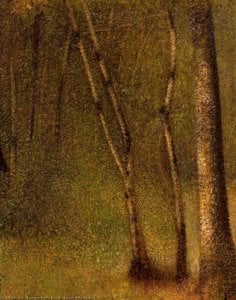
Forest Path, Barbizon

Georges Seurat's "Forest Path, Barbizon" captures serene woodland tranquility with Pointillism’s luminous dots. Explore the artist’s revolutionary technique and a timeless landscape masterpiece.

Erkunden Sie Georges Seurat (1859-1891), Pionier des Pointillismus und Neo-Impressionismus. Entdecken Sie 'A Sunday on La Grande Jatte' und seine revolutionäre Farbbtheorie, die das moderne Leben einfängt. Kaufen Sie handbemalte Reproduktionen!

Giclée / Kunstdruck

Giclée- oder Leinwanddruck in Museumsqualität mit schneller Produktion und flexiblen Veredelungsoptionen. (Handgemalte Reproduktion bestellen Handgemalte Reproduktion bestellenBild kaufen Bild kaufen)

P118B $10
P118H $10
P118W $10
P438Z $10
P508JH $12
P508YH $12
P805H $10
P805Z $10
P919BZ $10
P919G $10
P919XJ $10
P959ZH $10
P968JZ $12
W106C $8
W218G $10
W218JH $8
W218Y $10
W307PJ $10
W316G $10
W316PJ $8
W316Y $10
W398PJ $8
W4111J $10
W500HY $15
W500JH $15
W692G $12
W849H $8
W940BG $15
W953PJ $8

Standardformat
individuell anpassbar
CM
INCH

Wählen Sie aus unseren vordefinierten Formaten, die den ursprünglichen Proportionen des Kunstwerks entsprechen.

Breite
Höhe

Sie können Ihre eigenen Maße eingeben, um ein bestimmtes Format oder einen speziellen Platz einzupassen. Wenn das von Ihnen gewählte Format nicht den Proportionen des Originalbildes entspricht, werden wir das Kunstwerk entweder beschneiden oder das Bild mit einem gespiegelten oder einfarbigen Rand erweitern. Ein digitaler Entwurf wird Ihnen zur Genehmigung zugesandt, bevor die Produktion beginnt.
Bitte beachten Sie, dass die Vorschau auf dem Bildschirm nicht den tatsächlichen Zuschnitt oder die Erweiterung widerspiegelt. Nur der Entwurf zeigt die endgültige Komposition präzise an.
Obwohl Sondermaße verfügbar sind, empfehlen wir die Auswahl eines Maßes aus der vordefinierten Liste, um die ursprünglichen Proportionen zu bewahren.

Weltweiter Versand () innerhalb von 2 Wochen statt der üblichen 4/5 Wochen. (6 September)

why_choose_icon
Kostenloser weltweiter Expressversand
why_choose_icon
Hochwertige Leinenleinwand
why_choose_icon
Umfassender Versicherungsschutz beim Versand
why_choose_icon
Zollgebühren-Rückerstattungsgarantie
why_choose_icon
Garantie für exakte Farbtreue
why_choose_icon
100 Tage Rückgaberecht (nur bei Mängeln)
why_choose_icon
100% Geld-zurück-Garantie
why_choose_icon
Mengenrabatt verfügbar

Gesamtpreis

$ 68

reproduction

Forest Path, Barbizon

Giclée / Kunstdruck

Format der Reproduktion

-

Gesamtpreis

$ 68

Eckdaten

  • Medium: Oil on Canvas
  • Influences: Impressionism
  • Notable elements: Pointillism
  • Artist: Georges Seurat
  • Artistic style: Luminous Precision
  • Location: Private Collection
  • Subject or theme: Forest Landscape

Kunst-Quiz

Jede Frage hat nur eine richtige Antwort.

Frage 1:
What artistic movement is Georges Seurat primarily associated with?
Frage 2:
The painting 'Forest Path, Barbizon' predominantly utilizes which color palette?
Frage 3:
What technique did Georges Seurat develop to create the visual effects in 'Forest Path, Barbizon'?
Frage 4:
In what year was 'Forest Path, Barbizon' painted?
Frage 5:
The painting evokes a sense of what atmosphere or feeling?

A Glimpse of Tranquility: Seurat’s “Forest Path, Barbizon”

Georges Pierre Seurat's "Forest Path, Barbizon," painted in 1883, is more than just a depiction of a woodland scene; it’s a meticulously constructed meditation on light, color, and the very essence of perception. Created during his pivotal period exploring Pointillism – a technique he pioneered alongside Paul Signac – this work embodies Seurat's rigorous scientific approach to art while simultaneously radiating an undeniable sense of serenity. The painting transports us to the heart of the Barbizon Forest, a region renowned for its light and atmospheric qualities that drew artists seeking to capture the fleeting effects of nature. Unlike the Impressionists who focused on capturing immediate visual impressions, Seurat sought to analyze and deconstruct these impressions into their fundamental components: color and light.

The Science of Color – Pointillism in Action

At first glance, “Forest Path, Barbizon” might appear deceptively simple. However, a closer examination reveals the extraordinary complexity woven into its surface. Seurat employed the Pointillist technique—a revolutionary approach where tiny dots of pure color are applied to the canvas, allowing the viewer’s eye to blend them optically. This wasn't haphazard application; it was based on his study of optics and color theory, specifically Charles Blanc’s theories on how the human eye perceives color. Seurat believed that by using a vast array of colors – often juxtaposing complementary hues – he could create an illusion of depth, luminosity, and atmospheric perspective without resorting to traditional blending methods. The result is a shimmering surface, alive with subtle variations in tone and hue, mimicking the way sunlight filters through leaves and branches. The meticulous arrangement of these dots creates a vibrant, almost vibrating effect, particularly noticeable when viewed from a distance.

Barbizon’s Influence – Light, Atmosphere, and the Pursuit of Truth

The Barbizon school of painters, to which Seurat belonged, represented a significant shift in artistic practice. Rejecting the studio-bound traditions of academic art, these artists sought to paint *en plein air*—outdoors—directly from nature. They were particularly interested in capturing the subtle shifts in light and atmosphere that characterized the Fontainebleau Forest, a location favored for its diffused sunlight and rich colors. Seurat’s “Forest Path” is deeply rooted in this Barbizon aesthetic, prioritizing observation and scientific analysis over purely representational accuracy. The path itself, winding through the trees, becomes a symbolic invitation—a journey into the heart of nature's beauty and the artist’s intellectual pursuit.

Symbolism and Emotional Resonance – A Path to Contemplation

Beyond its technical brilliance, “Forest Path, Barbizon” possesses a quiet emotional resonance. The empty path suggests solitude and contemplation, inviting the viewer to step into the scene and experience it for themselves. The dappled sunlight filtering through the trees creates a sense of warmth and tranquility, while the muted greens and browns evoke a feeling of grounding and connection with nature. The single bird perched on a branch adds a touch of life and movement, hinting at the hidden wonders within this serene landscape. Seurat’s work isn't simply about depicting a forest; it’s about capturing a state of mind—a moment of peaceful reflection amidst the beauty of the natural world. It speaks to our innate desire for escape and connection with something larger than ourselves.
  • Dimensions: Unknown
  • Date: 1883
  • Artist: Georges Seurat
WahooArt offers meticulously crafted, hand-painted reproductions of “Forest Path, Barbizon,” allowing you to bring this iconic masterpiece into your home or office. Choose from a range of sizes and canvas materials to perfectly complement your space and style. Experience the brilliance of Seurat’s Pointillist technique firsthand – a truly captivating addition to any art collection.

Über den Künstler

Georges Seurat: Ein Pionier des Neoimpressionismus

Frühes Leben und Ausbildung

  • Geboren: 2. Dezember 1859 in Paris, Frankreich.
  • Seurats Familie zog kurz nach seiner Geburt auf den Boulevard de Magenta um.
  • Sein Vater, Antoine Chrysostome Seurat, war ein ehemaliger Jurist, der durch Immobilienhandel reich wurde.
  • Er begann seine künstlerische Ausbildung an der École Municipale de Sculpture et Dessin, in der Nähe seines Zuhauses, unter dem Bildhauer Justin Lequien.
  • Im Jahr 1878 meldete er sich an der renommierten École des Beaux-Arts an und studierte bei Henri Lehmann.

Künstlerische Entwicklung und Einflüsse

  • Seurats künstlerliche Persönlichkeit war eine einzigartige Mischung aus Sensibilität und logischer Abstraktion. Er verband zarte Empfindsamkeit mit mathematischer Präzision.
  • Einflüsse: Obwohl spezifische Einflüsse diskutiert werden, studierte er die Farbbtheorien von Wissenschaftlern wie Michel Eugène Chevreul und Ogden Rood.
  • Er experimentierte zunächst mit traditionellen Zeichentechniken, bevor er seinen charakteristischen Stil entwickelte.
  • Seine frühen Werke zeigen ein Interesse an akademischer Malerei, ging aber allmählich zu einem innovativeren Ansatz über.

Chromoluminarismus und Pointillismus

  • Seurat entwickelte die Techniken des Chromoluminarismus (die Wissenschaft der Farbe) und des Pointillismus, indem er kleine, deutliche Punkte reiner Farbe auf eine Leinwand auftrug.
  • Er verwendete Conté-Kreide für detaillierte Zeichnungen auf rauer Papiersubstanz als Teil seines Prozesses.
  • Ziel des Pointillismus: Die Idee war, dass das Auge des Betrachters diese Farben optisch miteinander mischen und so einen lebendigen und leuchtenden Effekt erzeugt.

Wichtige Leistungen und bemerkenswerte Werke

  • Ein Sonntagnachmittag auf der Île de la Grande Jatte (1884-1886): Sein berühmtestes Werk, das den Beginn des Neoimpressionismus markiert. Es veranschaulicht seine Pointillist-Technik und seinen methodischen Ansatz.
  • Alfalfa, Saint-Denis (1886-1887): Demonstriert seine Anwendung der Farbbtheorie auf eine ländliche Landschaft.
  • Landschaft bei Saint-Ouen (1882-1883): Ein frühes Beispiel, das seinen sich entwickelnden Stil und sein Interesse an Licht und Atmosphäre zeigt.
  • Der Eiffelturm (1889): Eine Darstellung des ikonischen Pariser Wahrzeichens, dargestellt mit Pointillist-Techniken.
  • Bäderer in Asnières (1884): Ein weiteres bedeutendes Werk, das Freizeit und modernen Lebensstil mit seinem unverwechselbaren Stil erforscht.

Historische Bedeutung und Vermächtnis

  • Seureats Werk beeinflusste die Entwicklung der modernen Kunst nachhaltig, insbesondere durch seinen Schwerpunkt auf subjektivem Ausdruck und die Erforschung neuer Techniken.
  • Legte den Grundstein: Er legte den Grundstein für Bewegungen wie Fauvismus, Kubismus und Expressionismus.
  • Sein wissenschaftlicher Ansatz in der Malerei stellte traditionelle künstlerische Konventionen in Frage.
  • Trotz seines kurzen Lebens (er starb im Alter von 31 Jahren) hinterließ Seurat einen unauslöschlichen Eindruck in der Kunstgeschichte und inspirierte Generationen von Künstlern mit seiner innovativen Vision.
Georges Pierre Seurat

Georges Pierre Seurat

1859 - 1891 , Frankreich

Kurzinfos

  • Beeinflusste Künstler:
    • Fauvismus
    • Kubismus
  • Bemerkenswerte Werke:
    • Ein Sonntagnachmittag...
    • Bäufer in Asnières
    • Der Eiffelturm
  • Einflüsse:
    • Michel Eugène Chevreul
    • Ogden Rood
  • Geburtsdatum: 2. Dezember 1859
  • Geburtsort: Paris, Frankreich
  • Künstlerische Bewegung: Neo-Impressionismus
  • Nationalität: Französisch
  • Sterbedatum: 1891
  • Vollständiger Name: Georges Pierre Seurat
Entdecken Sie Kunstwerke, die nach Themen, Stilen und Merkmalen sortiert sind.