Kostenlose Kunstberatung

x
Druck bestellen Druck bestellenBild kaufen Bild kaufen VersendenVersenden
Details anzeigenDetails anzeigen Zu Favoriten hinzufügen Zu Favoriten hinzufügen HerunterladenHerunterladen Ähnliche ObjekteÄhnliche Objekte RöntgenaufnahmeRöntgenaufnahme Diashow anzeigenDiashow anzeigen

untitled (9656)

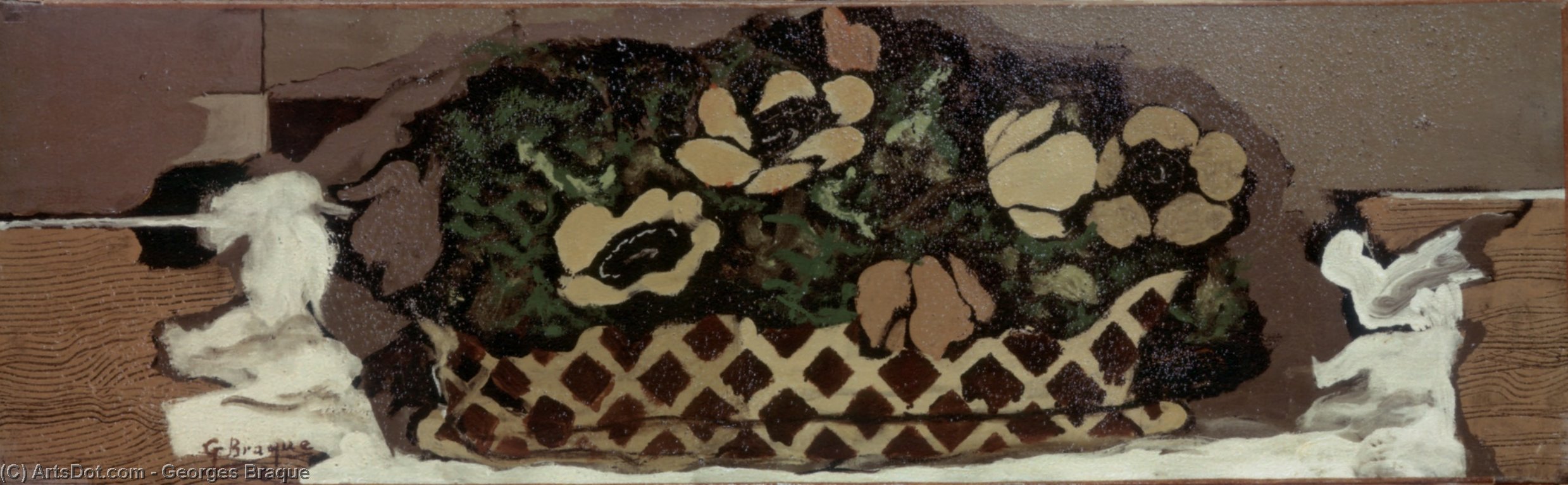
Georges Braque's 'Untitled (9656)' captures a serene nature scene with a tree and birds, showcasing the artist’s pioneering Cubist style. Explore the interplay of form and perspective in this captivating hand-painted reproduction.

Erkunden Sie das Leben und Werk von Georges Braque (1882-1963), eine Schlüsselgestalt der Malerei des 20. Jahrhunderts. Pionier des Kubismus an der Seite Picassos, bekannt für Fauvismus, Collagen und innovative geometrische Formen. Entdecken Sie sein Erbe bei WahooArt!

Handgefertigte Öl-Reproduktion

Handgemaltes Ölgemälde auf Leinwand in Ihrer Wunschgröße und mit Rahmen, auf Bestellung von unseren Künstlern angefertigt.

P118B $10
P118H $10
P118W $10
P438Z $10
P508JH $12
P508YH $12
P805H $10
P805Z $10
P919BZ $10
P919G $10
P919XJ $10
P959ZH $10
P968JZ $12
W106C $8
W218G $10
W218JH $8
W218Y $10
W307PJ $10
W316G $10
W316PJ $8
W316Y $10
W398PJ $8
W4111J $10
W500HY $15
W500JH $15
W692G $12
W849H $8
W940BG $15
W953PJ $8

Standard
custom
CM
INCH

Wählen Sie aus unseren vordefinierten Größen, die den ursprünglichen Proportionen des Kunstwerks entsprechen.

Breite
Höhe

Sie können Ihre eigenen Maße eingeben, um einen bestimmten Rahmen oder Platz auszufüllen. Wenn die gewählte Größe nicht den Proportionen des Originalbildes entspricht, werden wir das Kunstwerk entweder beschneiden oder das Gemälde durch zusätzliche, handgemalte Elemente erweitern. Ein digitales Mockup wird Ihnen zur Genehmigung zugesandt, bevor die Produktion beginnt.
Bitte beachten Sie, dass die Bildschirmvorschau nicht die tatsächliche Beschneidung oder Erweiterung widerspiegelt. Nur das Mockup zeigt die endgültige Komposition exakt an.
Obwohl Sondermaße verfügbar sind, empfehlen wir, eine Größe aus der vordefinierten Liste zu wählen, um die ursprünglichen Proportionen beizubehalten.

Beispiele für Anpassungsmöglichkeiten: Gesicht durch Kundenfoto ersetzen; Haustier hinzufügen (z. B. Katze durch Hund ersetzen); eine versteckte Nachricht im Hintergrund einfügen; Hintergrundlandschaft oder -elemente ändern.
Nach der Bestellung wird das WahooArt.com-Team dem Kunden Anweisungen per E-Mail zusenden und eine Mockup-Vorschau bereitstellen.

Weltweiter Versand () in nur 3 bis 4 Wochen statt der üblichen 5 Wochen. (4 Juli). Keine Kompromisse bei der Qualität.

why_choose_icon
Kostenloser weltweiter Expressversand
why_choose_icon
Hochwertige Leinenleinwand
why_choose_icon
Umfassender Versicherungsschutz beim Versand
why_choose_icon
Zollsteuer-Rückerstattungsgarantie
why_choose_icon
Garantie für echte Farbtreue
why_choose_icon
60-Tage-Rückgaberecht (nur bei Mängeln)
why_choose_icon
100% Geld-zurück-Garantie
why_choose_icon
Mengenrabatt verfügbar

Gesamtpreis

-

reproduction

untitled (9656)

Art der Reproduktion

Größe der Reproduktion

-

Endpreis aller Optionen

-

Eckdaten auf einen Blick

  • Artist: Georges Braque
  • Title: untitled (9656)
  • Movement: Cubism, Fauvism
  • Artistic style: Abstract, Naturalistic
  • Subject or theme: Nature, Serenity
  • Notable elements: Tree, birds, figure

Kunst-Quiz

Jede Frage hat nur eine richtige Antwort.

Frage 1:
Based on the image description, what is the primary focus of this artwork?
Frage 2:
The artwork is attributed to which artist?
Frage 3:
Which artistic movement is most closely associated with the style depicted in this artwork?
Frage 4:
The image description mentions a person observing the tree. What is the likely purpose of this figure?
Frage 5:
Considering Georges Braque's biography, what influenced his early artistic development?

Beschreibung des Kunstwerks

Georges Braque’s Serene Observation: A Window into Early Cubism

This untitled work by Georges Braque, created around 1926 (though the exact date remains elusive), offers a captivating glimpse into the artist's evolving approach to form and space during his pivotal period within the development of Cubism. It’s not merely a depiction of a forest scene; it’s an exploration of perception itself – a deliberate fracturing of reality to reveal its underlying geometric structure, mirroring Braque’s deep engagement with the ideas of Paul Cézanne. The painting's stark black and white palette immediately establishes a formal rigor, stripping away any superfluous detail and forcing the viewer to confront the essential shapes and planes that constitute the landscape.

The composition is dominated by a towering tree, its branches reaching upwards in a complex network of lines and angles. This isn’t a naturalistic representation; rather, it's an abstracted embodiment of the tree’s skeletal structure – a series of interlocking geometric forms that suggest both solidity and fragility. The leaves, rendered as dense clusters of overlapping planes, contribute to this sense of fragmentation, creating a visual texture that is simultaneously chaotic and meticulously controlled. Notice how Braque avoids smooth transitions; instead, he employs sharp edges and distinct planes, anticipating the key tenets of Cubism’s deconstruction of traditional perspective.

The Human Element: A Quiet Contemplation

Adding to the painting's intrigue is the presence of a solitary figure standing near the left side of the scene. This individual, partially obscured by the foliage, appears to be gazing intently at the tree. Their posture – slightly turned towards the subject – suggests a moment of quiet contemplation, perhaps an appreciation for the tree’s inherent beauty or a deeper engagement with its geometric form. The figure's inclusion isn’t merely decorative; it serves as a focal point, inviting the viewer to consider their own relationship to nature and art. Braque frequently used human figures in his work not to represent specific individuals, but rather to embody universal themes of observation and experience – a silent witness to the unfolding drama of the natural world.

Cubist Principles & Artistic Innovation

This painting is firmly rooted within the principles of Cubism, a revolutionary movement that Braque co-founded with Pablo Picasso. Unlike earlier artistic styles that prioritized realistic representation, Cubism sought to depict objects from multiple viewpoints simultaneously, breaking them down into their fundamental geometric components and reassembling them on the canvas in an abstract manner. Braque’s approach, often referred to as “Analytical Cubism,” involved a deliberate reduction of color palettes – typically limited to monochromatic schemes – to emphasize form and structure. The use of overlapping planes, fragmented forms, and ambiguous spatial relationships are hallmarks of this style, creating a sense of visual complexity that challenges the viewer's perception.

Symbolic Resonance & Emotional Impact

Beyond its formal innovations, the painting carries a subtle symbolic resonance. The tree itself can be interpreted as a symbol of strength, resilience, and connection to the earth – qualities deeply valued in Braque’s native France. The stark contrast between light and shadow further enhances this sense of drama, creating a visual tension that draws the viewer's eye across the composition. Ultimately, “Untitled (9656)” is not simply a landscape; it’s an invitation to engage with the complexities of perception, form, and the enduring beauty of the natural world – a testament to Braque’s pioneering spirit and his profound influence on the course of modern art.

Ähnliche Kunstwerke


Biografie des Künstlers

**frühes Leben und Ausbildung**

Georges Braque, ein prominenter französischer Maler, Kollagist, Bleistrichzeichner, Grafiker und Bildhauer, wurde am 13. Mai 1882 in Argenteuil, Val-d'oise, geboren. Er wuchs in Le Havre auf und erhielt zunächst eine Ausbildung als Hausmaler und Dekorateur wie sein Vater und Großvater. Braques künstlerische Neigungen führten ihn jedoch dazu, von 1897 bis 1899 an der École des Beaux-Arts in Le Havre Malerei zu studieren.

**Künstlerische Entwicklung und Fauvisme**

Im Jahr 1902, nachdem er seine Lehre bei einem Dekorateur in Paris abgeschlossen hatte, besuchte Braque bis 1904 die Académie Humbert. Dieser Zeitraum markierte seine Einführung ins Fauvismus, einen Stil, der durch lebendige Farben und emotionale Reaktionen gekennzeichnet ist. Beeinflusst von den Werken von Henri Matisse und André Derain, übernahm Braque einen fauvistischen Ansatz, wie in seinem Gemälde The Patience (Fauvismus, Öl auf Leinwand).

**Beitrag zum Kubismus**

Braques Zusammenarbeit mit Pablo Picasso von 1908 bis 1912 führte zur Entwicklung des Kubismus. Ihre analytischen kubistischen Werke, wie z.B. Georges Braque: The Patience und Pablo Picasso: Clarinet(analytischer Kubismus, Öl auf Leinwand), gelten heute als Meilensteine der Kunstgeschichte.

**Erbe und bemerkenswerte Werke**

* Houses at L'Estaques: Ein Zeugnis für Braques innovatives Einsatz von Geometrie und simultaner Perspektive. * The Patience(Fauvismus, Öl auf Leinwand): Demonstriert Braques fauvistischen Stil. * Clarinet(analytischer Kubismus, Öl auf Leinwand): Eine kollaborative kubistische Arbeit mit Picasso.

**Museen und Sammlungen**

* Musée d'Orsay: Bietet eine umfangreiche Sammlung impressionistischer und postimpressionistischer Kunst, darunter Werke von Braque. * Musée de l'Orangerie: Zeigt eine breite Palette von Kunstwerken, darunter Werke von Braque und anderen bedeutenden Künstlern.
  • Erfahren Sie mehr über Georges Braques Leben und Werk auf WahooArt.com
  • Entdecken Sie die Sammlung des Musée d'Orsay, die Werke von Braque und anderen Künstlern umfasst, unter Musée d'Orsay - Wikipedia
  • Erfahren Sie mehr über den Fauvismus und seinen Einfluss auf die Entwicklung des Kubismus mit Fauvismus Kunstbewegung auf WahooArt.com
**Georges Braques innovative Stil und seine Zusammenarbeit mit Pablo Picasso inspirieren weiterhin Künstler und Kunstliebhaber.**
Georges Braque

Georges Braque

1882 - 1963 , Frankreich

Kurzinfos

  • Beeinflusste Künstler: ['Pablo Picasso']
  • Bemerkenswerte Werke:
    • Häuser in L'Estaque
    • Die Geduld (Fauvismus)
    • Stillleben mit Pfeife
    • Mandola
  • Einflussreiche Künstler:
    • Henri Matisse
    • André Derain
    • Paul Cézanne
  • Geburtsdatum: 13. Mai 1882
  • Geburtsort: Argenteuil, Frankreich
  • Künstlerischer Stil: Kubismus, Fauvismus
  • Nationalität: Französisch
  • Sterbedatum: 1963
  • Vollständiger Name: Georges Braque
Entdecken Sie Kunstwerke, die nach Themen, Stilen und Merkmalen sortiert sind.