Kostenlose Kunstberatung

x
Gemälde kaufen Gemälde kaufenBild kaufen Bild kaufen VersendenVersenden
DetailsDetails Zu Favoriten hinzufügen Zu Favoriten hinzufügen HerunterladenHerunterladen Ähnliche ObjekteÄhnliche Objekte RöntgenaufnahmeRöntgenaufnahme Diashow anzeigenDiashow anzeigen

untitled (7066)

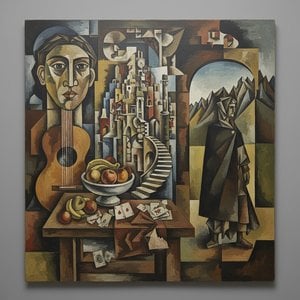
Georges Braque’s colorful landscape painting captures a vibrant mountainous scene with houses and birds, showcasing the artist's early 20th-century style. Discover this stunning reproduction and bring a touch of modern art into your space.

Erkunden Sie das Leben und Werk von Georges Braque (1882-1963), eine Schlüsselgestalt der Malerei des 20. Jahrhunderts. Pionier des Kubismus an der Seite Picassos, bekannt für Fauvismus, Collagen und innovative geometrische Formen. Entdecken Sie sein Erbe bei WahooArt!

Giclée / Kunstdruck

Giclée- oder Leinwanddruck in Museumsqualität mit schneller Produktion und flexiblen Veredelungsoptionen.

P118B $10
P118H $10
P118W $10
P438Z $10
P508JH $12
P508YH $12
P805H $10
P805Z $10
P919BZ $10
P919G $10
P919XJ $10
P959ZH $10
P968JZ $12
W106C $8
W218G $10
W218JH $8
W218Y $10
W307PJ $10
W316G $10
W316PJ $8
W316Y $10
W398PJ $8
W4111J $10
W500HY $15
W500JH $15
W692G $12
W849H $8
W940BG $15
W953PJ $8

Standard
custom
CM
INCH

Wählen Sie aus unseren vordefinierten Größen, die den ursprünglichen Proportionen des Kunstwerks entsprechen.

Breite
Höhe

Sie können Ihre eigenen Maße eingeben, um ein bestimmtes Format oder einen speziellen Platz einzupassen. Wenn das von Ihnen gewählte Format nicht den Proportionen des Originalbildes entspricht, werden wir das Kunstwerk entweder beschneiden oder das Bild mit einem gespiegelten oder einfarbigen Rand erweitern. Ein digitaler Entwurf wird Ihnen zur Genehmigung zugesandt, bevor die Produktion beginnt.
Bitte beachten Sie, dass die Vorschau auf dem Bildschirm nicht den tatsächlichen Zuschnitt oder die Erweiterung widerspiegelt. Nur der Entwurf zeigt die endgültige Komposition präzise an.
Obwohl Sondermaße verfügbar sind, empfehlen wir die Auswahl eines Maßes aus der vordefinierten Liste, um die ursprünglichen Proportionen zu bewahren.

Weltweiter Versand () innerhalb von 2 Wochen statt der üblichen 4/5 Wochen. (3 Juli)

why_choose_icon
Kostenloser weltweiter Expressversand
why_choose_icon
Hochwertige Leinenleinwand
why_choose_icon
Umfassender Versicherungsschutz beim Versand
why_choose_icon
Zollsteuer-Rückerstattungsgarantie
why_choose_icon
Garantie für echte Farbtreue
why_choose_icon
60-Tage-Rückgaberecht (nur bei Mängeln)
why_choose_icon
100% Geld-zurück-Garantie
why_choose_icon
Mengenrabatt verfügbar

Gesamtpreis

-

reproduction

untitled (7066)

Giclée / Kunstdruck

Größe der Reproduktion

-

Endpreis aller Optionen

-

Eckdaten auf einen Blick

  • Movement: Cubism
  • Artist: Georges Braque
  • Subject or theme: Mountain landscape
  • Title: untitled (7066)
  • Influences:
    • Impressionism
    • Post-Impressionism

Beschreibung des Sammlerstücks

Georges Braque’s Evocative Landscape – A Study in Form and Color

This captivating landscape, tentatively titled “untitled (7066),” offers a profound glimpse into the nascent explorations of Georges Braque during a pivotal moment in modern art. Painted around 19XX (date unknown), the artwork immediately draws the eye with its vibrant palette and meticulously rendered depiction of a mountainous scene. It’s not merely a representation of nature; it's a carefully constructed study of form, color, and spatial relationships – hallmarks of Braque’s groundbreaking approach to painting.

  • Subject Matter: The composition centers on a dramatic mountain range, punctuated by the charming presence of houses nestled amongst the peaks. Scattered trees, some laden with foliage, others starkly bare, contribute to a sense of seasonal variation and heighten the visual interest.
  • Color Palette: Braque’s use of color is both bold and restrained. He employs a rich array of hues – deep greens, blues, browns, and ochres – to capture the light and shadow effects within the landscape. This careful manipulation of color contributes significantly to the painting's depth and atmospheric quality.
  • Compositional Elements: The placement of two birds—one near the center-left, the other in the upper right corner—adds a subtle dynamism to the scene, subtly guiding the viewer’s eye across the canvas. The overall arrangement creates a powerful sense of perspective, drawing us into the heart of this mountainous vista.

The Roots of Cubism: Braque's Early Experimentation

Understanding “untitled (7066)” requires acknowledging its place within the broader context of Braque’s artistic development. Emerging from a background steeped in traditional craftsmanship – his father was a house painter and decorator – Braque initially sought to reconcile these practical skills with his burgeoning artistic ambitions. His early training at the École des Beaux-Arts in Le Havre provided him with a solid foundation in academic techniques, but it was his immersion in the vibrant Parisian art scene that truly ignited his revolutionary spirit.

Around 1902, Braque’s studies at the Académie Humbert exposed him to innovative ideas circulating amongst artists like Marie Laurencin and Francis Picabia. These encounters proved instrumental in shaping his evolving style. It's during this period that he began to dismantle traditional notions of perspective and representation, laying the groundwork for what would become known as Cubism – a movement he co-founded with Pablo Picasso.

Technique and Materiality: A Masterful Approach

The painting’s surface reveals Braque's meticulous attention to detail and his innovative approach to applying paint. While the exact techniques employed remain somewhat open to interpretation, it is likely that he utilized a layering method – building up thin glazes of color over a prepared ground. This technique would have allowed him to achieve the subtle gradations of tone and the luminous effects characteristic of his work.

  • Brushwork: The brushstrokes are generally controlled and precise, contributing to the painting’s overall sense of order and structure.
  • Color Mixing: Braque's masterful color mixing creates a remarkable depth and richness within the landscape.
  • Surface Texture: A subtle texture is achieved through multiple layers of paint, adding visual interest and enhancing the realism of the scene.

Symbolic Resonance and Emotional Impact

"untitled (7066)" transcends a simple depiction of a mountain landscape; it embodies Braque’s exploration of fundamental artistic principles. The painting invites contemplation on themes of nature, human settlement, and the relationship between the two. The seemingly tranquil scene subtly hints at the disruptive forces of modern art – the questioning of established conventions that would ultimately reshape the course of 20th-century art.

This reproduction offers a unique opportunity to experience Braque’s artistic vision firsthand. Its vibrant colors and masterful composition will undoubtedly bring a touch of sophistication and tranquility to any interior space, serving as a testament to the enduring legacy of one of modernism's most influential figures.

Ähnliche Kunstwerke


Biografie des Künstlers

**frühes Leben und Ausbildung**

Georges Braque, ein prominenter französischer Maler, Kollagist, Bleistrichzeichner, Grafiker und Bildhauer, wurde am 13. Mai 1882 in Argenteuil, Val-d'oise, geboren. Er wuchs in Le Havre auf und erhielt zunächst eine Ausbildung als Hausmaler und Dekorateur wie sein Vater und Großvater. Braques künstlerische Neigungen führten ihn jedoch dazu, von 1897 bis 1899 an der École des Beaux-Arts in Le Havre Malerei zu studieren.

**Künstlerische Entwicklung und Fauvisme**

Im Jahr 1902, nachdem er seine Lehre bei einem Dekorateur in Paris abgeschlossen hatte, besuchte Braque bis 1904 die Académie Humbert. Dieser Zeitraum markierte seine Einführung ins Fauvismus, einen Stil, der durch lebendige Farben und emotionale Reaktionen gekennzeichnet ist. Beeinflusst von den Werken von Henri Matisse und André Derain, übernahm Braque einen fauvistischen Ansatz, wie in seinem Gemälde The Patience (Fauvismus, Öl auf Leinwand).

**Beitrag zum Kubismus**

Braques Zusammenarbeit mit Pablo Picasso von 1908 bis 1912 führte zur Entwicklung des Kubismus. Ihre analytischen kubistischen Werke, wie z.B. Georges Braque: The Patience und Pablo Picasso: Clarinet(analytischer Kubismus, Öl auf Leinwand), gelten heute als Meilensteine der Kunstgeschichte.

**Erbe und bemerkenswerte Werke**

* Houses at L'Estaques: Ein Zeugnis für Braques innovatives Einsatz von Geometrie und simultaner Perspektive. * The Patience(Fauvismus, Öl auf Leinwand): Demonstriert Braques fauvistischen Stil. * Clarinet(analytischer Kubismus, Öl auf Leinwand): Eine kollaborative kubistische Arbeit mit Picasso.

**Museen und Sammlungen**

* Musée d'Orsay: Bietet eine umfangreiche Sammlung impressionistischer und postimpressionistischer Kunst, darunter Werke von Braque. * Musée de l'Orangerie: Zeigt eine breite Palette von Kunstwerken, darunter Werke von Braque und anderen bedeutenden Künstlern.
  • Erfahren Sie mehr über Georges Braques Leben und Werk auf WahooArt.com
  • Entdecken Sie die Sammlung des Musée d'Orsay, die Werke von Braque und anderen Künstlern umfasst, unter Musée d'Orsay - Wikipedia
  • Erfahren Sie mehr über den Fauvismus und seinen Einfluss auf die Entwicklung des Kubismus mit Fauvismus Kunstbewegung auf WahooArt.com
**Georges Braques innovative Stil und seine Zusammenarbeit mit Pablo Picasso inspirieren weiterhin Künstler und Kunstliebhaber.**

Georges Braque

Georges Braque

1882 - 1963 , Frankreich

Kurzinfos

  • Beeinflusste Künstler: ['Pablo Picasso']
  • Bemerkenswerte Werke:
    • Häuser in L'Estaque
    • Die Geduld (Fauvismus)
    • Stillleben mit Pfeife
    • Mandola
  • Einflussreiche Künstler:
    • Henri Matisse
    • André Derain
    • Paul Cézanne
  • Geburtsdatum: 13. Mai 1882
  • Geburtsort: Argenteuil, Frankreich
  • Künstlerischer Stil: Kubismus, Fauvismus
  • Nationalität: Französisch
  • Sterbedatum: 1963
  • Vollständiger Name: Georges Braque
Entdecken Sie Kunstwerke, die nach Themen, Stilen und Merkmalen sortiert sind.