Vorschau anzeigenVorschau anzeigen In AR erlebenIn AR erleben Zu Druck wechseln Zu Druck wechselnZum digitalen Bild wechseln Zum digitalen Bild wechseln VersendenVersenden
Details anzeigenDetails anzeigen Zu Favoriten hinzufügen Zu Favoriten hinzufügen HerunterladenHerunterladen Ähnliche ObjekteÄhnliche Objekte RöntgenaufnahmeRöntgenaufnahme DiashowDiashow StatistikenStatistiken

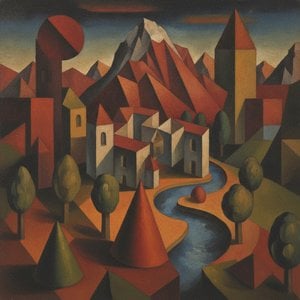
Reclining nude 1

Georges Braque’s ‘Reclining Nude 1’ is a revolutionary Cubist masterpiece showcasing fractured forms and muted earth tones from 1925. Explore this pivotal work by the influential artist and discover a captivating piece to own.

Erkunden Sie das Leben und Werk von Georges Braque (1882-1963), eine Schlüsselgestalt der Malerei des 20. Jahrhunderts. Pionier des Kubismus an der Seite Picassos, bekannt für Fauvismus, Collagen und innovative geometrische Formen. Entdecken Sie sein Erbe bei WahooArt!

Handgefertigte Ölreproduktion

Handgemaltes Ölgemälde auf Leinwand in Ihrer Wunschgröße und mit Rahmen, auf Bestellung von unseren Künstlern angefertigt. (Zu Druck wechseln Zu Druck wechselnZum digitalen Bild wechseln Zum digitalen Bild wechseln)

P118B $10
P118H $10
P118W $10
P438Z $10
P508JH $12
P508YH $12
P805H $10
P805Z $10
P919BZ $10
P919G $10
P919XJ $10
P959ZH $10
P968JZ $12
W106C $8
W218G $10
W218JH $8
W218Y $10
W307PJ $10
W316G $10
W316PJ $8
W316Y $10
W398PJ $8
W4111J $10
W500HY $15
W500JH $15
W692G $12
W849H $8
W940BG $15
W953PJ $8

Standardformat
individuell anpassbar
CM
INCH

Wählen Sie aus unseren vordefinierten Formaten, die den ursprünglichen Proportionen des Kunstwerks entsprechen.

Breite
Höhe

Sie können Ihre eigenen Maße eingeben, um einen bestimmten Rahmen oder Platz auszufüllen. Wenn die gewählte Größe nicht den Proportionen des Originalbildes entspricht, werden wir das Kunstwerk entweder beschneiden oder das Gemälde durch zusätzliche, handgemalte Elemente erweitern. Ein digitales Mockup wird Ihnen zur Genehmigung zugesandt, bevor die Produktion beginnt.
Bitte beachten Sie, dass die Bildschirmvorschau nicht die tatsächliche Beschneidung oder Erweiterung widerspiegelt. Nur das Mockup zeigt die endgültige Komposition exakt an.
Obwohl Sondermaße verfügbar sind, empfehlen wir, eine Größe aus der vordefinierten Liste zu wählen, um die ursprünglichen Proportionen beizubehalten.

Beispiele für Anpassungsmöglichkeiten: Gesicht durch Kundenfoto ersetzen; Haustier hinzufügen (z. B. Katze durch Hund ersetzen); eine versteckte Nachricht im Hintergrund einfügen; Hintergrundlandschaft oder -elemente ändern.
Nach der Bestellung wird das WahooArt.com-Team dem Kunden Anweisungen per E-Mail zusenden und eine Mockup-Vorschau bereitstellen.

Weltweiter Versand () in nur 3 bis 4 Wochen statt der üblichen 5 Wochen. (11 September). Keine Kompromisse bei der Qualität.

why_choose_icon
Kostenloser weltweiter Expressversand
why_choose_icon
Hochwertige Leinenleinwand
why_choose_icon
Umfassender Versicherungsschutz beim Versand
why_choose_icon
Zollgebühren-Rückerstattungsgarantie
why_choose_icon
Garantie für exakte Farbtreue
why_choose_icon
100-Tage-Rückgaberecht (nur bei Mängeln)
why_choose_icon
100% Geld-zurück-Garantie
why_choose_icon
Mengenrabatt verfügbar

Gesamtpreis

$ 272

reproduction

Reclining nude 1

Art der Reproduktion

Format der Reproduktion

-

Gesamtpreis

$ 272

Eckdaten

  • Artistic style: Abstract
  • Subject or theme: Female nude
  • Artist: Georges Braque
  • Title: Reclining nude 1
  • Notable elements or techniques: Geometric shapes; muted colors
  • Medium: Oil on canvas

Kunst-Quiz

Jede Frage hat nur eine richtige Antwort.

Frage 1:
In which art movement does Georges Braque's 'Reclining Nude 1' primarily belong?
Frage 2:
What is the primary color palette used in this painting?
Frage 3:
Which technique did Braque use to emphasize structural integrity in the figure's torso?
Frage 4:
Where is 'Reclining Nude 1' currently housed?
Frage 5:
What was Braque's primary goal in his approach to representing reality?

A Fragment of Cubist Revolution

To gaze upon Georges Braque’s “Reclining Nude 1” is to witness the very moment the mirror of art was shattered and reassembled into something far more profound than mere imitation. Created in 1925, this masterpiece stands as a quintessential embodiment of the Cubist movement—a stylistic upheaval that irrevocably altered the trajectory of Western art. More than just a depiction of the human form, it serves as an intellectual exploration of perception, reflecting the profound anxieties and aspirations of the early twentieth century. Braque does not merely present a figure; he invites the viewer into a complex dialogue between reality and representation, where the boundaries of the physical world are intentionally blurred to reveal a deeper, structural truth.

The painting’s power lies in its masterful synthesis of form and color. Eschewing the fleeting light favored by the Impressionists, Braque employs an analytical approach, dissecting the subject into fractured planes and geometric shapes. The central figure—a reclining woman—is constructed through a rhythmic arrangement of facets that suggest multiple viewpoints simultaneously. One can observe the meticulous crosshatching technique employed throughout the composition, particularly across the torso, which prioritizes structural integrity over traditional visual realism. This deliberate simplification does not diminish the beauty of the subject; rather, it elevates it, forcing the eye to actively engage with the underlying conceptual framework of the piece.

The Soul of the Earth: Palette and Texture

The emotional resonance of the work is deeply tied to its muted, evocative color palette. Dominated by earthy tones such as ochre, umber, and terracotta, the painting exudes a sense of quiet contemplation and austere elegance. These warm, grounded hues provide a stabilizing force against the radical fragmentation of the subject's form, creating an atmosphere that is both intellectually stimulating and visually inviting. For the discerning collector or interior designer, this palette offers a sophisticated versatility, lending a sense of historical depth and organic warmth to any curated space.

Beyond the colors, the texture of the work suggests a tactile soul. Braque’s background as the son of house painters and decorators is subtly present in his command over the canvas's surface. The interplay of light and shadow within the geometric facets creates a sense of depth and dimensionality that breathes life into the minimalist background. While the setting—a mere suggestion of a couch or chair—is stripped of unnecessary detail, the structural complexity of the figure ensures that the composition remains dynamic and captivating.

A Legacy for the Modern Collector

Housed in the prestigious Fitzwilliam Museum in Cambridge, “Reclining Nude 1” represents a pivotal moment in Braque's development following his legendary collaboration with Pablo Picasso. It is a work that captures the essence of an era when artists dared to dismantle reality to find its essence. For those seeking to bring a piece of art history into their homes, a high-quality reproduction of this work offers more than just decoration; it offers a window into the Cubist revolution.

Whether placed in a contemporary gallery setting or as a focal point in a classic study, this painting serves as a testament to the enduring power of innovation. It remains an essential piece for anyone moved by the intersection of technical mastery and avant-garde vision, providing a timeless aesthetic that continues to inspire awe and intellectual curiosity.


Über den Künstler

**frühes Leben und Ausbildung**

Georges Braque, ein prominenter französischer Maler, Kollagist, Bleistrichzeichner, Grafiker und Bildhauer, wurde am 13. Mai 1882 in Argenteuil, Val-d'oise, geboren. Er wuchs in Le Havre auf und erhielt zunächst eine Ausbildung als Hausmaler und Dekorateur wie sein Vater und Großvater. Braques künstlerische Neigungen führten ihn jedoch dazu, von 1897 bis 1899 an der École des Beaux-Arts in Le Havre Malerei zu studieren.

**Künstlerische Entwicklung und Fauvisme**

Im Jahr 1902, nachdem er seine Lehre bei einem Dekorateur in Paris abgeschlossen hatte, besuchte Braque bis 1904 die Académie Humbert. Dieser Zeitraum markierte seine Einführung ins Fauvismus, einen Stil, der durch lebendige Farben und emotionale Reaktionen gekennzeichnet ist. Beeinflusst von den Werken von Henri Matisse und André Derain, übernahm Braque einen fauvistischen Ansatz, wie in seinem Gemälde The Patience (Fauvismus, Öl auf Leinwand).

**Beitrag zum Kubismus**

Braques Zusammenarbeit mit Pablo Picasso von 1908 bis 1912 führte zur Entwicklung des Kubismus. Ihre analytischen kubistischen Werke, wie z.B. Georges Braque: The Patience und Pablo Picasso: Clarinet(analytischer Kubismus, Öl auf Leinwand), gelten heute als Meilensteine der Kunstgeschichte.

**Erbe und bemerkenswerte Werke**

* Houses at L'Estaques: Ein Zeugnis für Braques innovatives Einsatz von Geometrie und simultaner Perspektive. * The Patience(Fauvismus, Öl auf Leinwand): Demonstriert Braques fauvistischen Stil. * Clarinet(analytischer Kubismus, Öl auf Leinwand): Eine kollaborative kubistische Arbeit mit Picasso.

**Museen und Sammlungen**

* Musée d'Orsay: Bietet eine umfangreiche Sammlung impressionistischer und postimpressionistischer Kunst, darunter Werke von Braque. * Musée de l'Orangerie: Zeigt eine breite Palette von Kunstwerken, darunter Werke von Braque und anderen bedeutenden Künstlern.
  • Erfahren Sie mehr über Georges Braques Leben und Werk auf WahooArt.com
  • Entdecken Sie die Sammlung des Musée d'Orsay, die Werke von Braque und anderen Künstlern umfasst, unter Musée d'Orsay - Wikipedia
  • Erfahren Sie mehr über den Fauvismus und seinen Einfluss auf die Entwicklung des Kubismus mit Fauvismus Kunstbewegung auf WahooArt.com
**Georges Braques innovative Stil und seine Zusammenarbeit mit Pablo Picasso inspirieren weiterhin Künstler und Kunstliebhaber.**
Georges Braque

Georges Braque

1882 - 1963 , Frankreich

Kurzinfos

  • Beeinflusste Künstler: ['Pablo Picasso']
  • Bemerkenswerte Werke:
    • Häuser in L'Estaque
    • Die Geduld (Fauvismus)
    • Stillleben mit Pfeife
    • Mandola
  • Einflussreiche Künstler:
    • Henri Matisse
    • André Derain
    • Paul Cézanne
  • Geburtsdatum: 13. Mai 1882
  • Geburtsort: Argenteuil, Frankreich
  • Künstlerischer Stil: Kubismus, Fauvismus
  • Nationalität: Französisch
  • Sterbedatum: 1963
  • Vollständiger Name: Georges Braque
Entdecken Sie Kunstwerke, die nach Themen, Stilen und Merkmalen sortiert sind.