In echtem Maßstab anzeigen In AR an der Wand sehen Handgemalte Reproduktion kaufen Zum digitalen Bild wechseln Versenden als Grußkarte
Details anzeigen Zu Favoriten hinzufügen Herunterladen Ähnliche Objekte Röntgenaufnahme Diashow Besucherstatistiken

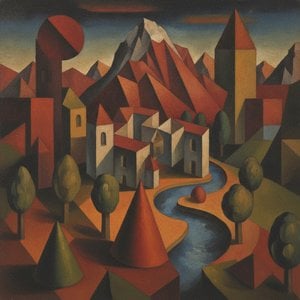
Musical instruments and Fruit

Explore Georges Braque’s ‘Musical Instruments & Fruit,’ a Cubist still life showcasing fragmented forms & dramatic lighting. Discover this iconic artwork's geometric abstraction.

Erkunden Sie das Leben und Werk von Georges Braque (1882-1963), eine Schlüsselgestalt der Malerei des 20. Jahrhunderts. Pionier des Kubismus an der Seite Picassos, bekannt für Fauvismus, Collagen und innovative geometrische Formen. Entdecken Sie sein Erbe bei WahooArt!

Giclée / Kunstdruck

Giclée- oder Leinwanddruck in Museumsqualität mit schneller Produktion und flexiblen Veredelungsoptionen. ( Handgemalte Reproduktion kaufen Zum digitalen Bild wechseln)

P118B $10
P118H $10
P118W $10
P438Z $10
P508JH $12
P508YH $12
P805H $10
P805Z $10
P919BZ $10
P919G $10
P919XJ $10
P959ZH $10
P968JZ $12
W106C $8
W218G $10
W218JH $8
W218Y $10
W307PJ $10
W316G $10
W316PJ $8
W316Y $10
W398PJ $8
W4111J $10
W500HY $15
W500JH $15
W692G $12
W849H $8
W940BG $15
W953PJ $8

Standardformat
individuell anpassbar
CM
INCH

Wählen Sie aus unseren vordefinierten Formaten, die den ursprünglichen Proportionen des Kunstwerks entsprechen.

Breite
Höhe

Sie können Ihre eigenen Maße eingeben, um ein bestimmtes Format oder einen speziellen Platz einzupassen. Wenn das von Ihnen gewählte Format nicht den Proportionen des Originalbildes entspricht, werden wir das Kunstwerk entweder beschneiden oder das Bild mit einem gespiegelten oder einfarbigen Rand erweitern. Ein digitaler Entwurf wird Ihnen zur Genehmigung zugesandt, bevor die Produktion beginnt.
Bitte beachten Sie, dass die Vorschau auf dem Bildschirm nicht den tatsächlichen Zuschnitt oder die Erweiterung widerspiegelt. Nur der Entwurf zeigt die endgültige Komposition präzise an.
Obwohl Sondermaße verfügbar sind, empfehlen wir die Auswahl eines Maßes aus der vordefinierten Liste, um die ursprünglichen Proportionen zu bewahren.

Weltweiter Versand () innerhalb von 2 Wochen statt der üblichen 4/5 Wochen. (19 September)

why_choose_icon
Kostenloser weltweiter Expressversand
why_choose_icon
Hochwertige Leinenleinwand
why_choose_icon
Vollständiger Versicherungsschutz beim Versand
why_choose_icon
Zollgebühren-Rückerstattungsgarantie
why_choose_icon
Garantie für exakte Farbtreue
why_choose_icon
100-tägiges Rückgaberecht (nur bei Mängeln)
why_choose_icon
100% Geld-zurück-Garantie
why_choose_icon
Angebot für Mengenrabatt

Gesamtpreis

$ 68

reproduction

Musical instruments and Fruit

Giclée / Kunstdruck

Format der Reproduktion

-

Gesamtpreis

$ 68

Kurzübersicht

  • Location: Tate Modern, London
  • Medium: Oil on canvas
  • Title: Musical Instruments and Fruit
  • Year: 1927
  • Influences: Cézanne
  • Movement: Cubism
  • Artist: Georges Braque

Kunst-Quiz

Jede Frage hat nur eine richtige Antwort.

Frage 1:
What artistic movement is most closely associated with Georges Braque’s ‘Musical Instruments and Fruit’?
Frage 2:
The painting utilizes a fragmented perspective, characteristic of which art movement?
Frage 3:
What is the primary subject matter depicted in ‘Musical Instruments and Fruit’?
Frage 4:
Based on the image description, what is a prominent feature of the lighting in ‘Musical Instruments and Fruit’?
Frage 5:
Which artist is most closely associated with Georges Braque, particularly during the development of Cubism?

A Fragmented World: The Genesis of Cubism

Georges Braque's "Musical Instruments and Fruit" isn’t merely a still life; it’s a carefully orchestrated dismantling of perception, a visual embodiment of the revolutionary ideas taking shape in early 20th-century Paris. Painted in 1927, during a period of intense collaboration with Pablo Picasso, this work represents a pivotal moment in the development of Cubism – an artistic movement that sought to redefine how we see and represent reality. The canvas isn’t concerned with replicating a single, unified view; instead, it presents multiple viewpoints simultaneously, as if peering through fractured lenses at a commonplace scene. This deliberate fragmentation reflects the burgeoning anxieties and intellectual shifts of the era, mirroring a world grappling with rapid industrialization, technological advancements, and a growing sense of instability.

Braque’s approach was deeply rooted in Cézanne's geometric explorations, particularly his emphasis on analyzing objects into their fundamental forms. Cézanne’s influence is palpable in the painting’s flattened perspective and the reduction of recognizable elements – the bowl, the sheet of paper, the draped cloth – to a series of interlocking planes and angles. This isn’t an attempt at photographic realism; rather, it's a conscious rejection of traditional representation, prioritizing the exploration of form, space, and the very nature of seeing itself. The muted color palette—primarily ochres, browns, and grays—further enhances this sense of detachment from the tangible world, contributing to the painting’s contemplative mood.

The Language of Geometry: Form and Structure

The composition is dominated by a rigorous geometric vocabulary. Rectangular blocks define the table and its contents, while triangular shapes suggest the contours of the fruit bowl and draped cloth. These forms aren't smoothly blended; they are sharply delineated, creating a dynamic tension between solidity and instability. Notice how Braque uses overlapping planes to create an illusion of depth – not through linear perspective, but by layering geometric shapes that seem to shift and rearrange themselves before your eyes. This technique is central to Cubism’s challenge to traditional spatial representation, forcing the viewer to actively engage with the painting and reconstruct its form in their mind.

  • The Bowl of Fruit: Representing abundance and fertility, the fruit itself becomes a collection of fragmented shapes, mirroring the overall fractured composition.
  • The Sheet of Paper: Suggests intellectual activity and documentation – perhaps reflecting Braque’s own role as an artist documenting his explorations of form.
  • The Draped Cloth: Adds a layer of complexity to the arrangement, its folds and creases contributing to the overall sense of dynamism and instability.

Musicality in Monochrome: Symbolism and Emotion

Beyond its purely formal qualities, “Musical Instruments and Fruit” resonates with a subtle emotional depth. The inclusion of musical instruments – specifically a mandolin – introduces an element of melody and rhythm into the composition. This suggests that Braque wasn’t simply interested in dissecting objects; he was also exploring their inherent relationships and the ways they could evoke feelings and associations. The painting's title itself hints at this interplay between visual form and auditory experience, inviting the viewer to imagine a silent symphony of shapes and colors.

Furthermore, the still life genre traditionally held symbolic weight, often representing the five senses. Braque’s choice to depict fruit and musical instruments aligns with this tradition, suggesting an exploration of pleasure, nourishment, and artistic creation. The muted color palette contributes to a sense of quiet contemplation, inviting viewers to reflect on the beauty and complexity of everyday objects.

A Legacy in Fragments: Reproduction and Interpretation

Reproductions of “Musical Instruments and Fruit” offer a remarkable opportunity to appreciate Braque’s groundbreaking innovations. The painting's fragmented composition and geometric forms are particularly well-suited to digital reproduction, allowing viewers to examine the intricate details of its construction. Whether displayed in a modern interior or a dedicated art gallery, this work continues to challenge our perceptions of reality and inspire new ways of seeing the world – a testament to Braque’s enduring legacy as one of the most influential artists of the 20th century.


Biografie des Künstlers

**frühes Leben und Ausbildung**

Georges Braque, ein prominenter französischer Maler, Kollagist, Bleistrichzeichner, Grafiker und Bildhauer, wurde am 13. Mai 1882 in Argenteuil, Val-d'oise, geboren. Er wuchs in Le Havre auf und erhielt zunächst eine Ausbildung als Hausmaler und Dekorateur wie sein Vater und Großvater. Braques künstlerische Neigungen führten ihn jedoch dazu, von 1897 bis 1899 an der École des Beaux-Arts in Le Havre Malerei zu studieren.

**Künstlerische Entwicklung und Fauvisme**

Im Jahr 1902, nachdem er seine Lehre bei einem Dekorateur in Paris abgeschlossen hatte, besuchte Braque bis 1904 die Académie Humbert. Dieser Zeitraum markierte seine Einführung ins Fauvismus, einen Stil, der durch lebendige Farben und emotionale Reaktionen gekennzeichnet ist. Beeinflusst von den Werken von Henri Matisse und André Derain, übernahm Braque einen fauvistischen Ansatz, wie in seinem Gemälde The Patience (Fauvismus, Öl auf Leinwand).

**Beitrag zum Kubismus**

Braques Zusammenarbeit mit Pablo Picasso von 1908 bis 1912 führte zur Entwicklung des Kubismus. Ihre analytischen kubistischen Werke, wie z.B. Georges Braque: The Patience und Pablo Picasso: Clarinet(analytischer Kubismus, Öl auf Leinwand), gelten heute als Meilensteine der Kunstgeschichte.

**Erbe und bemerkenswerte Werke**

* Houses at L'Estaques: Ein Zeugnis für Braques innovatives Einsatz von Geometrie und simultaner Perspektive. * The Patience(Fauvismus, Öl auf Leinwand): Demonstriert Braques fauvistischen Stil. * Clarinet(analytischer Kubismus, Öl auf Leinwand): Eine kollaborative kubistische Arbeit mit Picasso.

**Museen und Sammlungen**

* Musée d'Orsay: Bietet eine umfangreiche Sammlung impressionistischer und postimpressionistischer Kunst, darunter Werke von Braque. * Musée de l'Orangerie: Zeigt eine breite Palette von Kunstwerken, darunter Werke von Braque und anderen bedeutenden Künstlern.
  • Erfahren Sie mehr über Georges Braques Leben und Werk auf WahooArt.com
  • Entdecken Sie die Sammlung des Musée d'Orsay, die Werke von Braque und anderen Künstlern umfasst, unter Musée d'Orsay - Wikipedia
  • Erfahren Sie mehr über den Fauvismus und seinen Einfluss auf die Entwicklung des Kubismus mit Fauvismus Kunstbewegung auf WahooArt.com
**Georges Braques innovative Stil und seine Zusammenarbeit mit Pablo Picasso inspirieren weiterhin Künstler und Kunstliebhaber.**
Georges Braque

Georges Braque

1882 - 1963 , Frankreich

Eckdaten zum Künstler

  • Beeinflusste Künstler: ['Pablo Picasso']
  • Bemerkenswerte Werke:
    • Häuser in L'Estaque
    • Die Geduld (Fauvismus)
    • Stillleben mit Pfeife
    • Mandola
  • Einflussreiche Künstler:
    • Henri Matisse
    • André Derain
    • Paul Cézanne
  • Geburtsdatum: 13. Mai 1882
  • Geburtsort: Argenteuil, Frankreich
  • Künstlerischer Stil: Kubismus, Fauvismus
  • Nationalität: Französisch
  • Sterbedatum: 1963
  • Vollständiger Name: Georges Braque
Entdecken Sie Kunstwerke, die nach Themen, Stilen und Merkmalen sortiert sind.