


x


 Druck bestellen Bild kaufen
 Versenden
 Details
 Zu Favoriten hinzufügen
 Herunterladen
 Ähnliche Objekte
 X-Ray
X-Ray
 Diashow anzeigen
Handgemaltes Ölgemälde auf Leinwand in Ihrer Wunschgröße und mit Rahmen, auf Bestellung von unseren Künstlern angefertigt.
Wählen Sie aus unseren vordefinierten Größen, die den ursprünglichen Proportionen des Kunstwerks entsprechen.

Sie können Ihre eigenen Maße eingeben, um einen bestimmten Rahmen oder Platz auszufüllen. Wenn die gewählte Größe nicht den Proportionen des Originalbildes entspricht, werden wir das Kunstwerk entweder beschneiden oder das Gemälde durch zusätzliche, handgemalte Elemente erweitern. Ein digitales Mockup wird Ihnen zur Genehmigung zugesandt, bevor die Produktion beginnt.
Bitte beachten Sie, dass die Bildschirmvorschau nicht die tatsächliche Beschneidung oder Erweiterung widerspiegelt. Nur das Mockup zeigt die endgültige Komposition exakt an.
Obwohl Sondermaße verfügbar sind, empfehlen wir, eine Größe aus der vordefinierten Liste zu wählen, um die ursprünglichen Proportionen beizubehalten.
Weltweiter Versand () in nur 3 bis 4 Wochen statt der üblichen 5 Wochen. (1 Juli). Keine Kompromisse bei der Qualität.


Marsh Mallow
Größe der Reproduktion


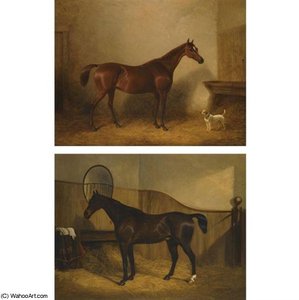


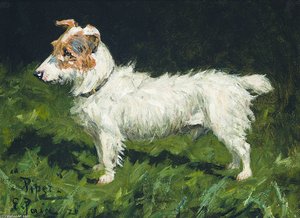


The name George Thomas Paice (1854 – 1925) might not immediately resonate with contemporary art enthusiasts, yet his legacy endures through a remarkable collection of paintings that offer intimate glimpses into the world of Victorian England’s gentry. Often described as a “sporting artist” and an “animal painter,” Paice wasn't a grand salon figure; he largely operated within the private commissions of wealthy patrons, ensuring his work remained largely absent from public exhibitions for decades. This relative obscurity only adds to the allure of his art – a quiet testament to a skilled observer and a sensitive interpreter of the British countryside and its beloved animals.
Born in Pimlico, London, Paice’s artistic journey began with formal training at the Heatherley School of Fine Art and later at the Royal Academy. However, he quickly established his own distinct style, moving beyond purely academic landscapes to focus on capturing the essence of canine companionship and the thrill of hunting – subjects deeply intertwined with the social fabric of the era. His early years were marked by a dedication to honing his craft, meticulously studying anatomy and light to achieve an astonishing level of realism in his depictions of horses and dogs.
Paice’s career was largely defined by private commissions, primarily from landed families and wealthy sportsmen. These weren't grand historical paintings intended for public display; rather, they were intimate portraits designed to adorn the walls of country houses – a reflection of the owner’s pursuits and passions. His subjects ranged from majestic hunters in full stride to loyal setters patiently awaiting the master’s command, each painting imbued with a sense of immediacy and emotion. The fact that his work rarely appeared in public galleries speaks volumes about the exclusivity of his clientele and the private nature of his artistic practice.
His patrons included some of England's most prominent families, including Lady Margaret Cecil, whose collection housed several of Paice’s works. These commissions demanded a keen understanding of both animal behavior and the social customs of the time. Paice wasn’t simply rendering an image; he was capturing a moment in a carefully constructed narrative – a scene that spoke to the values and traditions of his wealthy patrons.
Paice's paintings are characterized by their remarkable detail and sensitivity. He possessed an extraordinary ability to capture the texture of fur, the gleam of sunlight on muscle, and the subtle nuances of expression in his animal subjects. His brushwork is often described as loose and expressive, yet always meticulously controlled – a testament to years of dedicated practice. He favored a muted palette of earthy tones—browns, greens, and ochres—that effectively conveyed the atmosphere of the British countryside.
Beyond realism, Paice’s work possesses an undeniable warmth and charm. His paintings aren't merely depictions of animals; they are imbued with affection and respect for his subjects. He skillfully captured their personalities – a playful terrier, a stoic hunter, a loyal companion—transforming them into enduring symbols of loyalty and companionship.
Despite his relative obscurity during his lifetime, George Paice’s paintings have gained increasing recognition in recent decades. Several works emerged from private collections and were exhibited at the Royal Academy and the Royal Society of British Artists, attracting attention from art historians and collectors alike. The rediscovery of his work has revealed a significant contribution to Victorian art – a quiet but powerful voice that captured the essence of a bygone era.
Today, Paice’s paintings are housed in museums and private collections around the world, offering a unique window into the lives and passions of England's upper class. His legacy as a master of canine and sporting art endures, reminding us of the enduring appeal of animals and the timeless beauty of the British countryside.

1854 - 1925 , United Kingdom

Explore the rich history & techniques of oil painting! Discover Renaissance masters, scientific principles behind color, and emotional resonance in art. Learn about glazing, layering, and atmospheric perspective – a guide for enthusiasts & collectors.

Entdecken Sie das Werk von George Barret der Ältere, einem Pionier der britischen Landschaftsmalerei! Erfahren Sie mehr über seinen pastoralen Stil, Einfluss und die Entwicklung des Genres. Kunstgeschichte für Kenner.

Entdecken Sie das faszinierende Werk von John Frederick Lewis! Wir analysieren seinen Orientalismus, Detailreichtum und seine Genremalerei im Kontext des 19. Jahrhunderts. Expertenwissen zur britischen Kunstgeschichte.

Entdecken Sie die 10 legendärsten Öl auf Leinwand Meisterwerke! Von Van Gogh bis Monet – erfahren Sie die Geschichten hinter ikonischen Gemälden und lassen Sie sich von Kunstgeschichte inspirieren. Hochwertige Reproduktionen für Ihr Zuhause finden Sie auf .

Explore the captivating world of James Ward (1769-1859), a master of British Romantic landscape & animal painting. Discover his iconic 'Gordale Scar' and exquisite portraits – a timeless art investment. Learn about his influences, style, and enduring legacy.


Bleiben Sie über die neuesten Kunstnachrichten, exklusive Angebote und Dekorationsideen auf dem Laufenden.
Erzählen Sie uns von Ihrem Projekt und unsere Kunstexperten erstellen für Sie 3 personalisierte Kunstvorschläge.
Wir kuratieren 3 Optionen exklusiv für Sie – kostenlos!
 Teilen


 Weiterlesen




































 Die Glasoption ist nur in Größen unter 110 cm verfügbar.


