Frühes Leben und Ausbildung
Frans David Oerder, ein renommierter in den Niederlanden geborener südafrikanischer Maler von Landschaften, Stillleben und Porträts sowie Radierer und Lithograf, wurde 1867 in Rotterdam geboren. Als jüngstes von sieben Kindern des städtischen Angestellten Johannes Carolus Oerder wuchs er in einer Umgebung auf, die später seine künstlerische Präzision prägen sollte. Von 1880 bis 1885 vertiefte Oerder sein Talent an der
Rotterdam Academy, wo er mit der prestigeträchtigen King William III Goldmedaille und einem Stipendium ausgezeichnet wurde.
Künstlerische Laufbahn in Südafrika
Im Jahr 1890 wagte Oerder den Aufbruch in die Südafrikanische Republik, wo er zunächst als Hausmaler und Dekorateur tätig war. Seine frühen Arbeiten führten ihn entlang der Eisenbahnlinie von Delagoa Bay, wo er Telegrafenmasten malte. In den 1890er Jahren nahm Oerder eine seltene Stellung ein: Er war einer von nur drei Künstlern in ganz Südafrika mit einer anerkannten professionellen Ausbildung. Diese Expertise führte ihn zur Position eines Kunstlehrers an der Staatsmeisjesskool und ermöglichte es ihm, ein eigenes Atelier in der Church Street East zu unterhalten. Mit dem Ausbruch des Anglo-Boerischen Krieges im Jahr 1899 erreichte seine Karriere einen historischen Höhepunkt, als er von Präsident Paul Kruger zum offiziellen Kriegskünstler ernannt wurde. Seine Skizzen und Gemälde aus dieser bewegten Ära sind heute kostbare Zeugnisse der Geschichte und befinden sich im
War Museum in Bloemfontein, im
Africana Museum in Johannesburg sowie in der Kunstsammlung der
University of Pretoria.
Späteres Leben und Rückkehr in die Niederlande
Die Zeit nach dem Krieg war für Oerder von Reisen und neuen künstlerischen Eindrücken geprägt; er malte entlang der ostafrikanischen Küste, eine Reise, die ihn jedoch auch schwer an Malaria erkranken ließ. Im Jahr 1908 kehrte er über Italien in seine Heimat zurück. Er ließ sich zunächst in Brabant nieder, bevor sein Weg ihn nach Amsterdam führte, wo er 1910 die Malerin
Gerda Pitlo heiratete.
Vermächtnis und bedeutende Werke
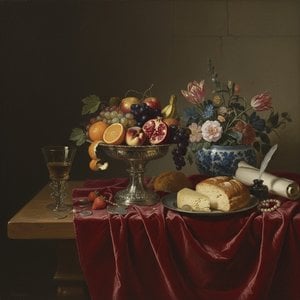
Oerders künstlerisches Erbe ist durch ikonische Meisterwerke geprägt, allen voran sein Gemälde „Magnolias“. Dieses Werk wurde an die New York Graphic Society verkauft, wurde zu einem der populärsten Bilder seiner Zeit und erzielte Rekordverkäufe für die Gesellschaft. Neben seiner Fähigkeit, die Natur einzufangen, war er auch für seine Porträtkunst geschätzt, was sich in bedeutenden Aufträgen wie dem Porträt von
Jan Smuts widerspiegelt.
Fazit
Frans David Oerder, ein niederländisch geborener Meister der südafrikanischen Landschafts-, Stillleben- und Porträtmalerei, hat die Kunstwelt unauslöschlich geprägt. Sein Leben, gezeichnet von den Zyklen von Krieg und Reise, ist ein Zeugnis seiner Resilienz und seines künstlerischen Genies. Durch seine Werke, die auf WahooArt.com zur Ansicht und zum Kauf bereitstehen, lebt Oerders Vermächtnis weiter und wird Kunstliebhaber auf der ganzen Welt weiterhin inspirieren und fesseln.



 In echtem Maßstab anzeigen
 Zum Druck wechseln
 Versenden als Grußkarte
 Teilen
 Details anzeigen

 Herunterladen
 Ähnliche Objekte
 Röntgenaufnahme
 Diashow
 Besucherstatistiken


 Mehr anzeigen






































 Die Glasoption ist nur für Größen unter 110 cm verfügbar.