
Vorschau anzeigen In AR ansehen Handgemalte Reproduktion bestellen Zum digitalen Bild wechseln Versenden
Details anzeigen Leitfaden Zu Favoriten hinzufügen Herunterladen Ähnliche Objekte Röntgenaufnahme Diashow Fragen & Antworten Präsentation herunterladen Statistiken

Landscape at Polling

Explore 'Landscape at Polling' by Frank Duveneck (1876). A Romantic landscape featuring a flooded river & serene valley. Oil on canvas, evocative mood & atmospheric perspective.

Entdecken Sie Frank Duveneck (1848-1919), Schlüsselfigur des amerikanischen Realismus! Dunkle Porträts & Genreszenen, beeinflusst von Frans Hals – Alltag mit beeindruckender Realität.

Giclée / Kunstdruck

Giclée- oder Leinwanddruck in Museumsqualität mit schneller Produktion und flexiblen Veredelungsoptionen. ( Handgemalte Reproduktion bestellen Zum digitalen Bild wechseln)

Corner sample of the P118B picture frame: formgepresstes Polystyrol, 5 cm wide and 3 cm thick
P118B €10
Corner sample of the P118H picture frame: formgepresstes Polystyrol, 5 cm wide and 3 cm thick
P118H €10
Corner sample of the P118W picture frame: formgepresstes Polystyrol, 5 cm wide and 3 cm thick
P118W €10
Corner sample of the P438Z picture frame: formgepresstes Polystyrol, 5.5 cm wide and 3.5 cm thick
P438Z €10
Corner sample of the P508JH picture frame: formgepresstes Polystyrol, 7 cm wide and 3.5 cm thick
P508JH €12
Corner sample of the P508YH picture frame: formgepresstes Polystyrol, 7 cm wide and 3.5 cm thick
P508YH €12
Corner sample of the P805H picture frame: formgepresstes Polystyrol, 5 cm wide and 3.5 cm thick
P805H €10
Corner sample of the P805Z picture frame: formgepresstes Polystyrol, 5 cm wide and 3.5 cm thick
P805Z €10
Corner sample of the P919BZ picture frame: formgepresstes Polystyrol, 7 cm wide and 3.5 cm thick
P919BZ €10
Corner sample of the P919G picture frame: formgepresstes Polystyrol, 7 cm wide and 3.5 cm thick
P919G €10
Corner sample of the P919XJ picture frame: formgepresstes Polystyrol, 7 cm wide and 3.5 cm thick
P919XJ €10
Corner sample of the P959ZH picture frame: formgepresstes Polystyrol, 5 cm wide and 3 cm thick
P959ZH €10
Corner sample of the P968JZ picture frame: formgepresstes Polystyrol, 6 cm wide and 4 cm thick
P968JZ €12
Corner sample of the W106C picture frame: Massivholz, 5 cm wide and 3 cm thick
W106C €8
Corner sample of the W218G picture frame: Massivholz, 5 cm wide and 3 cm thick
W218G €10
Corner sample of the W218JH picture frame: Massivholz, 5 cm wide and 3 cm thick
W218JH €8
Corner sample of the W218Y picture frame: Massivholz, 5 cm wide and 3 cm thick
W218Y €10
Corner sample of the W307PJ picture frame: Massivholz, 6 cm wide and 3 cm thick
W307PJ €10
Corner sample of the W316G picture frame: Massivholz, 6 cm wide and 3 cm thick
W316G €10
Corner sample of the W316PJ picture frame: Massivholz, 6 cm wide and 3 cm thick
W316PJ €8
Corner sample of the W316Y picture frame: Massivholz, 6 cm wide and 3 cm thick
W316Y €10
Corner sample of the W398PJ picture frame: Massivholz, 5 cm wide and 3 cm thick
W398PJ €8
Corner sample of the W4111J picture frame: Massivholz, 6.5 cm wide and 3.5 cm thick
W4111J €10
Corner sample of the W500HY picture frame: Massivholz, 7 cm wide and 5 cm thick
W500HY €15
Corner sample of the W500JH picture frame: Massivholz, 7 cm wide and 5 cm thick
W500JH €15
Corner sample of the W692G picture frame: Massivholz, 8 cm wide and 4 cm thick
W692G €12
Corner sample of the W849H picture frame: Massivholz, 5 cm wide and 3 cm thick
W849H €8
Corner sample of the W940BG picture frame: Massivholz, 7.5 cm wide and 4.5 cm thick
W940BG €15
Corner sample of the W953PJ picture frame: Massivholz, 6 cm wide and 3.5 cm thick
W953PJ €8

Standardformat
individuell anpassbar
CM
INCH

Wählen Sie aus unseren vordefinierten Formaten, die den ursprünglichen Proportionen des Kunstwerks entsprechen.

Breite
Höhe

Geben Sie die benötigte Breite und Höhe an, damit der Druck perfekt in Ihren Rahmen oder an Ihre Wand passt. Ein Druck kann nur beschnitten, aber niemals größer als das Originalbild angefertigt werden; daher verliert ein Format mit anderen Proportionen einen Teil des Bildes. Wir senden Ihnen ein digitales Mockup zur Freigabe, bevor wir den Druck ausführen. Das auf dieser Seite gezeigte Bild zeigt nicht den tatsächlichen Beschnitt – dies ist nur im Mockup ersichtlich.

Weltweiter Versand () innerhalb von 2 Wochen statt der üblichen 4/5 Wochen. (12 November)

Kostenloser weltweiter Expressversand
Hochwertige Leinenleinwand
Umfassender Versicherungsschutz beim Versand
Zollgebühren-Rückerstattungsgarantie
Garantie für exakte Farbtreue
100 Tage Rückgaberecht (nur bei Mängeln)
100% Geld-zurück-Garantie
Mengenrabatt verfügbar

Gesamtpreis

€ 62

Landscape at Polling

Giclée / Kunstdruck

Format der Reproduktion

-

Endpreis

€ 62

Eckdaten

  • Year: 1876
  • Subject or theme: River Valley Landscape
  • Notable elements or techniques: Loose brushwork, Atmospheric perspective
  • Artistic style: Expressive
  • Movement: Romanticism

Landscape at Polling

The canvas breathes with an understated grandeur – Landscape at Polling by Frank Duveneck (1876), a painting that transcends mere depiction, immersing the viewer in a poignant meditation on beauty and loss amidst the turbulent currents of Victorian England. Situated in Covington, Kentucky, Duveneck’s formative years were marked by profound sorrow; his father succumbed to cholera shortly after birth, shaping him into an artist acutely attuned to the fragility of life and the enduring power of memory. This familial tragedy undoubtedly fueled a dedication to capturing emotion on canvas, resulting in works that resonate with palpable sincerity. The artwork itself presents a panoramic vista of a river valley bathed in diffused twilight. Dominating the composition is a wide expanse of water – likely the Ohio River – reflecting the overcast sky and punctuated by partially submerged boats, hinting at recent flooding events prevalent during Duveneck’s era. Scattered along the riverbank are figures—likely villagers—adding scale to the scene and grounding it in the everyday realities of rural life. A stately church spire rises from the distant hills, a symbol of faith and permanence against the backdrop of transient natural forces. Duveneck's stylistic approach firmly anchors Landscape at Polling within the Romantic tradition. Loose brushstrokes dominate the surface, prioritizing expressive gesture over meticulous detail—a hallmark of the movement’s desire to convey feeling rather than simply representing observation. The artist skillfully employs atmospheric perspective, layering colors and textures to create a convincing illusion of depth, mirroring the grandeur of the natural world while simultaneously conveying an underlying melancholy. Light plays a crucial role in establishing mood; its soft diffusion contributes to a contemplative atmosphere, inviting contemplation on themes of vulnerability and resilience. Technically, Duveneck executed Landscape at Polling using oil paint on canvas—a medium favored by Romantic artists for its ability to capture nuanced tonal variations and luminous effects. The artist’s meticulous layering of pigment builds up texture, simulating the roughness of the hillside terrain and the shimmering surface of the river water. Careful blending ensures harmonious color transitions, reinforcing the painting's overall mood. Beyond its aesthetic qualities, Landscape at Polling carries significant symbolic weight. The flooded landscape serves as a poignant reminder of mortality—a visual metaphor for confronting inevitable hardship with grace and fortitude. Simultaneously, the church spire symbolizes spiritual solace and enduring faith, offering a counterpoint to the pervasive gloom. Duveneck’s masterful rendering captures not only the beauty of the natural world but also its capacity to inspire profound emotional responses. It remains an evocative testament to Romantic idealism and a captivating glimpse into the artistic sensibilities of a bygone era—a piece destined to resonate with collectors and interior designers alike who appreciate art that speaks to the human condition.

Fragen & Antworten

Welcher Raum eignet sich aufgrund der Farben von "Landscape at Polling" von Frank Duveneck am besten?

Die Neutrals-Farben von "Landscape at Polling" von Frank Duveneck passen perfekt zum empfohlenen Raum: einem Living Room.

Ist "Landscape at Polling" im Heimatland seines Künstlers verblieben?

Nein – das Kunstwerk wird im Ausland aufbewahrt. Frank Duveneck wurde in Vereinigte Staaten geboren, während sich das Museum, das das Original von „Landscape at Polling“ beherbergt, in Vereinigte Staaten von Amerika befindet.

Welche Druckgröße wird für "Landscape at Polling" von Frank Duveneck empfohlen?

Für "Landscape at Polling" von Frank Duveneck wird eine Reproduktion im Format Large empfohlen. Die Größe kann angepasst werden, wobei die Proportionen erhalten bleiben.

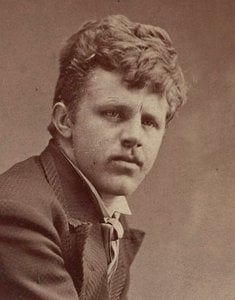
Künstlerbiografie

Frühes Leben und Ausbildung

Frank Duveneck, geboren als Frank Decker, war ein bedeutender Vertreter der amerikanischen Kunstszene. Er erblickte am 9. Oktober 1848 in Covington, Kentucky, das Licht der Welt. Sein Vater, Bernhard Decker, ein deutscher Einwanderer, verstarb bereits früh, und seine Mutter heiratete später Joseph Duveneck. Diese familiäre Herkunft prägte Duvenecs künstlerische Entwicklung maßgeblich. Schon mit 15 Jahren begann er unter Johann Schmitt, einem lokalen Maler, sein Studium, und wurde anschließend bei einer deutschen Firme für Kirchenausmaler ausgebildet. Diese frühen Erfahrungen legten den Grundstein für seinen späteren Erfolg.

Künstlerische Entwicklung und bedeutende Werke

Im Jahr 1869 reiste Duveneck nach München, um an der Königlichen Akademie in München bei Wilhelm von Diez und Wilhelm Leibl zu studieren. Dieser Aufenthalt markierte eine entscheidende Wendung in seinem Stil hin zu einem dunklen, realistischen und direkten Malansatz. Zu seinen bekanntesten Werken zählen:
  • Lady with Fan (1873), das seine Verbundenheit mit der dunklen Palette und den kraftvollen Pinselstrichen von Frans Hals widerspiegelt.
  • The Whistling Boy (1872), ein weiteres Beispiel seines frühen, ausdrucksstarken Stils.
  • The Cobbler's Apprentice (1877), Öl auf Leinwand, heute im Taft Museum of Art in Cincinnati, Ohio.

Lehre und Vermächtnis

Im Jahr 1878 eröffnete Duveneck eine Schule in München und später in Polling, Bayern. Seine Schüler, bekannt als die "Duveneck Boys", umfassten John Twachtman, Otto Bacher, Julius Rolshoven und John White Alexander. Nach seiner Rückkehr in Amerika unterrichtete Duveneck an der Art Academy of Cincinnati. Zu seinen bedeutenden Schülern gehörten Ida Holterhoff Holloway, John Christen Johansen, M. Jean McLane, Edward Charles Volkert, Russel Wright, Charles Mills sowie Herman und Bessie Wessel.

Späteres Leben und Tod

Frank Duveneck verstarb am 3. Januar 1919 in Covington, Kentucky. Seine Werke sind heute in verschiedenen Museen zu finden, darunter das Metropolitan Museum of Art in New York City, die National Gallery of Art in Washington, D.C., und das Cincinnati Art Museum.

Einflüsse und Bedeutung

Duveneck wurde stark von Frans Hals beeinflusst, was sich in seinen losen Pinselstrichen und der Verwendung dunkler Töne zeigt. Er trug maßgeblich zur Entwicklung des amerikanischen Realismus bei und gilt als einer der wichtigsten Vertreter dieser Kunstrichtung. Seine Betonung auf die Darstellung des Alltagslebens mit realistischer Detailgenauigkeit und emotionaler Tiefe machte ihn zu einem bedeutenden Künstler seiner Zeit. Sein Einfluss auf nachfolgende Generationen von Künstlern ist unbestreitbar, insbesondere durch seine Lehrtätigkeit und die zahlreichen Schüler, die er ausbildete.
Frank Duveneck

Frank Duveneck

1848 - 1919 , Vereinigte Staaten

Kurzinfos

  • Beeinflusste Künstler:
    • John Twachtman
    • Otto Bacher
    • Julius Rolshoven
  • Bemerkenswerte Werke:
    • Lady with Fan (1873)
    • The Whistling Boy (1872)
    • The Cobbler’s Apprentice (1877)
  • Geburtsdatum: 09. Oktober 1848
  • Geburtsort: Covington, USA
  • Künstlerische Einflüsse:
    • Frans Hals
    • Wilhelm von Diez
    • Gustave Courbet
  • Künstlerische Richtung: Amerikaner Realismus
  • Nationalität: Amerikanisch
  • Todatum: 03. Januar 1919
  • Vollständiger Name: Frank Duveneck
Entdecken Sie Kunstwerke, die nach Themen, Stilen und Merkmalen sortiert sind.


































