In echtem Maßstab anzeigen In AR an der Wand sehen Handgemalte Reproduktion kaufen Zum digitalen Bild wechseln Versenden als Grußkarte
Details anzeigen Leitfaden öffnen Zu Favoriten hinzufügen Herunterladen Ähnliche Objekte Röntgenaufnahme Diashow Besucherstatistiken

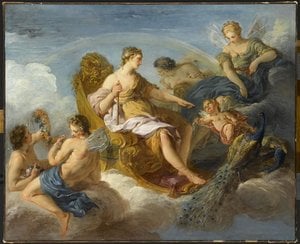
The Bather

Admire François Lemoyne's 'The Bather,' a captivating Rococo masterpiece showcasing classical beauty and serene landscapes. Explore the artistry & details of this iconic Hermitage Museum painting.

Entdecken Sie François Lemoyne (1688-1737), einen bedeutenden französischen Rokoko-Maler, berühmt für seine prachtvollen Deckenfresken & mythologischen Szenen! Erkunden Sie sein Erbe.

Giclée / Kunstdruck

Giclée- oder Leinwanddruck in Museumsqualität mit schneller Produktion und flexiblen Veredelungsoptionen. ( Handgemalte Reproduktion kaufen Zum digitalen Bild wechseln)

Corner sample of the P118B picture frame: formgepresstes Polystyrol, 5 cm wide and 3 cm thick
P118B €10
Corner sample of the P118H picture frame: formgepresstes Polystyrol, 5 cm wide and 3 cm thick
P118H €10
Corner sample of the P118W picture frame: formgepresstes Polystyrol, 5 cm wide and 3 cm thick
P118W €10
Corner sample of the P438Z picture frame: formgepresstes Polystyrol, 5.5 cm wide and 3.5 cm thick
P438Z €10
Corner sample of the P508JH picture frame: formgepresstes Polystyrol, 7 cm wide and 3.5 cm thick
P508JH €12
Corner sample of the P508YH picture frame: formgepresstes Polystyrol, 7 cm wide and 3.5 cm thick
P508YH €12
Corner sample of the P805H picture frame: formgepresstes Polystyrol, 5 cm wide and 3.5 cm thick
P805H €10
Corner sample of the P805Z picture frame: formgepresstes Polystyrol, 5 cm wide and 3.5 cm thick
P805Z €10
Corner sample of the P919BZ picture frame: formgepresstes Polystyrol, 7 cm wide and 3.5 cm thick
P919BZ €10
Corner sample of the P919G picture frame: formgepresstes Polystyrol, 7 cm wide and 3.5 cm thick
P919G €10
Corner sample of the P919XJ picture frame: formgepresstes Polystyrol, 7 cm wide and 3.5 cm thick
P919XJ €10
Corner sample of the P959ZH picture frame: formgepresstes Polystyrol, 5 cm wide and 3 cm thick
P959ZH €10
Corner sample of the P968JZ picture frame: formgepresstes Polystyrol, 6 cm wide and 4 cm thick
P968JZ €12
Corner sample of the W106C picture frame: Massivholz, 5 cm wide and 3 cm thick
W106C €8
Corner sample of the W218G picture frame: Massivholz, 5 cm wide and 3 cm thick
W218G €10
Corner sample of the W218JH picture frame: Massivholz, 5 cm wide and 3 cm thick
W218JH €8
Corner sample of the W218Y picture frame: Massivholz, 5 cm wide and 3 cm thick
W218Y €10
Corner sample of the W307PJ picture frame: Massivholz, 6 cm wide and 3 cm thick
W307PJ €10
Corner sample of the W316G picture frame: Massivholz, 6 cm wide and 3 cm thick
W316G €10
Corner sample of the W316PJ picture frame: Massivholz, 6 cm wide and 3 cm thick
W316PJ €8
Corner sample of the W316Y picture frame: Massivholz, 6 cm wide and 3 cm thick
W316Y €10
Corner sample of the W398PJ picture frame: Massivholz, 5 cm wide and 3 cm thick
W398PJ €8
Corner sample of the W4111J picture frame: Massivholz, 6.5 cm wide and 3.5 cm thick
W4111J €10
Corner sample of the W500HY picture frame: Massivholz, 7 cm wide and 5 cm thick
W500HY €15
Corner sample of the W500JH picture frame: Massivholz, 7 cm wide and 5 cm thick
W500JH €15
Corner sample of the W692G picture frame: Massivholz, 8 cm wide and 4 cm thick
W692G €12
Corner sample of the W849H picture frame: Massivholz, 5 cm wide and 3 cm thick
W849H €8
Corner sample of the W940BG picture frame: Massivholz, 7.5 cm wide and 4.5 cm thick
W940BG €15
Corner sample of the W953PJ picture frame: Massivholz, 6 cm wide and 3.5 cm thick
W953PJ €8

Standardformat
individuell anpassbar
CM
INCH

Wählen Sie aus unseren vordefinierten Formaten, die den ursprünglichen Proportionen des Kunstwerks entsprechen.

Breite
Höhe

Geben Sie die Breite und die Höhe an, die Sie benötigen, damit der Druck perfekt in Ihren Rahmen oder an Ihre Wand passt. Ein Druck kann nur beschnitten werden und niemals größer als das Originalbild gemacht werden; daher verliert ein Format mit einer anderen Proportion einen Teil des Bildes. Wir senden Ihnen ein digitales Mockup zur Freigabe, bevor wir den Druck ausführen. Das auf dieser Seite gezeigte Bild zeigt nicht den tatsächlichen Beschnitt – dies ist nur im Mockup ersichtlich.

Weltweiter Versand () innerhalb von 2 Wochen statt der üblichen 4/5 Wochen. (23 Oktober)

Kostenloser weltweiter Expressversand
Hochwertige Leinenleinwand
Vollständiger Versicherungsschutz beim Versand
Zollgebühren-Rückerstattungsgarantie
Garantie für exakte Farbtreue
100-tägiges Rückgaberecht (nur bei Mängeln)
100% Geld-zurück-Garantie
Angebot für Mengenrabatt

Gesamtpreis

€ 60

The Bather

Giclée / Kunstdruck

Format der Reproduktion

-

Gesamtpreis

€ 60

Kurzübersicht

  • Subject or theme: Nude bathing scene
  • Artist: François Lemoyne
  • Movement: Rococo
  • Medium: Oil on canvas
  • Dimensions: 137 x 105 cm

Kunst-Quiz

Jede Frage hat nur eine richtige Antwort.

Frage 1:
What artistic movement is most closely associated with François Lemoyne’s ‘The Bather’?
Frage 2:
In the painting 'The Bather', what is depicted in the background landscape?
Frage 3:
According to the description, what is a key characteristic of Lemoyne’s style as demonstrated in ‘The Bather’?
Frage 4:
What year was François Lemoyne born?
Frage 5:
The painting ‘The Bather’ is housed in which museum?

François Lemoyne’s “The Bather”: A Baroque Embrace of Form and Nature

François Lemoyne's "The Bather," housed within the venerable halls of the Hermitage Museum in St. Petersburg, is more than a simple depiction of two women enjoying a tranquil moment; it’s a masterful distillation of 18th-century Rococo aesthetics, imbued with the grandeur and intellectual depth sought by its creator. Painted around the mid-1720s, this oil on canvas work offers a glimpse into a world where classical ideals intertwined with the burgeoning sensuality of the era, showcasing Lemoyne’s skill in capturing both human form and the harmonious relationship between figure and landscape.

Lemoyne, born in Paris in 1688, was a dedicated revivalist. He sought to resurrect the monumental allegorical paintings that had fallen out of favor since the time of Charles Le Brun, viewing himself as a worthy successor to this illustrious tradition. Unlike mere decorative works, Lemoyne aimed for pieces possessing significant intellectual weight and emotional resonance – a reflection of the complex spirit of the Rococo period while simultaneously drawing upon the stability and balance of classical art. The painting’s composition immediately establishes this duality; the figures are presented within a carefully constructed natural setting, yet their poses and gazes convey a subtle interplay of observation and intimacy.

A Study in Drapery and Light

The immediate impact of “The Bather” lies in its exquisite rendering of form and texture. Lemoyne’s mastery of drapery is particularly noteworthy. The flowing garments enveloping the figures are not merely decorative; they actively contribute to the sense of movement and life within the scene. Each fold, pleat, and drape appears sculpted with meticulous detail, suggesting a tactile quality that invites the viewer to almost reach out and feel the fabric’s weight and texture. This is further enhanced by Lemoyne's skillful use of light and shadow – a hallmark of Baroque technique—which models the curves of the bodies and creates a sense of depth within the landscape.

The background, depicting a serene woodland scene with trees and foliage rendered in soft blues and greens, provides a tranquil counterpoint to the figures. The sky, dotted with clouds, reinforces this atmosphere of peaceful contemplation. Notice how Lemoyne subtly integrates the natural elements into the composition; the branches of the trees frame the women, creating a sense of enclosure and intimacy while simultaneously emphasizing their connection to the surrounding environment. Research reveals that Lemoyne’s time in Venice and Rome profoundly influenced his approach, evident in the vibrant local colors used to depict the foliage – a departure from the more muted palettes often favored in Parisian art at the time.

Symbolism and the Rococo Ideal

While seemingly simple in its subject matter, “The Bather” is rich in symbolic potential. The act of bathing itself held multiple meanings during the 18th century – representing purification, renewal, and a connection to nature. The two women, positioned in close proximity yet engaged in distinct activities, invite speculation about their relationship. One appears to be lost in thought, while the other observes her companion with a gentle curiosity. This subtle dynamic speaks to the complexities of human interaction and the enduring fascination with the mysteries of the female psyche – themes frequently explored within the Rococo style.

The painting’s overall mood is one of understated elegance and quiet beauty. It's a testament to Lemoyne’s ability to capture not just the physical likeness of his subjects, but also their inner lives—a skill that cemented his place as a significant figure in the transition from Baroque formality to the more playful sensibilities of the Rococo era. WahooArt offers meticulously crafted hand-painted reproductions that faithfully recreate this exquisite work, allowing you to experience its timeless beauty and intellectual depth firsthand.

Bringing “The Bather” Home

Reproductions of "The Bather" by WahooArt are available in a range of sizes, ensuring that you can find the perfect piece to complement your interior design. Whether adorning a formal salon or adding a touch of classical grace to a more casual space, this painting’s serene beauty and masterful technique will undoubtedly captivate viewers for years to come. Explore our collection today and bring a touch of 18th-century French artistry into your home.

Fragen & Antworten

Welche Farbe sticht in "The Bather" am meisten hervor?

Die dominante Farbe von "The Bather" von François Lemoyne ist Espresso (#5a4933).

Welche Farbpalette und welches Gefühl vereint "The Bather"?

Die Earthy-Palette von "The Bather" von François Lemoyne harmoniert mit seinem Tranquil emotionalen Tonfall. Farbe ist eine der Arten und Weisen, wie ein Werk Gefühle vermittelt.

Befindet sich "The Bather" im Land seines Schöpfers?

Nein – das Kunstwerk wird im Ausland aufbewahrt. Das Geburtsland von François Lemoyne ist Frankreich, und das Museum, das das Original von „The Bather“ beherbergt, befindet sich in Russia.


Biografie des Künstlers

François Lemoyne: Ein Leben im Rokoko

  • Geboren: Paris, Frankreich (1688)
  • Gestorben: 4. Juni 1737

François Lemoyne war ein bedeutender französischer Rokokomaler des frühen bis mittleren 18. Jahrhunderts. Er ist bekannt für seine großartigen allegorischen Deckenfresken und mythologischen Szenen und leistete damit einen wesentlichen Beitrag zur künstlerischen Landschaft unter der Herrschaft von Ludwig XV. Obwohl er oft im Schatten seiner Zeitgenossen wie Boucher und Watteau stand, bemühte sich Lemoyne, sich als Erbe Charles Le Bruns zu etablieren, einer führenden Figur in der französischen Kunstgeschichte.

Frühes Leben und Ausbildung

  • Ausbildung: Lemoyne studierte zunächst bei seinem Stiefvater Robert le Vrac.
  • Académie Royale: Er absolvierte von 1701 an eine formelle Ausbildung an der Académie Royale de peinture et de sculpture, wo er bei Louis Galloche und später unter der Leitung von Pierre-Jacques Cazes studierte. Der Einfluss von Cazes ist besonders in Lemoynes Farbgebung zu bemerken.
  • Prix de Rome: 1711 erreichte er einen bedeutenden Meilenstein, indem er den Prix de Rome gewann, eine Auszeichnung, die typischerweise eine Reise nach Italien für künstlerische Studien gewährte. Aufgrund finanzieller Einschränkungen konnte er diese Gelegenheit jedoch nicht sofort nutzen.

Künstlerische Entwicklung und Einflüsse

  • Italienischer Einfluss: Lemoynes spätere Reise nach Italien im Jahr 1723/24, begleitet von François Berger, erwies sich als entscheidend. Er studierte die Werke von Raphael, Correggio und Tizian und absorbierte italienische künstlerische Techniken und Ästhetik.
  • Rubens' Einfluss: Ein starker Einfluss auf Lemoyne war das Werk von Peter Paul Rubens, insbesondere in seiner lebhaften Farbgebung und dynamischen Kompositionen deutlich erkennbar.
  • Venetianische Schule: Die Auseinandersetzung mit der venezianischen Malerei, insbesondere innerhalb der Sammlung von Pierre Crozat, prägte seine künstlerische Stilrichtung weiter.
  • Rokoko-Stil: Obwohl er von früheren Meistern beeinflusst war, gehörte Lemoynes Werk fest zur Rokoko-Periode, die durch Eleganz, Ornamentik und einen Fokus auf dekorative Schönheit gekennzeichnet ist.

Wichtige Werke und Errungenschaften

  • Deckenfresken: Lemoyne ist am besten bekannt für seine monumentalen Deckenfresken, insbesondere L'Apothéose d'Hercule (Die Apotheose des Herkules) im Salon d’Hercule im Schloss Versailles. Diese Arbeit demonstrierte seine Meisterschaft in illusionistischen Techniken und wurde von Zeitgenossen wie Voltaire und Kardinal Fleury hoch gelobt.
  • Religiöse Gemälde: Er schuf auch bedeutende religiöse Werke, wie Die Verklärung im Chor der Jacobin Kirche (heute Parish Church of St. Thomas d’Aquin) in Paris.
  • Premier peintre du Roi: 1736 erreichte Lemoyne den Höhepunkt seiner Karriere, indem er zum Premier peintre du roi (Erster Maler des Königs) unter Ludwig XV ernannt wurde.

Historische Bedeutung und Vermächtnis

François Lemoyne spielte eine entscheidende Rolle bei der Gestaltung der französischen Rokoko-Malerei. Sein Ziel war es, die Tradition großformatiger allegorischer Deckenfresken wiederzubeleben, die aus dem Mode gekommen waren. Obwohl seine Karriere durch seinen Selbstmord im Jahr 1737 tragisch beendet wurde, hinterließ sein Werk einen bleibenden Eindruck auf nachfolgende Generationen von Künstlern.

  • Einfluss auf Schüler: Lemoyne unterrichtete bedeutende Künstler wie Charles-Joseph Natoire und François Boucher und vermittelte so sein künstlerisches Wissen und beeinflusste ihre Entwicklung.
  • Niedergang der Deckenmalerei: Sein Tod markierte das Ende einer Ära, die mit dem Rückgang der Beliebtheit großer allegorischer Deckenfresken zusammenfiel.
  • Anerkennung heute: Obwohl er vielleicht nicht so bekannt ist wie einige seiner Zeitgenossen, werden Lemoynes Beiträge zur französischen Rokoko-Kunst zunehmend für seine technische Fertigkeit und künstlerische Ambition geschätzt.
François Lemoyne

François Lemoyne

1688 - 1737 , Frankreich

Eckdaten zum Künstler

  • Beeinflusste Künstler:
    • Charles Le Brun
    • Peter Paul Rubens
  • Bemerkenswerte Werke:
    • L'Apothéose d'Hercule
    • Die Verklärung
  • Geburtsdatum: 1688
  • Geburtsort: Paris, Frankreich
  • Künstlerische Richtung: Rokoko-Malerei
  • Nationalität: Französisch
  • Todatum: 1737
  • Vollständiger Name: François Lemoyne
  • Von Künstlern Beeinflusst:
    • François Boucher
    • Charles-Joseph Natoire
Entdecken Sie Kunstwerke, die nach Themen, Stilen und Merkmalen sortiert sind.