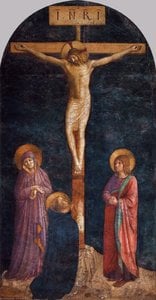
Fra Angelico's "Christ in Limbo" – A Symphony of Faith and Light
Fra Angelico’s “Christ in Limbo” stands as an unparalleled achievement of Early Renaissance art, residing within the serene walls of San Marco Convent in Florence. Created between 1441 and 1442, this fresco transcends mere visual representation; it embodies a profound theological contemplation meticulously rendered with breathtaking artistry—a testament to Fra Angelico’s unwavering devotion and mastery.
Historical Context: The Florentine Renaissance Spirit
The artwork emerged during the burgeoning Early Renaissance in Florence, an era characterized by a fervent revival of classical ideals alongside humanist thought. Fra Angelico, deeply rooted in Dominican spirituality, infused his artistic practice with this intellectual fervor. Unlike many contemporaries preoccupied with grand narratives and dramatic portrayals, he prioritized spiritual purity and grace—a stylistic choice that profoundly shaped the fresco’s aesthetic.
Artistic Style: Delicate Beauty and Precise Detail
Fra Angelico's style is instantly recognizable for its ethereal luminosity and exquisite attention to detail. He eschewed excessive ornamentation, favoring instead a restrained palette of pastel hues—primarily blues, greens, and reds—that evoke a sense of tranquility and reverence. The artist’s meticulous technique—painting directly onto wet plaster—allowed him to achieve remarkable textural nuances and luminous effects, capturing the subtle interplay of light and shadow with unparalleled skill.
Symbolism: A Theological Narrative Illuminated
"Christ in Limbo" is laden with symbolic significance, reflecting the core tenets of Christian theology. The central figure of Christ dominates the composition, radiating divine grace as he breaks through a rocky barrier—a visual metaphor for overcoming death and sin. Surrounding him are figures emerging from darkness—righteous souls awaiting salvation—represented by Abraham, Moses, and David—symbols of Old Testament patriarchs who foreshadowed Christ’s triumph over mortality. The demons fleeing in terror underscore the victory of divine power over evil, while the radiant light emanating from Christ symbolizes God's love and promise of eternal life.
Emotional Impact: Contemplation and Spiritual Resonance
Fra Angelico’s masterful execution transcends mere visual beauty; it evokes a palpable emotional response. The serene expressions on the figures convey reverence and awe, inviting viewers into a meditative state—a reflection of the fresco's purpose as an instrument of spiritual contemplation within the San Marco Convent. The luminous colors and delicate brushstrokes contribute to this profound emotional resonance, capturing the essence of faith and inspiring admiration for the artist’s genius.
Technique: Fresco Painting – A Legacy of Brilliance
The fresco technique—applying pigment onto wet plaster—was paramount to Fra Angelico's success. This method ensured exceptional durability and vibrancy, preserving the artwork’s colors and textures for centuries. The artist skillfully manipulated light and shadow, creating depth and dimensionality that further enhanced the fresco’s visual impact. His meticulous layering of pigments resulted in a surface finish that is remarkably smooth and luminous—a testament to his unparalleled technical prowess.



 Zu Druck wechseln
 Versenden
 Teilen
 Details anzeigen

 Herunterladen
 Ähnliche Objekte
 Diashow
 Statistiken

 Weiterlesen






































 Die Glasoption ist nur für Größen unter 110 cm verfügbar.