Vorschau anzeigenVorschau anzeigen In AR erlebenIn AR erleben Handgemalte Reproduktion bestellen Handgemalte Reproduktion bestellenZum digitalen Bild wechseln Zum digitalen Bild wechseln VersendenVersenden
Details anzeigenDetails anzeigen Zu Favoriten hinzufügen Zu Favoriten hinzufügen HerunterladenHerunterladen Ähnliche ObjekteÄhnliche Objekte RöntgenaufnahmeRöntgenaufnahme DiashowDiashow StatistikenStatistiken

Annunciation

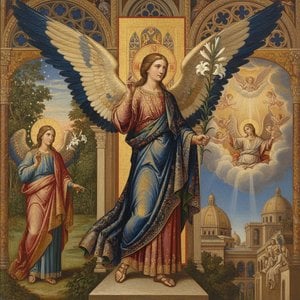
Filippino Lippi’s stunning Annunciation fresco captures the High Renaissance dialogue of faith with masterful detail and harmonious composition. This 1489 masterpiece depicting Mary's miraculous conception showcases Lippi’s skill and invites you to own a piece of art history.

Entdecken Sie Filippino Lippi (1457-1504)! Meisterwerke der Hochrenaissance, ausdrucksstarke Madonnen & Kollaborationen mit Botticelli. Einblicke in sein Leben & Werk.

Giclée / Kunstdruck

Giclée- oder Leinwanddruck in Museumsqualität mit schneller Produktion und flexiblen Veredelungsoptionen. (Handgemalte Reproduktion bestellen Handgemalte Reproduktion bestellenZum digitalen Bild wechseln Zum digitalen Bild wechseln)

P118B $10
P118H $10
P118W $10
P438Z $10
P508JH $12
P508YH $12
P805H $10
P805Z $10
P919BZ $10
P919G $10
P919XJ $10
P959ZH $10
P968JZ $12
W106C $8
W218G $10
W218JH $8
W218Y $10
W307PJ $10
W316G $10
W316PJ $8
W316Y $10
W398PJ $8
W4111J $10
W500HY $15
W500JH $15
W692G $12
W849H $8
W940BG $15
W953PJ $8

Standardformat
individuell anpassbar
CM
INCH

Wählen Sie aus unseren vordefinierten Formaten, die den ursprünglichen Proportionen des Kunstwerks entsprechen.

Breite
Höhe

Sie können Ihre eigenen Maße eingeben, um ein bestimmtes Format oder einen speziellen Platz einzupassen. Wenn das von Ihnen gewählte Format nicht den Proportionen des Originalbildes entspricht, werden wir das Kunstwerk entweder beschneiden oder das Bild mit einem gespiegelten oder einfarbigen Rand erweitern. Ein digitaler Entwurf wird Ihnen zur Genehmigung zugesandt, bevor die Produktion beginnt.
Bitte beachten Sie, dass die Vorschau auf dem Bildschirm nicht den tatsächlichen Zuschnitt oder die Erweiterung widerspiegelt. Nur der Entwurf zeigt die endgültige Komposition präzise an.
Obwohl Sondermaße verfügbar sind, empfehlen wir die Auswahl eines Maßes aus der vordefinierten Liste, um die ursprünglichen Proportionen zu bewahren.

Weltweiter Versand () innerhalb von 2 Wochen statt der üblichen 4/5 Wochen. (12 September)

why_choose_icon
Kostenloser weltweiter Expressversand
why_choose_icon
Hochwertige Leinenleinwand
why_choose_icon
Umfassender Versicherungsschutz beim Versand
why_choose_icon
Zollgebühren-Rückerstattungsgarantie
why_choose_icon
Garantie für exakte Farbtreue
why_choose_icon
100-Tage-Rückgaberecht (nur bei Mängeln)
why_choose_icon
100% Geld-zurück-Garantie
why_choose_icon
Mengenrabatt verfügbar

Gesamtpreis

$ 68

reproduction

Annunciation

Giclée / Kunstdruck

Format der Reproduktion

-

Gesamtpreis

$ 68

Eckdaten

  • Notable elements or techniques: Detailed architectural setting; Perspective
  • Movement: High Renaissance
  • Title: Annunciation
  • Location: National Gallery, London
  • Subject or theme: Religious iconography; Divine communication
  • Artist: Filippino Lippi
  • Influences: Masaccio

Kunst-Quiz

Jede Frage hat nur eine richtige Antwort.

Frage 1:
What is the title of this artwork?
Frage 2:
Where was Filippino Lippi's masterpiece, 'Annunciation,' originally located?
Frage 3:
Who commissioned the frescoes in Santa Maria sopra Minerva?
Frage 4:
What artistic style is predominantly represented in 'Annunciation'?
Frage 5:
The painting utilizes perspective to create a sense of depth. What architectural element contributes significantly to this effect?

A Divine Encounter in Fresco

In the hallowed stillness of Santa Maria sopra Minerva in Rome, a profound theological drama unfolds upon the walls. Filippino Lippi’s Annunciation is not merely a painting; it is a window into a moment where the celestial and the terrestrial collide. Completed in 1489, during the luminous height of the Medici era, this masterpiece captures the precise instant the Archangel Gabriel delivers his divine message to the Virgin Mary. The scene is bathed in a sense of sacred gravity, inviting the viewer to witness a dialogue of faith that has resonated through the centuries. As one gazes upon the fresco, the architectural grandeur of Florentine-style columns and arches creates a stage of immense dignity, framing a narrative that feels both intimately human and cosmically significant.

The composition is a masterclass in High Renaissance equilibrium. At the heart of this sacred space stands Mary, her presence anchored by the weight of her blue robes, which provide a striking, soulful contrast to the warm, earthy tones of the surrounding architecture. She is depicted with a serene, contemplative grace, her attention captured by the angelic visitor. Gabriel, descending with a gesture of reverence and reassurance, brings with him the symbolic lily—a delicate emblem of purity and divine grace that pierts the solemnity of the scene with its ethereal lightness. The artist’s use of perspective draws the eye deep into the painted space, making the viewer feel less like an observer and more like a silent participant in this miraculous visitation.

Mastery of Technique and Symbolism

Lippi’s technical prowess is evident in the meticulous way he employs the fresco technique to achieve depth and luminosity. The interplay of light and shadow across the architectural elements suggests a tangible, three-dimensional reality, a hallmark of the Renaissance pursuit of naturalism. Every detail, from the intricate folds of the drapery to the scholarly figure seated at a desk in the background, is rendered with an exacting precision that speaks to the artist's devotion. This secondary figure, engaged in quiet intellectual discourse, adds a layer of humanistic depth to the work, suggesting that the divine announcement is not just a religious event, but one that invites profound meditation and scholarly reflection.

For the discerning collector or interior designer, this artwork offers more than mere decoration; it provides an atmosphere of timeless elegance and spiritual introspection. The palette, dominated by rich ochres, deep blues, and soft terracottas, possesses a sophisticated warmth that can anchor a room with a sense of history and prestige. Whether displayed as a focal point in a grand library or as a contemplative piece in a private sanctuary, a high-quality reproduction of this fresco brings the intellectual rigor and emotional depth of the Italian Renaissance into the modern home. It is an invitation to surround oneself with beauty that transcends the ephemeral, celebrating a legacy of artistic innovation and enduring faith.


Über den Künstler

Frühe Jahre und Ausbildung

  • Geboren: April 1457, Prato, Italien
  • Gestorben: April 1504
  • Eltern: Fra Filippo Lippi (Maler) und Lucrezia Buti
  • Filippino war der uneheliche Sohn eines renommierten Malers.
  • Die frühe Ausbildung unter seinem Vater legte den Grundstein für seine künstlerische Karriere.

Künstlerische Laufbahn und Entwicklung

  • Frühe Periode (1475-1480): Anfängliche Werke, wie Madonnen, zeigten einen weniger verfeinerten Stil. Diese wurden zunächst einem anonymen Künstler namens "amico di Sandro" zugeschrieben.
  • Entwicklung (1480-1485): Entwicklung eines persönlichen und effektiven Ansatzes in Werken wie den *Reisen des Tobias*.
  • Maturität (1485-1504): Beherrschung des Hochrenaissance-Stils, veranschaulicht durch die *Erscheinung Christi der Jungfrau*.

Hauptwerke und Kollaborationen

  • Zusammenarbeit mit Perugino, Ghirlandaio und Botticelli an Fresken in Lorenzos de' Medicis Villa.
  • Vollendung der unvollendeten Dekoration von Masaccio in der Brancacci-Kapelle zusammen mit Masolino.
  • Bemerkenswerte Werke sind: *Die Krönung der Jungfrau*, *Tobias und der Engel*, *St. Hieronymus* und *Szene aus dem Leben des Heiligen Thomas*.

Einflüsse und künstlerischer Stil

  • Frühe Einflüsse: Sandro Botticelli, Fra Filippo Lippi.
  • Stileigenschaften: Animierte Form und Linie, warmer Kolorit, detaillierte Landschaften, ausdrucksstarke Figuren und eine Mischung aus Perspektivgeometrie mit intimen Innenräumen.
  • Römische Altertümer: Studien nach römischen Altertümern während seiner Zeit in Rom beeinflussten seine Arbeit und integrierten einen antiken Wortschatz in seine Kunst.

Historische Bedeutung und Vermächtnis

  • Ein führender florentinischer Vertreter der Tradition großer Freskenzyklen.
  • Sein Einfluss auf die Hochrenaissance ist unbestreitbar.
  • Werke sind in Museen auf der ganzen Welt zu finden, darunter in der Uffizien-Galerie in Florenz.
  • Bekannt dafür, die Kluft zwischen früheren Renaissance-Stilen und der entstehenden Hochrenaissance-Ästhetik zu überbrücken.
Filippino Lippi

Filippino Lippi

1457 - 1504 , Italien

Kurzinfos

  • Beeinflusste Künstler:
    • Fra Filippo Lippi
    • Sandro Botticelli
  • Bemerkenswerte Werke:
    • Coronation of the Virgin
    • Tobias and the Angel
    • St Jerome
  • Geburtsdatum: April 1457
  • Geburtsort: Prato, Italien
  • Künstlerische Richtung: Hochrenaissance
  • Nationalität: Italienisch
  • Sterbedatum: April 1504
  • Vollständiger Name: Filippino Lippi
  • Von Künstlern Beeinflusst: ['Masaccio']
Entdecken Sie Kunstwerke, die nach Themen, Stilen und Merkmalen sortiert sind.