Kostenlose Kunstberatung

x
Gemälde kaufen Gemälde kaufenBild kaufen Bild kaufen VersendenVersenden
DetailsDetails Zu Favoriten hinzufügen Zu Favoriten hinzufügen HerunterladenHerunterladen Ähnliche ObjekteÄhnliche Objekte RöntgenaufnahmeRöntgenaufnahme Diashow anzeigenDiashow anzeigen

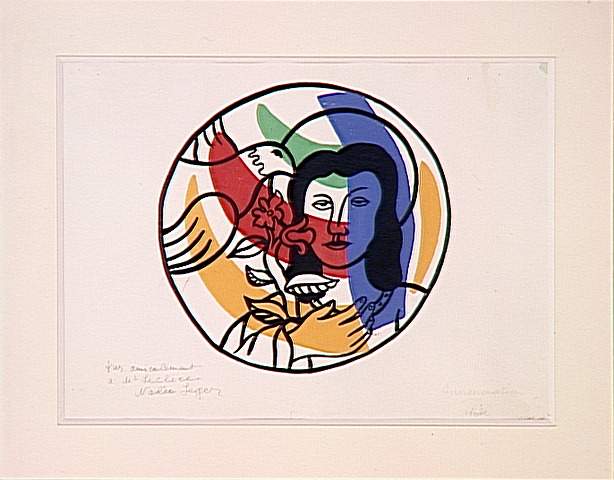
The Annunciation

Fernand Léger’s ‘The Annunciation’ presents a strikingly modern interpretation of the classic biblical scene with dynamic forms and symbolic details. This 1950s artwork captures the spirit of the machine age through bold abstraction, inviting you to discover this unique piece.

Erkunden Sie die Kunst von Fernand Léger (1881-1955), einem Pionier des Kubismus und der 'Tubism'. Entdecken Sie seine mutigen, figurativen Gemälde, die das moderne Leben, Maschinen und die menschliche Form feiern. Ein Vorläufer des Pop Art!

Giclée / Kunstdruck

Giclée- oder Leinwanddruck in Museumsqualität mit schneller Produktion und flexiblen Veredelungsoptionen.

P118B $10
P118H $10
P118W $10
P438Z $10
P508JH $12
P508YH $12
P805H $10
P805Z $10
P919BZ $10
P919G $10
P919XJ $10
P959ZH $10
P968JZ $12
W106C $8
W218G $10
W218JH $8
W218Y $10
W307PJ $10
W316G $10
W316PJ $8
W316Y $10
W398PJ $8
W4111J $10
W500HY $15
W500JH $15
W692G $12
W849H $8
W940BG $15
W953PJ $8

Standard
custom
CM
INCH

Wählen Sie aus unseren vordefinierten Größen, die den ursprünglichen Proportionen des Kunstwerks entsprechen.

Breite
Höhe

Sie können Ihre eigenen Maße eingeben, um ein bestimmtes Format oder einen speziellen Platz einzupassen. Wenn das von Ihnen gewählte Format nicht den Proportionen des Originalbildes entspricht, werden wir das Kunstwerk entweder beschneiden oder das Bild mit einem gespiegelten oder einfarbigen Rand erweitern. Ein digitaler Entwurf wird Ihnen zur Genehmigung zugesandt, bevor die Produktion beginnt.
Bitte beachten Sie, dass die Vorschau auf dem Bildschirm nicht den tatsächlichen Zuschnitt oder die Erweiterung widerspiegelt. Nur der Entwurf zeigt die endgültige Komposition präzise an.
Obwohl Sondermaße verfügbar sind, empfehlen wir die Auswahl eines Maßes aus der vordefinierten Liste, um die ursprünglichen Proportionen zu bewahren.

Weltweiter Versand () innerhalb von 2 Wochen statt der üblichen 4/5 Wochen. (3 Juli)

why_choose_icon
Kostenloser weltweiter Expressversand
why_choose_icon
Hochwertige Leinenleinwand
why_choose_icon
Umfassender Versicherungsschutz beim Versand
why_choose_icon
Zollsteuer-Rückerstattungsgarantie
why_choose_icon
Garantie für echte Farbtreue
why_choose_icon
60-Tage-Rückgaberecht (nur bei Mängeln)
why_choose_icon
100% Geld-zurück-Garantie
why_choose_icon
Mengenrabatt verfügbar

Gesamtpreis

-

reproduction

The Annunciation

Giclée / Kunstdruck

Größe der Reproduktion

-

Endpreis aller Optionen

-

Eckdaten auf einen Blick

  • Influences: Georges Braque
  • Movement: Cubism
  • Artistic style: Naive Art
  • Medium: Oil on Canvas
  • Notable elements or techniques: Tubism, Geometric abstraction
  • Title: The Annunciation
  • Subject or theme: Religious Iconography

Kunst-Quiz

Jede Frage hat nur eine richtige Antwort.

Frage 1:
What artistic style is Fernand Léger’s ‘The Annunciation’ primarily associated with?
Frage 2:
The painting depicts a biblical scene featuring Mary receiving news from the angel Gabriel. What is this event known as?
Frage 3:
What prominent symbol appears in the image, representing time and its influence on human experience?
Frage 4:
Fernand Léger’s approach to portraying modern life differed from many of his contemporaries. How did he characterize his artistic vision?
Frage 5:
What is the dominant color scheme used in ‘The Annunciation’?

Beschreibung des Sammlerstücks

A Moment of Divine Revelation: Léger's "The Annunciation"

Fernand Léger’s “The Annunciation,” rendered in a striking 52 x 40 cm format, offers a uniquely modern interpretation of a timeless biblical narrative. This artwork transcends the traditional devotional painting, presenting a dynamic and powerfully abstracted depiction of the angel Gabriel's announcement to Mary – a moment pregnant with spiritual significance and imbued with Léger’s signature fascination for the geometry of industrial forms. Dating from an unknown period within his prolific career (1881-1955), the piece exemplifies Léger’s revolutionary approach, blending elements of Cubism with a deeply felt connection to the natural world.

  • Subject Matter: The Annunciation – the pivotal moment when the angel Gabriel reveals to Mary that she will conceive and bear the Son of God.
  • Style: Léger’s distinctive “Tubism” is immediately apparent, characterized by fragmented forms, geometric shapes, and a deliberate flattening of perspective. While retaining recognizable figures—a woman holding a child and an angel with expansive wings – they are rendered through a vocabulary of interlocking planes and angular lines.
  • Technique: Executed in oil on canvas, the painting showcases Léger’s meticulous brushwork and his masterful control of color. The palette is dominated by blues and earthy tones, creating a sense of both serenity and underlying tension.

Decoding the Symbolism

Beyond its formal qualities, “The Annunciation” is rich in symbolic meaning, reflecting Léger’s broader concerns about humanity's relationship with technology and the natural world. The central figures – the woman representing Mary and the angel embodying divine grace – are presented not as idealized representations but as constructed forms, echoing the machine-like structures that Léger admired. The inclusion of birds, scattered throughout the composition, adds another layer of interpretation, perhaps symbolizing freedom, spirituality, or the connection between earthly and heavenly realms. Notably, a clock is positioned near the top right corner, a recurring motif in Léger’s work, serving as a visual reminder of time's relentless passage and the significance of this historical moment. The other three figures add to the complexity of the scene, possibly representing humanity's role within this divine narrative.

Historical Context & Léger’s Vision

Created during a period of rapid industrialization and social change in early 20th-century France, “The Annunciation” reflects Léger’s broader artistic project – to capture the spirit of modernity. He rejected the prevailing trend towards pure abstraction, arguing that artists should engage with the tangible realities of their time, particularly the impact of machines on human life. Léger believed in a synthesis of form and function, seeking to find beauty and harmony within the seemingly chaotic world of industry. This piece stands as a testament to his belief that even sacred narratives could be reinterpreted through a distinctly modern lens.

Emotional Impact & Artistic Value

“The Annunciation” is more than just a beautiful artwork; it’s an invitation to contemplate profound questions about faith, humanity, and the relationship between art and technology. Léger's bold use of form and color creates a powerful emotional impact, drawing the viewer into the scene and prompting reflection on its symbolic layers. This hand-painted reproduction offers a unique opportunity to own a piece of art history – a testament to Fernand Léger’s genius and his enduring vision of a world transformed by modernity. Its size (52 x 40 cm) makes it suitable for a variety of interior design settings, from contemporary living rooms to art galleries.


Biografie des Künstlers

frühes Leben und Ausbildung

Fernand Légér, ein französischer Maler, Bildhauer und Filmemacher, wurde am 4. Februar 1881 in Argentan, Orne, Niedergermanien geboren. Sein Vater züchtete Rinder, und Légér erhielt zunächst eine Ausbildung als Architekt von 1897 bis 1899. Er zog dann im Jahr 1900 nach Paris und unterstützte sich dort als Architektenzeichner.

Künstlerische Entwicklung

Légers frühe Werke wurden vom Impressionismus beeinflusst, wie in Le Jardin de ma Mère (Mein Muttergarten) (1905) zu sehen ist. Nach dem Besuch der Schule für dekorative Künste und der Académie Julian begann er ab seinem 25. Lebensjahr ernsthaft als Maler zu arbeiten. Sein Stil entwickelte sich zu einer persönlichen Form des Kubismus, der von Kritikern als "Tubism" bezeichnet wurde, da er sich auf zylindrische Formen konzentrierte.

Kubismus und die Puteaux-Gruppe

Im Jahr 1910 stellte Légér im Salon d’Automne zusammen mit Jean Metzinger und Henri Le Fauconnier aus. Er schloss sich der Puteaux-Gruppe an, auch bekannt als die Section d’Or (die Goldene Proportion), zusammen mit anderen Künstlern wie Francis Picabia und Marcel Duchamp.

Krieg und seine Auswirkungen auf Légers Werk

Légers Erfahrungen im Ersten Weltkrieg hatten einen erheblichen Einfluss auf sein Werk. Während seiner Zeit an der Front produzierte er Skizzen von Artilleriegeschützen, Flugzeugen und Soldaten. Sein Gemälde Soldat mit Pfeife (1916) spiegelt diese Zeit wider.

Spätere Werke und Vermächtnis

Légers Nachkriegszeitliche Arbeiten, die von glatten, maschinellen Formen geprägt waren, verknüpften ihn mit der Tradition der französischen figurativen Malerei. Seine "animierten Landschaften" von 1921 zeigten Figuren und Tiere in harmonischen, stromlinienförmigen Formen. Schlüsselwerke: Museen, die Légers Werk ausstellen:
Fernand Léger

Fernand Léger

1881 - 1955 , Frankreich

Kurzinfos

  • Beeinflusste Kunstrichtungen: ['Pop Art']
  • Beeinflusste Künstler: ['Paul Cézanne']
  • Bemerkenswerte Werke:
    • Die Sitzende Frau
    • Maschinenelement
    • Der Große Umzug
    • Die Stadt
  • Geburtsdatum: 04. Februar 1881
  • Geburtsort: Argentan, Frankreich
  • Künstlerische Richtung: Kubismus, Tubismus
  • Nationalität: Französisch
  • Sterbedatum: 1955
  • Vollständiger Name: Fernand Léger
  • Von Kunstbewegungen Beeinflusst: ['Cézannismus']
  • Von Künstlern Beeinflusst: ['Impressionismus']
Entdecken Sie Kunstwerke, die nach Themen, Stilen und Merkmalen sortiert sind.