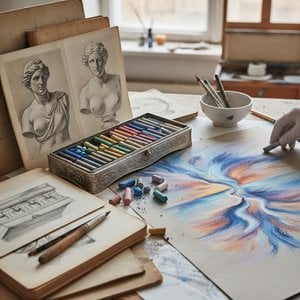
A Window into a Sacred Moment: Federico Barocci’s Composition Study
Federico Fiori Barocci's "Composition Study (for ‘Circumcision’, Paris, musée du Louvre)” isn’t merely a preparatory sketch; it’s a profound distillation of the artist’s vision for a monumental work depicting a pivotal scene from biblical history. Completed around 1590, this drawing offers an intimate glimpse into Barocci's meticulous process and reveals a remarkable sensitivity to light, gesture, and the emotional weight of the subject matter – the Circumcision of Isaac. It’s a piece that transcends its status as a study, becoming a miniature masterpiece in itself, brimming with the artist’s characteristic blend of Renaissance restraint and burgeoning Baroque dynamism.

The Master’s Technique: Pastel and the Dawn of a New Era
Barocci's masterful use of pastel is immediately striking. The delicate washes of color – ranging from soft pinks and blues to earthy browns and ochres – create an ethereal atmosphere, imbuing the scene with a sense of otherworldly grace. Unlike the heavier pigments favored by his predecessors, Barocci embraced the pastel’s ability to capture subtle nuances of light and shadow, producing effects that shimmer and glow. This technique wasn't simply a matter of preference; it was revolutionary. Barocci is widely considered one of the earliest artists to fully exploit the medium’s potential, paving the way for its later adoption by Rubens and other Baroque masters. The drawing itself demonstrates this – the layering of pastel creates an incredible depth and luminosity, capturing the texture of fabrics, skin tones, and even the rough surface of the stone altar.
- Pastel Layering: Barocci’s technique involved building up layers of pastel to achieve complex color gradations.
- Light & Shadow: The subtle shifts in tone create a remarkable sense of volume and depth.
- Emotional Resonance: The soft, luminous quality contributes significantly to the drawing's evocative power.
A Scene of Ritual and Reverence
The composition itself is carefully constructed, guiding the viewer’s eye through the scene with a masterful understanding of perspective and spatial relationships. The figures are arranged in a dynamic yet balanced manner, creating a sense of movement and drama. The central focus is clearly Isaac, bathed in a soft light that highlights his youthful vulnerability. Around him gather the key participants – Abraham, his aged servant, and the sacrificial animal. Note the meticulous detail with which Barocci renders each figure’s expression—a mixture of solemnity, reverence, and perhaps even apprehension. The inclusion of the altar and the surrounding objects subtly reinforces the ritualistic nature of the event.
The drawing's historical context is equally important. It was created during a period of intense religious fervor in Italy, as the Counter-Reformation sought to revitalize Catholic faith. Barocci’s work reflects this spirit, conveying a sense of profound spiritual significance and emotional intensity. The scene itself—the sacrifice of Isaac—is a powerful allegory for obedience, faith, and divine grace.
Beyond the Sketch: A Legacy of Emotion
While intended as a preparatory study, "Composition Study (for ‘Circumcision’, Paris, musée du Louvre)” stands as a testament to Barocci’s artistic genius. It's not just a technical exercise; it’s a deeply felt expression of human emotion and spiritual contemplation. The drawing invites us to step into the artist’s mind and witness his creative process firsthand. Reproductions of this work, skillfully executed in high-quality materials, offer a tangible connection to this remarkable artistic achievement – a window into a sacred moment captured with unparalleled sensitivity and artistry.



 In echtem Maßstab anzeigen
 Zum Druck wechseln
 Versenden als Grußkarte
 Teilen
 Details anzeigen
 Leitfaden öffnen

 Herunterladen
 Ähnliche Objekte
 Röntgenaufnahme
 Diashow
 Besucherstatistiken


 Mehr anzeigen






































 Die Glasoption ist nur für Größen unter 110 cm verfügbar.