In echtem Maßstab anzeigen In AR an der Wand sehen Handgemalte Reproduktion kaufen Zum digitalen Bild wechseln Versenden als Grußkarte
Details anzeigen Leitfaden öffnen Zu Favoriten hinzufügen Herunterladen Ähnliche Objekte Röntgenaufnahme Diashow Besucherstatistiken

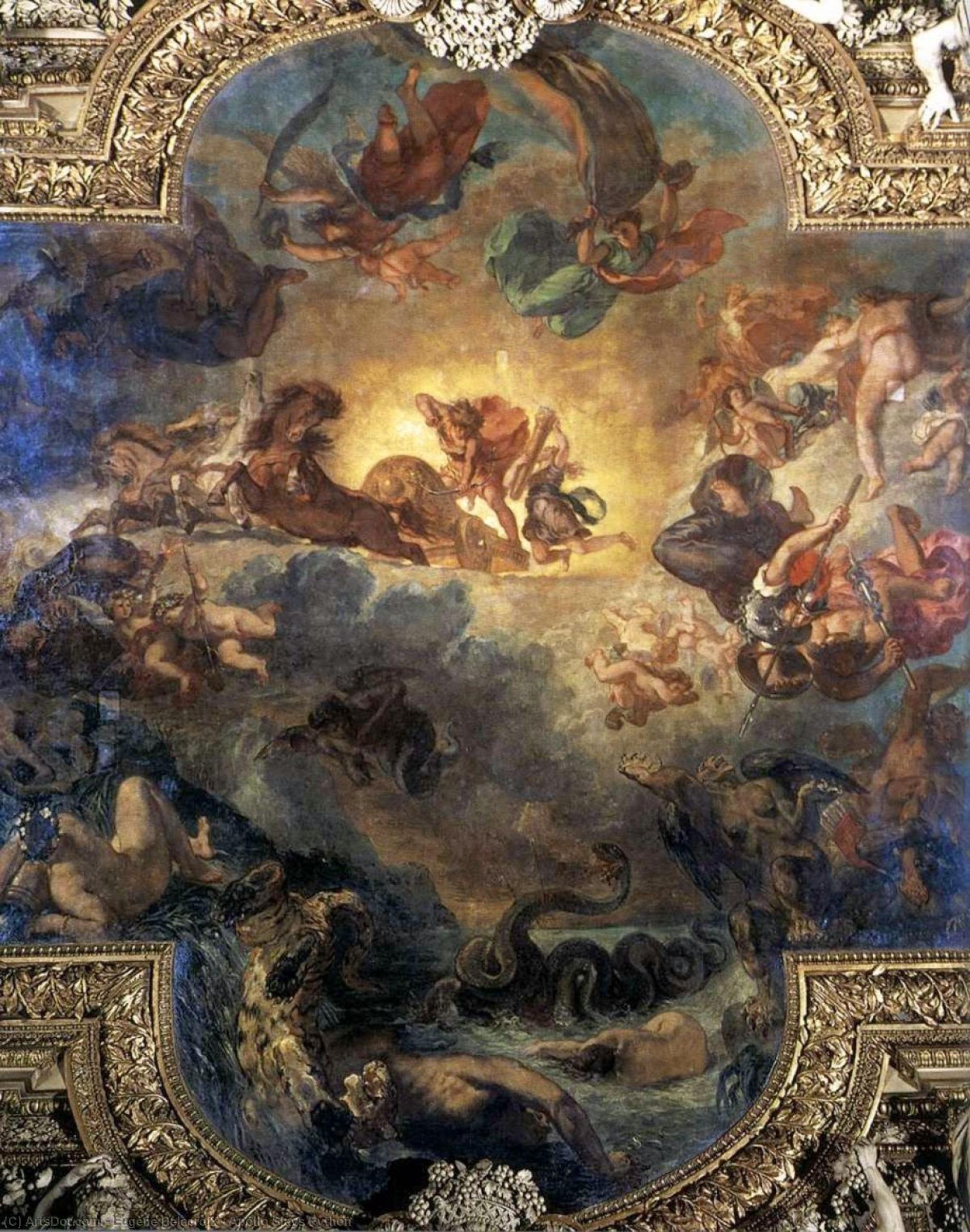
Apollo und Python

Das Gemälde „Apollo und Python“ von Eugène Delacroix beeindruckt durch seine dramatische Darstellung der griechischen Mythologie und den Einfluss des Romantikums. Entstanden 1850, wird es im Louvre aufbewahrt.

Entdecken Sie Eugène Delacroix, den führenden französischen Romantiker! Erleben Sie dramatische Szenen wie "Die Freiheit führt das Volk" und exotische Themen in leuchtenden Farben. Ein Pionier der Kunst des 19. Jahrhunderts.

Giclée / Kunstdruck

Giclée- oder Leinwanddruck in Museumsqualität mit schneller Produktion und flexiblen Veredelungsoptionen. ( Handgemalte Reproduktion kaufen Zum digitalen Bild wechseln)

Corner sample of the P118B picture frame: moulded polystyrene, 5 cm wide and 3 cm thick
P118B €10
Corner sample of the P118H picture frame: moulded polystyrene, 5 cm wide and 3 cm thick
P118H €10
Corner sample of the P118W picture frame: moulded polystyrene, 5 cm wide and 3 cm thick
P118W €10
Corner sample of the P438Z picture frame: moulded polystyrene, 5.5 cm wide and 3.5 cm thick
P438Z €10
Corner sample of the P508JH picture frame: moulded polystyrene, 7 cm wide and 3.5 cm thick
P508JH €12
Corner sample of the P508YH picture frame: moulded polystyrene, 7 cm wide and 3.5 cm thick
P508YH €12
Corner sample of the P805H picture frame: moulded polystyrene, 5 cm wide and 3.5 cm thick
P805H €10
Corner sample of the P805Z picture frame: moulded polystyrene, 5 cm wide and 3.5 cm thick
P805Z €10
Corner sample of the P919BZ picture frame: moulded polystyrene, 7 cm wide and 3.5 cm thick
P919BZ €10
Corner sample of the P919G picture frame: moulded polystyrene, 7 cm wide and 3.5 cm thick
P919G €10
Corner sample of the P919XJ picture frame: moulded polystyrene, 7 cm wide and 3.5 cm thick
P919XJ €10
Corner sample of the P959ZH picture frame: moulded polystyrene, 5 cm wide and 3 cm thick
P959ZH €10
Corner sample of the P968JZ picture frame: moulded polystyrene, 6 cm wide and 4 cm thick
P968JZ €12
Corner sample of the W106C picture frame: solid wood, 5 cm wide and 3 cm thick
W106C €8
Corner sample of the W218G picture frame: solid wood, 5 cm wide and 3 cm thick
W218G €10
Corner sample of the W218JH picture frame: solid wood, 5 cm wide and 3 cm thick
W218JH €8
Corner sample of the W218Y picture frame: solid wood, 5 cm wide and 3 cm thick
W218Y €10
Corner sample of the W307PJ picture frame: solid wood, 6 cm wide and 3 cm thick
W307PJ €10
Corner sample of the W316G picture frame: solid wood, 6 cm wide and 3 cm thick
W316G €10
Corner sample of the W316PJ picture frame: solid wood, 6 cm wide and 3 cm thick
W316PJ €8
Corner sample of the W316Y picture frame: solid wood, 6 cm wide and 3 cm thick
W316Y €10
Corner sample of the W398PJ picture frame: solid wood, 5 cm wide and 3 cm thick
W398PJ €8
Corner sample of the W4111J picture frame: solid wood, 6.5 cm wide and 3.5 cm thick
W4111J €10
Corner sample of the W500HY picture frame: solid wood, 7 cm wide and 5 cm thick
W500HY €15
Corner sample of the W500JH picture frame: solid wood, 7 cm wide and 5 cm thick
W500JH €15
Corner sample of the W692G picture frame: solid wood, 8 cm wide and 4 cm thick
W692G €12
Corner sample of the W849H picture frame: solid wood, 5 cm wide and 3 cm thick
W849H €8
Corner sample of the W940BG picture frame: solid wood, 7.5 cm wide and 4.5 cm thick
W940BG €15
Corner sample of the W953PJ picture frame: solid wood, 6 cm wide and 3.5 cm thick
W953PJ €8

Standardformat
individuell anpassbar
CM
INCH

Wählen Sie aus unseren vordefinierten Formaten, die den ursprünglichen Proportionen des Kunstwerks entsprechen.

Breite
Höhe

Sie können Ihre eigenen Maße eingeben, um ein bestimmtes Format oder einen speziellen Platz einzupassen. Wenn das von Ihnen gewählte Format nicht den Proportionen des Originalbildes entspricht, werden wir das Kunstwerk entweder beschneiden oder das Bild mit einem gespiegelten oder einfarbigen Rand erweitern. Ein digitaler Entwurf wird Ihnen zur Genehmigung zugesandt, bevor die Produktion beginnt.
Bitte beachten Sie, dass die Vorschau auf dem Bildschirm nicht den tatsächlichen Zuschnitt oder die Erweiterung widerspiegelt. Nur der Entwurf zeigt die endgültige Komposition präzise an.
Obwohl Sondermaße verfügbar sind, empfehlen wir die Auswahl eines Maßes aus der vordefinierten Liste, um die ursprünglichen Proportionen zu bewahren.

Weltweiter Versand () innerhalb von 2 Wochen statt der üblichen 4/5 Wochen. (10 Oktober)

Kostenloser weltweiter Expressversand
Hochwertige Leinenleinwand
Vollständiger Versicherungsschutz beim Versand
Zollgebühren-Rückerstattungsgarantie
Garantie für exakte Farbtreue
100-tägiges Rückgaberecht (nur bei Mängeln)
100% Geld-zurück-Garantie
Angebot für Mengenrabatt

Gesamtpreis

€ 59

Apollo und Python

Giclée / Kunstdruck

Format der Reproduktion

-

Gesamtpreis

€ 59

Kurzübersicht

  • Subject or theme: Mythology (Greek)
  • Influences:
    • Rubens
    • Titian
  • Artist: Eugène Delacroix
  • Notable elements or techniques: Dramatic brushstrokes, vibrant color palette
  • Artistic style: Expressive realism
  • Movement: Romanticism
  • Dimensions: 800 x 750 cm

Kunst-Quiz

Jede Frage hat nur eine richtige Antwort.

Frage 1:
What mythological tale does Eugène Delacroix’s Apollo Slays Python depict?
Frage 2:
Where is Apollo Slays Python housed?
Frage 3:
What artistic movement is Eugène Delacroix primarily associated with?
Frage 4:
Which artist greatly influenced Delacroix's style and approach to painting?
Frage 5:
What is a prominent feature of the painting’s color palette?

Apollo Slays Python: A Triumph of Romantic Vision

Eugène Delacroix’s Apollo Slays Python stands as a cornerstone of French Romanticism—a movement that prioritized emotion, imagination, and individualism above rational formalism. Created in 1850, this monumental mural, measuring an impressive 800 x 750 cm, resides within the hallowed halls of the Musée du Louvre in Paris, France, ensuring its enduring legacy as one of art history’s most celebrated achievements.

The Mythic Narrative and Compositional Drama

The painting recounts the ancient Greek myth of Apollo, god of light and music, confronting Python, a serpent embodying primordial darkness that threatened Delphi’s prophetic oracle—a tale brimming with symbolism concerning divine justice and triumph over evil. Delacroix masterfully orchestrates this narrative through a dynamic composition dominated by a heroic figure astride a horse, symbolizing strength and nobility. Surrounding him are supporting characters engaged in various postures, contributing to the overall theatricality of the scene. The inclusion of horses, birds—particularly eagles—snakes, and a dog amplifies the visual complexity and reinforces the myth’s thematic concerns.

A Palette of Passion: Color and Technique

Delacroix's artistic prowess is immediately evident in his audacious use of color. He eschewed the muted tones favored by Neoclassical painters, opting instead for vibrant hues—particularly yellows and oranges—that illuminate Apollo’s radiant aura and convey a palpable sense of energy. Simultaneously, he employs deep purples to depict Python’s shadowy form, creating a striking contrast that underscores the battle between light and darkness. The artist skillfully applies oil paint onto canvas with loose brushstrokes—a technique characteristic of Romanticism—allowing for expressive textures and conveying movement within the composition. This method captures not only the visual spectacle but also the emotional intensity of the mythological confrontation.

Romantic Ideals Embodied: Significance Beyond Aesthetics

Apollo Slays Python transcends mere aesthetic beauty; it embodies the core tenets of Romanticism—a reaction against Enlightenment rationalism and a fervent embrace of subjective experience. Delacroix’s work reflects the movement's fascination with nature’s sublime power and its belief in the artist’s role as a conduit for conveying profound emotions. The painting served as an inspiration for Impressionists like Claude Monet, who adopted Delacroix’s bold color palette and expressive brushwork to revolutionize artistic practice.

Further Exploration: Delacroix's Oeuvre and Artistic Influences

To delve deeper into Eugène Delacroix’s artistic universe, a visit to the Musée Eugène Delacroix—a hidden gem nestled in Paris—is indispensable. Established in the former apartment where Delacroix spent his final years, this museum houses an unparalleled collection of his paintings and drawings, offering visitors a privileged glimpse into his creative process and artistic vision. Don’t miss the opportunity to examine Apollo Slays Python (detail)—a captivating study that reveals Delacroix’s meticulous attention to detail and his masterful manipulation of color—and explore other iconic works such as Bouquet of Flowers—a delicate watercolor piece showcasing Delacroix’s versatility—and Self-Portrait with Cap—an intimate drawing offering insight into Delacroix’s personal character. Finally, consider admiring the works of Jean-François Demay, particularly The Hunt (1837)—another masterpiece embodying Romantic ideals and demonstrating Delacroix's influence on subsequent generations of artists.

Fragen & Antworten

Für welchen Raum wird "Apollo und Python" von Eugène Delacroix empfohlen?

Eine Reproduktion von „Apollo und Python“ passt hervorragend in ein Wohnbereich.

Wie alt war Eugène Delacroix, als „Apollo und Python“ im Jahr 1850 geschaffen wurde?

Eugène Delacroix war 52 Jahre alt, als Apollo und Python im Jahr 1850 geschaffen wurde. Das Alter berechnet sich aus dem Geburtsjahr des Künstlers, 1798.

In welchem Museum befindet sich das Original von „Apollo und Python“?

Das Original von "Apollo und Python" von Eugène Delacroix befindet sich im Louvre, Paris, Frankreich. Eine Reproduktion ermöglicht es, das Werk zu Hause auszustellen.

Wie kann ich das Bild von "Apollo und Python" von Eugène Delacroix herunterladen?

"Apollo und Python" von Eugène Delacroix kann auf der Download-Seite des Kunstwerks als ein hochauflösender digitaler Bild-Download heruntergeladen werden.

In welchem Jahr wurde "Apollo und Python" geschaffen?

"Apollo und Python" von Eugène Delacroix entstand im Jahr 1850.

Welchem Künstler wird "Apollo und Python" zugeschrieben?

"Apollo und Python" wird Eugène Delacroix zugeschrieben.

Ist "Apollo und Python" von Eugène Delacroix gemeinfrei, und warum?

"Apollo und Python" von Eugène Delacroix ist gemeinfrei – das Urheberrecht ist abgelaufen. Die Dauer des Urheberrechts beginnt mit dem Tod des Künstlers, der im Jahr 1863 verstarb.


Biografie des Künstlers

Ein Pionier der Romantik: Eugène Delacroix

Eugène Delacroix gilt als eine der prägendsten Figuren der französischen Romantik und wurde von Anfang an für seine Führungsrolle innerhalb dieser künstlerischen Bewegung gefeiert. Geboren 1798 in Chantonnay, Frankreich, fand er seinen künstlerischen Weg durch die Beschäftigung mit den Werken großer Meister wie Rubens und den Malern der venezianischen Renaissance – wobei Farbe und Bewegung eine zentrale Rolle spielten und Klarheit von Konturen sowie sorgfältige Modellierung zugunsten eines dynamischen Ausdrucks vernachlässigt wurden. Diese Philosophie prägte sein gesamtes künstlerisches Leben und beeinflusste nachfolgende Generationen von Künstlern nachhaltig.
  • Frühe Jahre und Ausbildung: Delacroix erhielt eine umfassende künstlerische Ausbildung am École Royale Supérieure des Beaux-Arts in Paris, wo er sich intensiv mit klassischen Formen beschäftigte und dennoch einen eigenen Stil entwickelte, der sich durch eine besondere Sensibilität für Farbe und Bewegung auszeichnete.
  • Die ersten Erfolge: Bereits früh beeindruckte Delacroix sein Publikum mit seinen Gemälden und erhielt zahlreiche Aufträge von wohlhabenden Mäzenen und Mitgliedern des französischen Königshauses. Besonders bekannt wurde sein Werk „Die Barque von Dante“, das eine außergewöhnliche technische Virtuosität und eine tiefgründige künstlerische Vision demonstriert.

Der Einfluss der Romantik und die Suche nach neuen Ausdrucksformen

Delacroix war tief beeindruckt von den Ideen der französischen Romantik, insbesondere von deren Betonung von Gefühl und Leidenschaft sowie ihrer Ablehnung der klassischen Regeln und Konventionen. Er sah sich als Aufgabe, neue Wege zu beschreiten und eine künstlerische Sprache zu entwickeln, die die komplexen Emotionen und Erfahrungen des menschlichen Lebens einfangen konnte. Diese Suche nach neuen Ausdrucksformen fand ihren Ausgang in einer umfassenden Beschäftigung mit historischen Ereignissen und literarischen Werken sowie in einer ersten Reise nach Nordafrika.

Nordafrika und die Geburt eines einzigartigen Stil

Die Reise nach Nordafrika im Jahr 1830 markierte einen entscheidenden Wendepunkt für Delacroixs künstlerische Entwicklung. Er ließ sich von der exotischen Landschaft und Kultur dieser Region inspirieren und schuf beeindruckende Gemälde wie „Arabische Pferde im Kampf“ und „Der Tod des Sardanapalus“, die durch ihre lebendige Farbgebung, dynamische Komposition und dramatische Darstellung außergewöhnlich sind. Diese Werke gelten als Schlüssel zum Verständnis seines unverwechselbaren künstlerischen Stils und verkörpern die Essenz der romantischen Kunst.

Die Meisterwerke und ihr Vermächtnis

Delacroix hinterließ ein beeindruckendes Oeuvre, das bis heute weltweit Anerkennung findet. Zu seinen berühmtesten Gemälden zählen „Freiheit führt das Volk an“, eine monumentale Darstellung der Julirevolution von 1830, und „Die Schlacht von Zaragoza“, die eine außergewöhnliche historische Dokumentation darstellt. Seine Werke haben einen tiefgreifenden Einfluss auf die Entwicklung der französischen Kunst des 19. Jahrhunderts ausgeübt und inspirierten zahlreiche Künstler nachfolgender Generationen.

Ein Erbe für die Zukunft

Eugène Delacroix gilt als einer der bedeutendsten Künstler seiner Zeit und sein Werk wird bis heute intensiv studiert und gefeiert. Seine künstlerische Vision und sein außergewöhnlicher Stil haben einen nachhaltigen Eindruck auf die Kunstgeschichte hinterlassen und werden weiterhin von Künstlern weltweit bewundert und nachgeahmt.
Eugène Delacroix

Eugène Delacroix

1798 - 1863 , Frankreich

Eckdaten zum Künstler

  • Artistic Movement Or Style: Romantik
  • Artists Or Movements Influenced By This Artist:
    • Impressionismus
    • Postimpressionismus
  • Artists Who Influenced This Artist:
    • Rubens
    • Venezianische Renaissance
  • Date Of Birth: 26. April 1798
  • Date Of Death: 13. August 1863
  • Full Name: Eugène Delacroix
  • Nationality: Französisch
  • Notable Artworks:
    • Liberty Leading the People
    • Der Tod des Sardanapales
    • Arabische Pferde im Kampf
  • Place Of Birth: Chantonnay, Frankreich
Entdecken Sie Kunstwerke, die nach Themen, Stilen und Merkmalen sortiert sind.