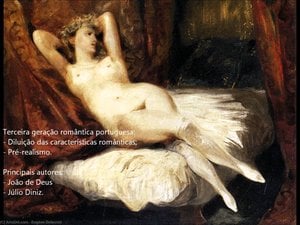
Eugène Delacroix’s “Abel Widmer”: A Portrait of Intensity
Eugène Delacroix's "Abel Widmer," painted around 1824, is more than just a portrait; it’s a carefully constructed tableau of youthful intensity and burgeoning intellect. This remarkable work, housed in the National Gallery in London, offers a captivating glimpse into the artist’s evolving style and his deep engagement with the artistic currents of his time – particularly the vibrant legacy of Rubens and the Venetian Renaissance.
Delacroix, a pivotal figure in the French Romantic movement, rejected the rigid formality of Neoclassicism, instead embracing a dynamic approach characterized by bold color palettes, dramatic lighting, and an emphasis on emotional expression. “Abel Widmer” exemplifies this shift perfectly. The subject, Abel Widmer, a young student at the prestigious Institution Saint-Victor in Paris, is depicted not as a static representation but as a man brimming with potential – his gaze direct, almost challenging, conveying a sense of thoughtful contemplation and perhaps even quiet defiance. Delacroix masterfully utilizes color to heighten this impression; the deep blues and greens of the background create a sense of depth and mystery, while the warm tones applied to Widmer’s skin suggest vitality and inner strength.
The Influence of Masters Past
Delacroix's artistic journey was profoundly shaped by the masters who preceded him. He deeply admired the works of Peter Paul Rubens, particularly his masterful use of color and dynamic composition, and the rich textures and theatrical lighting found in Venetian Renaissance paintings. These influences are readily apparent in “Abel Widmer.” The painting’s overall structure echoes Rubens' penchant for dramatic diagonals and swirling forms, while the vibrant hues and atmospheric effects recall the luminous palette favored by Venetian artists like Titian. Delacroix wasn’t simply copying these masters; he was absorbing their techniques and translating them into his own unique visual language.
The choice of Abel Widmer as a subject is also significant. He represents a new generation, one poised to challenge established norms and embrace the spirit of Romanticism. Delacroix’s decision to capture him in this moment of thoughtful intensity suggests a desire to portray not just an individual but also an idea – the promise of intellectual and artistic exploration.
A Study in Dramatic Brushwork
Delacroix's technique is immediately striking. He employs loose, expressive brushstrokes that create a sense of movement and energy throughout the painting. The paint seems to shimmer and flow across the canvas, conveying a feeling of immediacy and spontaneity. This deliberate lack of polish—a hallmark of Romanticism—contrasts sharply with the smooth, polished surfaces favored by Neoclassical artists. Notice how the brushwork is particularly concentrated around Widmer’s face and hands, drawing our attention to his features and emphasizing his emotional state.
The composition itself contributes to the painting's dramatic effect. The strong diagonal line created by Widmer’s posture draws the eye across the canvas, while the dark background serves to isolate him and intensify his presence. Delacroix skillfully uses light and shadow to sculpt Widmer’s features, creating a sense of three-dimensionality and adding depth to the portrait.
Symbolism and Emotional Resonance
Beyond its technical brilliance, “Abel Widmer” is imbued with symbolic meaning. The stern expression on Widmer's face suggests a quiet determination and perhaps even a hint of melancholy – qualities often associated with the Romantic sensibility. The painting’s overall atmosphere evokes a sense of intellectual curiosity and artistic aspiration. It’s a portrait that invites us to contemplate not only the subject’s individual character but also the broader themes of youth, ambition, and the pursuit of knowledge.
Reproductions of “Abel Widmer” offer a wonderful opportunity to bring this captivating work into your home or office. The vibrant colors, dynamic brushwork, and profound emotional resonance will undoubtedly serve as a source of inspiration for years to come. Consider commissioning a handmade oil painting reproduction from WahooArt – a truly authentic way to own a piece of art history.
Fragen & Antworten
Gibt es einen Leitfaden für "Abel Widmer" von Eugène Delacroix?
Die Leitfaden-Seite von "Abel Widmer" von Eugène Delacroix bietet ein druckbares, zweiseitiges Infoblatt: das Kunstwerk mit seiner Identifikationstabelle, eine Zeitstrahl-Einordnung in die Lebensspanne des Künstlers, weitere Werke des Künstlers, die gemessene Farbpalette sowie kopierfertige Zitate in vier verschiedenen Stilen.
Welchem Künstler wird "Abel Widmer" zugeschrieben?
"Abel Widmer" wurde von Eugène Delacroix geschaffen. Die Informationen auf dieser Seite beschreiben das Originalwerk von Eugène Delacroix.
Ist "Abel Widmer" von Eugène Delacroix ein helles oder ein dunkles Kunstwerk?
In Bezug auf die wahrgenommene Helligkeit ist "Abel Widmer" von Eugène Delacroix Tiefster Schatten.
Wer verkauft handgemalte Kopien von "Abel Widmer" von Eugène Delacroix?
Handgemalte Repliken von "Abel Widmer" von Eugène Delacroix sind auf diese Website erhältlich: eine handgemalte Ölreproduktion auf Leinenleinwand, bestellbar über diese Seite.
Ist "Abel Widmer" als Kunstdruck erhältlich?
Ein Druck von "Abel Widmer" von Eugène Delacroix kann direkt auf diese Seite bestellt werden: ein Fine Art Print auf Baumwollkanvas oder Archiv-Leinwandpapier.
Wo kann ich eine Vorschau von „Abel Widmer“ sehen?
Um eine Reproduktion von "Abel Widmer" von Eugène Delacroix in der Vorschau zu sehen, öffnen Sie die Vorschau-Seite des Kunstwerks.
Gibt es für "Abel Widmer" eine Augmented-Reality-Vorschau?
"Abel Widmer" von Eugène Delacroix kann mithilfe der AR-Vorschau-Seite des Kunstwerks in Ihrem eigenen Raum mit Augmented Reality auf einem kompatiblen Gerät an Ihrer Wand vorab betrachtet werden.



 In echtem Maßstab anzeigen
 Zum Druck wechseln
 Versenden als Grußkarte
 Teilen
 Details anzeigen
 Leitfaden öffnen

 Herunterladen
 Ähnliche Objekte
 Röntgenaufnahme
 Diashow
 Besucherstatistiken

 Mehr anzeigen






































 Die Glasoption ist nur für Größen unter 110 cm verfügbar.