In echtem Maßstab anzeigen In AR an der Wand sehen Handgemalte Reproduktion kaufen Zum digitalen Bild wechseln Versenden als Grußkarte
Details anzeigen Leitfaden öffnen Zu Favoriten hinzufügen Herunterladen Ähnliche Objekte Röntgenaufnahme Diashow Besucherstatistiken

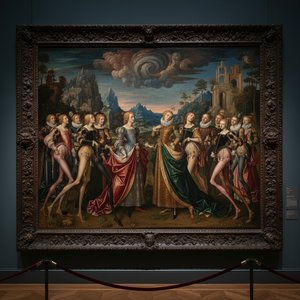
Laokoön (Detail)

Ein dramatisches Detail des Laokoon-Sculpturs von El Greco! Intensives Licht, kraftvolle Muskeln und eine Darstellung der griechischen Mythologie im expressiven Stil des Malers. Entdecken Sie die Meisterleistung!

Erkunden Sie die dramatische und ausdrucksstarke Kunst von El Greco (Doménikos Theotokopoulos). Entdecken Sie seine ikonischen Manierismus-Gemälde, religiöse Themen, verlängerte Figuren und seinen bleibenden Einfluss auf Expressionismus und Kubismus. Bewundern Sie Meisterwerke wie 'Toledos Blick'!

Giclée / Kunstdruck

Giclée- oder Leinwanddruck in Museumsqualität mit schneller Produktion und flexiblen Veredelungsoptionen. ( Handgemalte Reproduktion kaufen Zum digitalen Bild wechseln)

Corner sample of the P118B picture frame: formgepresstes Polystyrol, 5 cm wide and 3 cm thick
P118B €10
Corner sample of the P118H picture frame: formgepresstes Polystyrol, 5 cm wide and 3 cm thick
P118H €10
Corner sample of the P118W picture frame: formgepresstes Polystyrol, 5 cm wide and 3 cm thick
P118W €10
Corner sample of the P438Z picture frame: formgepresstes Polystyrol, 5.5 cm wide and 3.5 cm thick
P438Z €10
Corner sample of the P508JH picture frame: formgepresstes Polystyrol, 7 cm wide and 3.5 cm thick
P508JH €12
Corner sample of the P508YH picture frame: formgepresstes Polystyrol, 7 cm wide and 3.5 cm thick
P508YH €12
Corner sample of the P805H picture frame: formgepresstes Polystyrol, 5 cm wide and 3.5 cm thick
P805H €10
Corner sample of the P805Z picture frame: formgepresstes Polystyrol, 5 cm wide and 3.5 cm thick
P805Z €10
Corner sample of the P919BZ picture frame: formgepresstes Polystyrol, 7 cm wide and 3.5 cm thick
P919BZ €10
Corner sample of the P919G picture frame: formgepresstes Polystyrol, 7 cm wide and 3.5 cm thick
P919G €10
Corner sample of the P919XJ picture frame: formgepresstes Polystyrol, 7 cm wide and 3.5 cm thick
P919XJ €10
Corner sample of the P959ZH picture frame: formgepresstes Polystyrol, 5 cm wide and 3 cm thick
P959ZH €10
Corner sample of the P968JZ picture frame: formgepresstes Polystyrol, 6 cm wide and 4 cm thick
P968JZ €12
Corner sample of the W106C picture frame: Massivholz, 5 cm wide and 3 cm thick
W106C €8
Corner sample of the W218G picture frame: Massivholz, 5 cm wide and 3 cm thick
W218G €10
Corner sample of the W218JH picture frame: Massivholz, 5 cm wide and 3 cm thick
W218JH €8
Corner sample of the W218Y picture frame: Massivholz, 5 cm wide and 3 cm thick
W218Y €10
Corner sample of the W307PJ picture frame: Massivholz, 6 cm wide and 3 cm thick
W307PJ €10
Corner sample of the W316G picture frame: Massivholz, 6 cm wide and 3 cm thick
W316G €10
Corner sample of the W316PJ picture frame: Massivholz, 6 cm wide and 3 cm thick
W316PJ €8
Corner sample of the W316Y picture frame: Massivholz, 6 cm wide and 3 cm thick
W316Y €10
Corner sample of the W398PJ picture frame: Massivholz, 5 cm wide and 3 cm thick
W398PJ €8
Corner sample of the W4111J picture frame: Massivholz, 6.5 cm wide and 3.5 cm thick
W4111J €10
Corner sample of the W500HY picture frame: Massivholz, 7 cm wide and 5 cm thick
W500HY €15
Corner sample of the W500JH picture frame: Massivholz, 7 cm wide and 5 cm thick
W500JH €15
Corner sample of the W692G picture frame: Massivholz, 8 cm wide and 4 cm thick
W692G €12
Corner sample of the W849H picture frame: Massivholz, 5 cm wide and 3 cm thick
W849H €8
Corner sample of the W940BG picture frame: Massivholz, 7.5 cm wide and 4.5 cm thick
W940BG €15
Corner sample of the W953PJ picture frame: Massivholz, 6 cm wide and 3.5 cm thick
W953PJ €8

Standardformat
individuell anpassbar
CM
INCH

Wählen Sie aus unseren vordefinierten Formaten, die den ursprünglichen Proportionen des Kunstwerks entsprechen.

Breite
Höhe

Geben Sie die Breite und die Höhe an, die Sie benötigen, damit der Druck perfekt in Ihren Rahmen oder an Ihre Wand passt. Ein Druck kann nur beschnitten werden und niemals größer als das Originalbild gemacht werden; daher verliert ein Format mit einer anderen Proportion einen Teil des Bildes. Wir senden Ihnen ein digitales Mockup zur Freigabe, bevor wir den Druck ausführen. Das auf dieser Seite gezeigte Bild zeigt nicht den tatsächlichen Beschnitt – dies ist nur im Mockup ersichtlich.

Weltweiter Versand () innerhalb von 2 Wochen statt der üblichen 4/5 Wochen. (25 Oktober)

Kostenloser weltweiter Expressversand
Hochwertige Leinenleinwand
Vollständiger Versicherungsschutz beim Versand
Zollgebühren-Rückerstattungsgarantie
Garantie für exakte Farbtreue
100-tägiges Rückgaberecht (nur bei Mängeln)
100% Geld-zurück-Garantie
Angebot für Mengenrabatt

Gesamtpreis

€ 60

Laokoön (Detail)

Giclée / Kunstdruck

Format der Reproduktion

-

Gesamtpreis

€ 60

Kurzübersicht

  • Einflüsse:
    • Byzanz
    • Rom
  • Artist: El Greco
  • Notable Elemente: Dynamische Muskeln
  • Medium: Ölfarbe auf Leinwand
  • Title: Laocoön (Detail)

Kunst-Quiz

Jede Frage hat nur eine richtige Antwort.

Frage 1:
Welche Mythologie bildet die Grundlage für das Gemälde "Laocoön (Detail)"?
Frage 2:
Welche Farbe dominiert die Farbpalette des Gemäldes?
Frage 3:
Welche künstlerische Bewegung wird durch El Grecos Stil hauptsächlich charakterisiert?
Frage 4:
Welche Technik wird im Gemälde besonders hervorgehoben, um eine dramatische Wirkung zu erzielen?
Frage 5:
Welche Aussage trifft am besten auf die Beleuchtung im Gemälde zu?

Das Drama der Verzweiflung: El Grecos “Laocoön” – Ein Meisterwerk des Manierismus

El Greco’s “Laocoön,” painted between 1610 and 1614, is not merely a depiction of a classical myth; it's an intensely visceral exploration of suffering, struggle, and the crushing weight of fate. The painting, housed in the National Gallery of Art in Washington D.C., immediately commands attention with its dramatic composition and emotionally charged atmosphere. It’s a work that transcends its mythological subject matter to become a universal symbol of human endurance against overwhelming odds.

At the heart of the scene lies Laocoön, a Trojan priest devoted to Poseidon, desperately attempting to warn his countrymen about the deceitful Trojan Horse. He and his two sons are mercilessly strangled by sea serpents – a punishment swiftly delivered by the gods for their audacity. El Greco masterfully captures this moment of agonizing struggle, focusing on the muscular tension in Laocoön’s body as he battles against the relentless coils of the monstrous reptiles. The figures are elongated and distorted, characteristic hallmarks of El Greco's distinctive Mannerist style – a deliberate departure from the idealized forms prevalent in earlier Renaissance art. This stylistic choice amplifies the sense of drama and emotional intensity, pushing beyond realistic representation to convey a profound psychological state.

Farben und Licht: Die Maltechnik des “Laocoön”

The color palette is deliberately muted, dominated by earthy tones – greys, browns, and whites – creating an atmosphere of somberness and despair. However, El Greco employs dramatic contrasts between light and shadow to sculpt the figures and heighten the sense of movement and tension. The lighting, originating from above and slightly to the left, casts long, sweeping shadows across Laocoön’s body, emphasizing his strained muscles and desperate expression. This chiaroscuro technique is expertly utilized to draw the viewer's eye directly to the central figure, immersing them in the scene’s harrowing drama.

Furthermore, El Greco’s masterful use of impasto – applying thick layers of paint – adds a remarkable tactile quality to the work. The textured surface seems to writhe with movement, mirroring the physical struggle depicted within the painting. The brushstrokes are visible and dynamic, contributing significantly to the overall sense of urgency and emotional intensity. It's clear that El Greco wasn’t simply aiming for a static representation; he sought to capture the very essence of the moment – the raw, unfiltered experience of suffering.

Mythos und Symbolik: Mehr als nur eine Geschichte

The subject matter itself—the myth of Laocoön—is rich in symbolic meaning. The story represents humanity’s defiance against divine authority and the inevitable consequences of hubris. Laocoön's struggle embodies the universal human experience of confronting insurmountable obstacles, battling against forces beyond our control. The sea serpents, representing the wrath of the gods, symbolize fate itself – an inescapable force that relentlessly pursues us all.

Interestingly, El Greco’s painting is not a direct copy of the renowned marble sculpture “Laocoön and His Sons” by the Greek sculptors Hagesander, Polykleitos, and Kesikrates. Instead, it's a deeply personal interpretation inspired by the sculpture, infused with El Greco’s own unique artistic vision. The inclusion of the detailed cityscape in the background adds another layer of symbolism – representing the world continuing on despite the tragedy unfolding before us, highlighting the isolation and futility of Laocoön’s struggle.

Emotionale Wirkung und zeitloser Ausdruck

"Laocoön" is a profoundly moving work that continues to resonate with viewers centuries after its creation. It's not simply a historical or mythological depiction; it’s an exploration of the human condition – our capacity for suffering, our resilience in the face of adversity, and our ultimate vulnerability before the forces of fate. The painting evokes a powerful sense of empathy and compels us to contemplate our own struggles and vulnerabilities.

Today, reproductions of El Greco's “Laocoön” are highly sought after by collectors and interior designers alike. Its dramatic composition, evocative color palette, and timeless themes make it a compelling addition to any collection or space – a constant reminder of the enduring power of art to capture and convey the deepest aspects of human experience.

Fragen & Antworten

Aus welcher historischen Epoche stammt "Laokoön (Detail)" von El Greco?

Die historische Epoche von "Laokoön (Detail)" von El Greco ist Frühmittelalterlich. Diese Klassifizierung ordnet das Werk kunsthistorisch ein.

Gehört "Laokoön (Detail)" von El Greco zu den begehrten Kunstwerken der Mannerism-Epoche?

Innerhalb der Mannerism-Strömung weist „Laokoön (Detail)“ ein Ikonisch Bekanntheitsniveau auf.

Kann ich "Laokoön (Detail)" von El Greco vor der Bestellung in einer Vorschau ansehen?

Um eine Reproduktion von "Laokoön (Detail)" von El Greco in der Vorschau zu sehen, öffnen Sie die Vorschau-Seite des Kunstwerks.


Biografie des Künstlers

**frühes Leben und Ausbildung**

El Greco (Doménikos Theotokopoulos), ein renommierter griechischer Maler, Bildhauer und Architekt, wurde 1541 in Kreta geboren, das damals unter venezianischer Herrschaft stand. Sein Geburtsname war Doménikos Theotokopoulos. El Grecos frühe Ausbildung als Ikonenmaler der kreter Schule, einem führenden Zentrum für byzantinische Kunst nach dem Fall des Reiches, legte den Grundstein für seine zukünftigen künstlerischen Bemühungen.

**Künstlerische Entwicklung und Einflüsse**

El Gredos künstlerischer Stil wurde durch seine Reisen nach Venedig und Rom geprägt, wo er Manierismus- und Renaissance-Stile aufnahm, insbesondere von Tintoretto und Tizian beeinflusst. Seine Umsiedlung nach Toledo, Spanien, im Jahr 1577 markierte eine Periode fruchtbarer Schaffenskraft, die zu Meisterwerken wie Ansicht von Toledo und das Öffnen des fünften Siegels führte.

**Bekannte Werke und Stil**

* Allegorie der Camaldulitenorden (Manierismus, Öl) – ein Zeugnis für El Gredos einzigartige Mischung aus byzantinischen Traditionen und westlichen stilistischen Elementen. * Fabel (Manierismus, Öl) – demonstriert seine Verwendung ungewöhnlicher, lebhafter Farben. * Giacomo Bosio (Manierismus, Öl) – zeigt El Gredos Meisterschaft im Manierismus-Stil.

**Vermächtnis und Einfluss**

El Gredos dramatischer und expressiver Stil, der durch verlängerte Figuren und fantastische Pigmentierung gekennzeichnet ist, war eine Quelle der Inspiration für Dichter und Schriftsteller. Er gilt als Vorläufer des Expressionismus und Kubismus. Für mehr Informationen über das Leben und Werk von El Greco besuchen Sie [https://WahooArt.com/@/el-greco-(domenikos-theotokopoulos)](https://WahooArt.com/@/el-greco-(domenikos-theotokopoulos)).
  • **Betrachten Sie El Gredos Gemälde** unter [https://WahooArt.com/@@/85fr95-el-greco-(domenikos-theotokopoulos)-allegory-of-the-camaldolite-order](https://WahooArt.com/@@/85fr95-el-greco-(domenikos-theotokopoulos)-allegory-of-the-camaldolite-order)
  • **Erfahren Sie mehr über das Leben und Werk von El Greco** unter [https://en.wikipedia.org/wiki/el_greco](https://en.wikipedia.org/wiki/el_greco)
  • **Entdecken Sie das Hellenische Institut für byzantinische und post-byzantinische Studien**, das eine breite Palette von Artefakten umfasst, die das reiche künstlerische Erbe Byzants zu reflektieren, unter /de/art/show/art-d3b8bv-de/
**El Gredos innovativer Stil und seine idiosynkratische Mischung aus multikulturellen Einflüssen haben einen unauslöschlichen Eindruck auf die Kunstwelt hinterlassen.**
El Greco

El Greco

1541 - 1614 , Griechenland

Eckdaten zum Künstler

  • Beeinflusste Künstler:
    • Tintoretto
    • Tizian
  • Bemerkenswerte Werke:
    • Grablegung des Grafen Orgaz
    • Blick auf Toledo
    • Öffnung des fünften Siegels
  • Geburtsdatum: 1541
  • Geburtsort: Kreta, Griechenland
  • Künstlerische Richtung: Manierismus, Spanische Renaissance
  • Nationalität: Griechisch-Spanisch
  • Todatum: 1614
  • Vollständiger Name: El Greco (Doménikos Theotokópoulos)
  • Von Künstlern Beeinflusst: ['Byzantinische Traditionen']
Entdecken Sie Kunstwerke, die nach Themen, Stilen und Merkmalen sortiert sind.