Giclée- oder Leinwanddruck in Museumsqualität mit schneller Produktion und flexiblen Veredelungsoptionen. ( Handgemalte Reproduktion bestellen Bild kaufen)





























Wählen Sie aus unseren vordefinierten Formaten, die den ursprünglichen Proportionen des Kunstwerks entsprechen.

Sie können Ihre eigenen Maße eingeben, um ein bestimmtes Format oder einen speziellen Platz einzupassen. Wenn das von Ihnen gewählte Format nicht den Proportionen des Originalbildes entspricht, werden wir das Kunstwerk entweder beschneiden oder das Bild mit einem gespiegelten oder einfarbigen Rand erweitern. Ein digitaler Entwurf wird Ihnen zur Genehmigung zugesandt, bevor die Produktion beginnt.
Bitte beachten Sie, dass die Vorschau auf dem Bildschirm nicht den tatsächlichen Zuschnitt oder die Erweiterung widerspiegelt. Nur der Entwurf zeigt die endgültige Komposition präzise an.
Obwohl Sondermaße verfügbar sind, empfehlen wir die Auswahl eines Maßes aus der vordefinierten Liste, um die ursprünglichen Proportionen zu bewahren.
Weltweiter Versand () innerhalb von 2 Wochen statt der üblichen 4/5 Wochen. (6 September)


The New bridge
Format der Reproduktion
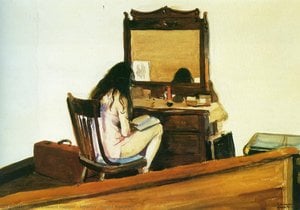
Edward Hopper’s “The New Bridge,” painted in 1909, is more than just a depiction of a city street; it’s a poignant meditation on the human condition within the burgeoning landscape of early 20th-century America. The painting immediately draws the viewer into a scene brimming with quiet tension – a tableau of parked automobiles and solitary figures that speaks volumes about the increasing alienation inherent in modern urban life. Hopper, though born in 1882, captured a feeling that would become synonymous with his work: a sense of profound solitude amidst the relentless activity of the city.
"The New Bridge" was created during a pivotal moment in American art history – the transition from Impressionism to Modernism. Hopper, influenced by artists like William Merritt Chase and Robert Henri, embraced realism but infused it with a distinctly modern sensibility. The painting reflects the rapid industrialization and urbanization of America at the turn of the century, themes that would become increasingly prevalent in his work. The presence of automobiles, a relatively new phenomenon at the time, underscores this shift and adds to the sense of unease within the scene. The year 1909 marks a crucial period where Hopper was developing his signature style, experimenting with capturing fleeting moments and exploring psychological states through carefully constructed compositions.
Beyond its realistic depiction, “The New Bridge” is laden with symbolic meaning. The solitary figures – the three people standing near the center – represent individuals adrift in a sea of urban activity, disconnected from one another and perhaps even from themselves. The bridge itself can be interpreted as a symbol of transition or connection, yet here it serves only to emphasize the distance between the figures and the overall sense of isolation. Hopper’s ability to evoke such powerful emotions through seemingly simple scenes is a testament to his artistic genius.
A hand-painted reproduction of “The New Bridge” offers an exceptional opportunity to bring this iconic work into your home or office. WahooArt’s meticulous reproductions capture the essence of Hopper's style, faithfully recreating the painting's nuanced light, precise detail, and profound emotional impact. This artwork is not merely a decorative piece; it’s a window into the soul of modern America – a reminder of the enduring themes of isolation, contemplation, and the search for meaning in an increasingly complex world. Its timeless appeal makes it a valuable addition to any art collection or interior design scheme.


1931 - 1967 , Vereinigte Staaten von Amerika

Explore the profound beauty of American Realism. From Winslow Homer’s rural landscapes to the dignity of everyday life, discover how master artists captured the soul of a nation through evocative oil paintings and timeless fine art techniques.

 Vorschau anzeigen
 Versenden
 Teilen
 Details anzeigen

 Herunterladen
 Ähnliche Objekte
 Röntgenaufnahme
 Diashow

 Weiterlesen







 Die Glasoption ist nur für Größen unter 110 cm verfügbar.