In echtem Maßstab anzeigen In AR an der Wand sehen Zum Druck wechseln Zum digitalen Bild wechseln Versenden als Grußkarte
Details anzeigen Zu Favoriten hinzufügen Herunterladen Ähnliche Objekte Röntgenaufnahme Diashow Besucherstatistiken

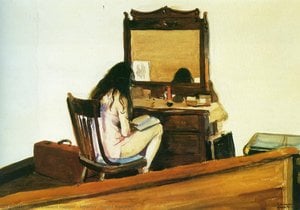
The lee shore, private

Edward Hopper's "The Lee Shore" captures poignant urban isolation with its evocative depiction of sailboats and a solitary house, reflecting the artist’s signature style.

Erkunden Sie die ikonischen amerikanischen Realistmalereien von Edward Hopper (1882-1967). Bekannt für seine eindringlichen städtische und ländliche Szenen, seine meisterhafte Verwendung von Licht und seine Themen der Einsamkeit und des modernen Lebens. Entdecken Sie 'House by the Railroad' & mehr bei WahooArt.

Handgefertigte Ölreproduktion

Handgemaltes Ölgemälde auf Leinwand in Ihrer Wunschgröße und mit Rahmen, auf Bestellung von unseren Künstlern angefertigt. ( Zum Druck wechseln Zum digitalen Bild wechseln)

P118B $10
P118H $10
P118W $10
P438Z $10
P508JH $12
P508YH $12
P805H $10
P805Z $10
P919BZ $10
P919G $10
P919XJ $10
P959ZH $10
P968JZ $12
W106C $8
W218G $10
W218JH $8
W218Y $10
W307PJ $10
W316G $10
W316PJ $8
W316Y $10
W398PJ $8
W4111J $10
W500HY $15
W500JH $15
W692G $12
W849H $8
W940BG $15
W953PJ $8

Standardformat
individuell anpassbar
CM
INCH

Wählen Sie aus unseren vordefinierten Formaten, die den ursprünglichen Proportionen des Kunstwerks entsprechen.

Breite
Höhe

Sie können Ihre eigenen Maße eingeben, um einen bestimmten Rahmen oder Platz auszufüllen. Wenn die gewählte Größe nicht den Proportionen des Originalbildes entspricht, werden wir das Kunstwerk entweder beschneiden oder das Gemälde durch zusätzliche, handgemalte Elemente erweitern. Ein digitales Mockup wird Ihnen zur Genehmigung zugesandt, bevor die Produktion beginnt.
Bitte beachten Sie, dass die Bildschirmvorschau nicht die tatsächliche Beschneidung oder Erweiterung widerspiegelt. Nur das Mockup zeigt die endgültige Komposition exakt an.
Obwohl Sondermaße verfügbar sind, empfehlen wir, eine Größe aus der vordefinierten Liste zu wählen, um die ursprünglichen Proportionen beizubehalten.

Beispiele für Anpassungsmöglichkeiten: Gesicht durch Kundenfoto ersetzen; Haustier hinzufügen (z. B. Katze durch Hund ersetzen); eine versteckte Nachricht im Hintergrund einfügen; Hintergrundlandschaft oder -elemente ändern.
Nach der Bestellung wird das WahooArt.com-Team dem Kunden Anweisungen per E-Mail zusenden und eine Mockup-Vorschau bereitstellen.

Weltweiter Versand () in nur 3 bis 4 Wochen statt der üblichen 5 Wochen. (18 September). Keine Kompromisse bei der Qualität.

why_choose_icon
Kostenloser weltweiter Expressversand
why_choose_icon
Hochwertige Leinenleinwand
why_choose_icon
Vollständiger Versicherungsschutz beim Versand
why_choose_icon
Zollgebühren-Rückerstattungsgarantie
why_choose_icon
Garantie für exakte Farbtreue
why_choose_icon
100-tägiges Rückgaberecht (nur bei Mängeln)
why_choose_icon
100% Geld-zurück-Garantie
why_choose_icon
Angebot für Mengenrabatt

Gesamtpreis

$ 272

reproduction

The lee shore, private

Reproduktionsmedium

Format der Reproduktion

-

Gesamtpreis

$ 272

Kurzübersicht

  • Artist: Edward Hopper
  • Notable elements: Sailboat capsizing
  • Location: Private Collection
  • Year: 1941
  • Title: The Lee Shore
  • Dimensions: 71.76 x 109.22 cm
  • Subject or theme: Sailing, Nature

Kunst-Quiz

Jede Frage hat nur eine richtige Antwort.

Frage 1:
What is the primary subject matter depicted in ‘The Lee Shore’?
Frage 2:
Edward Hopper is most associated with which artistic movement?
Frage 3:
The painting ‘The Lee Shore’ primarily evokes a sense of:
Frage 4:
What is the significance of the sailboats in ‘The Lee Shore’?
Frage 5:
Considering Hopper’s style, what technique is most evident in ‘The Lee Shore’?

Edward Hopper’s “The Lee Shore”: A Study in Quiet Isolation

Edward Hopper's "The Lee Shore," painted in 1941, isn’t merely a depiction of a coastal scene; it’s a distilled essence of American loneliness and the subtle anxieties simmering beneath the surface of everyday life. This work, rendered in oil on canvas at 71.76 x 109.22 cm, exemplifies Hopper's signature style – a masterful blend of realism and psychological depth that continues to resonate with viewers today. The painting captures a moment suspended in time, a quiet drama unfolding against the backdrop of a New England shoreline, inviting us into a world of unspoken narratives and poignant solitude.

The scene itself is deceptively simple: a small sailboat, its sail partially collapsed, struggling against the relentless pull of the waves. A second, more stable vessel sits further out on the water, seemingly oblivious to the turmoil at hand. A stately house, rendered in sharp, precise lines, anchors the composition on the right, offering a sense of permanence and detachment from the dynamic elements of the sea. The muted palette – dominated by blues, grays, and ochres – contributes significantly to the painting’s melancholic mood, evoking a feeling of stillness tinged with unease. Hopper's use of light is particularly striking; it’s not bright or cheerful, but rather diffused and atmospheric, casting long shadows and highlighting the textures of the water and the weathered surfaces of the boats.

The Poetics of Modern Isolation

Hopper was a keen observer of human behavior, and “The Lee Shore” is arguably one of his most potent explorations of isolation. The figures in the painting – the struggling sailor and the distant occupant of the house – are presented without direct interaction, emphasizing their separation from each other and from the surrounding world. There’s no dialogue, no shared experience; only a palpable sense of individual existence within a vast, indifferent landscape. This theme is deeply rooted in the context of 20th-century America, a period marked by rapid urbanization, social change, and a growing sense of alienation.

The painting’s historical context is crucial to understanding its emotional impact. Created during World War II, “The Lee Shore” reflects the anxieties and uncertainties of the era. The looming threat of war cast a shadow over American society, fostering a sense of vulnerability and displacement. Hopper's work, with its focus on solitude and introspection, seems to anticipate the psychological toll of wartime experiences. However, it’s important to note that Hopper wasn’t simply depicting the horrors of war; he was exploring the more fundamental human condition – the inherent loneliness and longing that can exist even in moments of apparent tranquility.

Technique and Composition: A Masterclass in Restraint

Hopper's technical skill is evident in every detail of “The Lee Shore.” His brushwork is precise yet fluid, capturing both the solidity of the boats and the movement of the water with remarkable accuracy. He employed a technique known as "accidentalism," allowing chance variations in his brushstrokes to contribute to the overall effect. This approach lends the painting an organic quality, suggesting that it’s not simply a representation of reality but rather a distillation of experience.

The composition is carefully balanced, with the boats and the house creating a visual counterweight. The diagonal lines of the shoreline draw the eye into the distance, while the verticality of the house provides a sense of stability. Hopper’s use of negative space – the expanse of water surrounding the boats – further emphasizes their isolation and vulnerability. The painting's restraint—the absence of overt drama or emotional expression—is precisely what makes it so compelling. It invites us to project our own feelings and interpretations onto the scene, transforming it into a mirror reflecting our own experiences of loneliness and longing.

Symbolism and Enduring Resonance

Beyond its immediate depiction of a coastal scene, “The Lee Shore” is rich in symbolism. The struggling sailboat represents the fragility of human endeavor, while the distant house symbolizes the unattainable comforts of domesticity. The sea itself can be interpreted as a metaphor for life – vast, unpredictable, and ultimately indifferent to our fate. Hopper’s work has been analyzed through various lenses—psychoanalytic, sociological, and philosophical—each offering new insights into its meaning.

“The Lee Shore” remains one of Edward Hopper's most iconic paintings, a testament to his ability to capture the complexities of the human experience with remarkable subtlety and grace. Its enduring resonance lies in its universal themes of isolation, longing, and the search for connection—themes that continue to resonate with viewers across generations. A reproduction of this masterpiece offers a powerful opportunity to engage with Hopper’s profound vision and contemplate the quiet dramas unfolding within our own lives.


Biografie des Künstlers

**frühes Leben und Einflüsse**

Edward Hopper, ein bedeutender amerikanischer Realist-Maler und Grafiker, wurde am 22. Juli 1882 in Upper Nyack, New York, geboren. Seine Familie, von hauptsächlich niederländischer Abstammung, bot eine komfortable Erziehung, die es Hopper ermöglichte, seine künstlerischen Neigungen schon im frühen Alter zu verfolgen. - **Inspirationen:** Hoppers Werk wurde von den Schriften von Ralph Waldo Emerson und den französischen Impressionisten-Meistern Édouard Manet und Edgar Degas beeinflusst. - **Frühzeitige Ausbildung:** Er begann mit Kunststudien durch einen Korrespondenzkurs im Jahr 1899, wechselte später an die New York School of Art and Design.

**Künstlerischer Stil und Themen**

Edward Hopper's sparsame und präzise Darstellungen spiegelten seine persönliche Vision des modernen amerikanischen Lebens wider. Sein Werk lässt sich durch folgende Merkmale charakterisieren: - **Städtische und ländliche Szenen:** Beide Umgebungen wurden mit einer einzigartigen Mischung aus Realismus und emotionaler Tiefe dargestellt. - **Beleuchtung:** Eine Meisterschaft der Beleuchtung, oft eingesetzt, um Gefühle von Isolation oder Kontemplation hervorzurufen. - **Figuren:** Oft ohne Gesicht oder im Hintergrund platziert, wodurch die Umgebung gegenüber den Figuren betont wird.

**Bekannte Werke und ihre Bedeutung**

- House by the Railroad (Museum of Modern Art, New York, United States), ein Beispiel für Hoppers Fähigkeit, durch eine einfache, aber wirkungsvolle Komposition einen Hauch von Melancholie hervorzurufen. - Reclining Nude (50 x 35 cm, New Realism, Watercolour), das seine Vielseitigkeit bei der Darstellung des menschlichen Körpers demonstriert.

**Vermächtnis und Einfluss**

- **Einfluss auf zukünftige Künstler:** Hoppers einzigartiger Stil hat zahlreiche Künstler beeinflusst, darunter Pierre Sanford Ross, der für seine städtischen und ländlichen Szenen bekannt ist. - **dauernde Beliebtheit:** Seine Werke fesseln weiterhin das Publikum mit ihren zeitlosen Themen von Einsamkeit und dem menschlichen Dasein.

**Erfahren Sie mehr bei WahooArt**

- [https://WahooArt.com/@/edward-hopper](Edward Hoppers Werke) - /de/art/show/art-8xyffg-de/Kaufen Sie Kunst inspiriert von den Meistern)
  • Erkunden Sie die Welt der Kunst mit der umfangreichen Kollektion von WahooArt.
  • Entdecken Sie, wie Hoppers Vermächtnis weiterhin Künstler und Kunstliebhaber inspiriert.

**Referenzen**

- [https://WahooArt.com/@/edward-hopper](Wikipedia: Edward Hopper) - [https://en.wikipedia.org/wiki/edward_hopper](Wikipedia: Edward Hoppers Biografie)
Edward Hopper

Edward Hopper

1931 - 1967 , Vereinigte Staaten von Amerika

Eckdaten zum Künstler

  • Beeinflusste Künstler: ['Pierre Sanford Ross']
  • Bemerkenswerte Werke:
    • House by the Railroad
    • Nighthawks
    • Gas
    • Chop Suey
    • Sommertime
  • Einflüsse:
    • Ralph Waldo Emerson
    • Édouard Manet
    • Edgar Degas
  • Geburtsdatum: 22. Juli 1882
  • Geburtsort: Upper Nyack, USA
  • Künstlerischer Stil: Amerikanischer Realismus
  • Nationalität: Amerikanisch
  • Sterbedatum: 1967
  • Vollständiger Name: Edward Hopper
Entdecken Sie Kunstwerke, die nach Themen, Stilen und Merkmalen sortiert sind.