Vorschau anzeigenVorschau anzeigen In AR erlebenIn AR erleben Handgemalte Reproduktion bestellen Handgemalte Reproduktion bestellenZum digitalen Bild wechseln Zum digitalen Bild wechseln VersendenVersenden
Details anzeigenDetails anzeigen Zu Favoriten hinzufügen Zu Favoriten hinzufügen HerunterladenHerunterladen Ähnliche ObjekteÄhnliche Objekte RöntgenaufnahmeRöntgenaufnahme DiashowDiashow StatistikenStatistiken

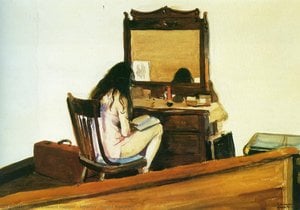
Sunlights in Cafeteria

Edward Hopper's 'Sunlight in a Cafeteria' (1958) captures urban solitude and quiet tension with masterful light & shadow. Explore American Realism’s evocative depiction of modern life – perfect for art lovers.

Erkunden Sie die ikonischen amerikanischen Realistmalereien von Edward Hopper (1882-1967). Bekannt für seine eindringlichen städtische und ländliche Szenen, seine meisterhafte Verwendung von Licht und seine Themen der Einsamkeit und des modernen Lebens. Entdecken Sie 'House by the Railroad' & mehr bei WahooArt.

Giclée / Kunstdruck

Giclée- oder Leinwanddruck in Museumsqualität mit schneller Produktion und flexiblen Veredelungsoptionen. (Handgemalte Reproduktion bestellen Handgemalte Reproduktion bestellenZum digitalen Bild wechseln Zum digitalen Bild wechseln)

P118B $10
P118H $10
P118W $10
P438Z $10
P508JH $12
P508YH $12
P805H $10
P805Z $10
P919BZ $10
P919G $10
P919XJ $10
P959ZH $10
P968JZ $12
W106C $8
W218G $10
W218JH $8
W218Y $10
W307PJ $10
W316G $10
W316PJ $8
W316Y $10
W398PJ $8
W4111J $10
W500HY $15
W500JH $15
W692G $12
W849H $8
W940BG $15
W953PJ $8

Standardformat
individuell anpassbar
CM
INCH

Wählen Sie aus unseren vordefinierten Formaten, die den ursprünglichen Proportionen des Kunstwerks entsprechen.

Breite
Höhe

Sie können Ihre eigenen Maße eingeben, um ein bestimmtes Format oder einen speziellen Platz einzupassen. Wenn das von Ihnen gewählte Format nicht den Proportionen des Originalbildes entspricht, werden wir das Kunstwerk entweder beschneiden oder das Bild mit einem gespiegelten oder einfarbigen Rand erweitern. Ein digitaler Entwurf wird Ihnen zur Genehmigung zugesandt, bevor die Produktion beginnt.
Bitte beachten Sie, dass die Vorschau auf dem Bildschirm nicht den tatsächlichen Zuschnitt oder die Erweiterung widerspiegelt. Nur der Entwurf zeigt die endgültige Komposition präzise an.
Obwohl Sondermaße verfügbar sind, empfehlen wir die Auswahl eines Maßes aus der vordefinierten Liste, um die ursprünglichen Proportionen zu bewahren.

Weltweiter Versand () innerhalb von 2 Wochen statt der üblichen 4/5 Wochen. (10 September)

why_choose_icon
Kostenloser weltweiter Expressversand
why_choose_icon
Hochwertige Leinenleinwand
why_choose_icon
Umfassender Versicherungsschutz beim Versand
why_choose_icon
Zollgebühren-Rückerstattungsgarantie
why_choose_icon
Garantie für exakte Farbtreue
why_choose_icon
100-Tage-Rückgaberecht (nur bei Mängeln)
why_choose_icon
100% Geld-zurück-Garantie
why_choose_icon
Mengenrabatt verfügbar

Gesamtpreis

$ 68

reproduction

Sunlights in Cafeteria

Giclée / Kunstdruck

Format der Reproduktion

-

Gesamtpreis

$ 68

Eckdaten

  • Subject or theme: Cafeteria scene
  • Artistic style: Realist, Melancholy
  • Year: 1958
  • Influences: Hemingway
  • Medium: Oil on canvas
  • Movement: American Realism
  • Title: Sunlight in a Cafeteria

Kunst-Quiz

Jede Frage hat nur eine richtige Antwort.

Frage 1:
What is the primary subject of Edward Hopper’s ‘Sunlight in a Cafeteria’?
Frage 2:
The painting ‘Sunlight in a Cafeteria’ is primarily associated with which art movement?
Frage 3:
What does the lighting in ‘Sunlight in a Cafeteria’ primarily suggest?
Frage 4:
Edward Hopper was born in which city?
Frage 5:
The painting ‘Sunlight in a Cafeteria’ was created in which year?

A Moment Frozen: The Poignant Realism of *Sunlight in a Cafeteria*

Edward Hopper's 1958 painting, *Sunlight in a Cafeteria*, isn’t merely a depiction of a diner scene; it’s a distilled essence of modern American loneliness. Captured with his signature mastery of light and shadow, the work transports us to a quiet corner of urban life, where unspoken anxieties and the subtle dance between strangers hang heavy in the air. The painting immediately draws the eye – not towards grand spectacle or dramatic action, but toward the carefully constructed stillness of the interior, bathed in the warm, diffused glow of afternoon sunlight streaming through the large window. Hopper’s deliberate choice to frame the scene through this glass creates a sense of voyeurism, inviting us into a private moment that we are both observers and, perhaps, subtly implicated within.

The composition itself is deceptively simple yet profoundly effective. A man and a woman occupy separate tables, their postures suggesting an awareness of each other’s presence without any overt interaction. The man, clad in a dark suit and holding a cigarette, gazes out the window – a gesture that simultaneously conveys contemplation and detachment. His back is turned to the woman, who sits quietly, her attention focused on a sandwich, her hands folded neatly in her lap. This arrangement immediately establishes a palpable tension—a feeling of potential connection thwarted by an unspoken barrier. Hopper’s use of color further amplifies this mood; the warm yellows and browns of the diner contrast sharply with the cooler tones of the street outside, reinforcing the sense of isolation within the brightly lit space.

The Language of Light and Shadow: Hopper's Technique

Hopper’s technical skill is paramount to the painting’s impact. He was a master of capturing the subtle nuances of light, using it not just to illuminate form but also to evoke mood and atmosphere. Notice how he renders the sunlight – not as a harsh, direct beam, but as a diffused glow that softens edges and casts long shadows. This technique creates a sense of depth and realism while simultaneously contributing to the painting’s melancholic tone. The meticulous detail with which Hopper depicts the diner's interior—the chrome accents, the checkered floor, the worn wood of the tables—adds to the feeling of authenticity and invites us to linger in this carefully constructed world.

Furthermore, Hopper’s use of perspective is particularly noteworthy. The slightly skewed angles of the furniture and the placement of the figures create a sense of unease and disorientation, mirroring the emotional state of the subjects themselves. He employed a technique known as “atmospheric perspective,” subtly blurring details in the distance to suggest depth and recession, further enhancing the painting’s realism and drawing the viewer into the scene.

Echoes of Isolation: Context and Symbolism

*Sunlight in a Cafeteria* is deeply rooted in Hopper's broader exploration of American loneliness and urban alienation. Born in 1882, Hopper witnessed significant social and cultural shifts during his lifetime – the rise of industrialization, urbanization, and the increasing sense of anonymity in modern life. His paintings often reflect these anxieties, portraying individuals adrift in vast cities, struggling to connect with one another. This painting is part of a larger body of work that examines the quiet desperation of the American experience.

The diner itself becomes a potent symbol—a temporary refuge from the outside world, yet also a space of isolation and detachment. It’s a place where strangers briefly encounter one another, but rarely forge lasting connections. The painting's title, *Sunlight in a Cafeteria*, is particularly evocative, suggesting both warmth and an underlying sense of melancholy—a reminder that even in the brightest light, loneliness can persist.

A Timeless Masterpiece: Reproduction and Beyond

WahooArt offers meticulously crafted hand-painted reproductions of *Sunlight in a Cafeteria*, allowing you to bring this iconic work into your home or office. Our artists replicate Hopper’s masterful use of light, shadow, and composition with exceptional detail, ensuring that the painting's emotional impact is fully preserved. Whether you are an art collector, an interior designer seeking to create a sophisticated atmosphere, or simply someone who appreciates the beauty of American realism, a WahooArt reproduction of *Sunlight in a Cafeteria* is a timeless addition to any collection. Explore our gallery today and discover the perfect way to experience this poignant masterpiece.


Über den Künstler

**frühes Leben und Einflüsse**

Edward Hopper, ein bedeutender amerikanischer Realist-Maler und Grafiker, wurde am 22. Juli 1882 in Upper Nyack, New York, geboren. Seine Familie, von hauptsächlich niederländischer Abstammung, bot eine komfortable Erziehung, die es Hopper ermöglichte, seine künstlerischen Neigungen schon im frühen Alter zu verfolgen. - **Inspirationen:** Hoppers Werk wurde von den Schriften von Ralph Waldo Emerson und den französischen Impressionisten-Meistern Édouard Manet und Edgar Degas beeinflusst. - **Frühzeitige Ausbildung:** Er begann mit Kunststudien durch einen Korrespondenzkurs im Jahr 1899, wechselte später an die New York School of Art and Design.

**Künstlerischer Stil und Themen**

Edward Hopper's sparsame und präzise Darstellungen spiegelten seine persönliche Vision des modernen amerikanischen Lebens wider. Sein Werk lässt sich durch folgende Merkmale charakterisieren: - **Städtische und ländliche Szenen:** Beide Umgebungen wurden mit einer einzigartigen Mischung aus Realismus und emotionaler Tiefe dargestellt. - **Beleuchtung:** Eine Meisterschaft der Beleuchtung, oft eingesetzt, um Gefühle von Isolation oder Kontemplation hervorzurufen. - **Figuren:** Oft ohne Gesicht oder im Hintergrund platziert, wodurch die Umgebung gegenüber den Figuren betont wird.

**Bekannte Werke und ihre Bedeutung**

- House by the Railroad (Museum of Modern Art, New York, United States), ein Beispiel für Hoppers Fähigkeit, durch eine einfache, aber wirkungsvolle Komposition einen Hauch von Melancholie hervorzurufen. - Reclining Nude (50 x 35 cm, New Realism, Watercolour), das seine Vielseitigkeit bei der Darstellung des menschlichen Körpers demonstriert.

**Vermächtnis und Einfluss**

- **Einfluss auf zukünftige Künstler:** Hoppers einzigartiger Stil hat zahlreiche Künstler beeinflusst, darunter Pierre Sanford Ross, der für seine städtischen und ländlichen Szenen bekannt ist. - **dauernde Beliebtheit:** Seine Werke fesseln weiterhin das Publikum mit ihren zeitlosen Themen von Einsamkeit und dem menschlichen Dasein.

**Erfahren Sie mehr bei WahooArt**

- [https://WahooArt.com/@/edward-hopper](Edward Hoppers Werke) - /de/art/show/art-8xyffg-de/Kaufen Sie Kunst inspiriert von den Meistern)
  • Erkunden Sie die Welt der Kunst mit der umfangreichen Kollektion von WahooArt.
  • Entdecken Sie, wie Hoppers Vermächtnis weiterhin Künstler und Kunstliebhaber inspiriert.

**Referenzen**

- [https://WahooArt.com/@/edward-hopper](Wikipedia: Edward Hopper) - [https://en.wikipedia.org/wiki/edward_hopper](Wikipedia: Edward Hoppers Biografie)
Edward Hopper

Edward Hopper

1931 - 1967 , Vereinigte Staaten von Amerika

Kurzinfos

  • Beeinflusste Künstler: ['Pierre Sanford Ross']
  • Bemerkenswerte Werke:
    • House by the Railroad
    • Nighthawks
    • Gas
    • Chop Suey
    • Sommertime
  • Einflüsse:
    • Ralph Waldo Emerson
    • Édouard Manet
    • Edgar Degas
  • Geburtsdatum: 22. Juli 1882
  • Geburtsort: Upper Nyack, USA
  • Künstlerischer Stil: Amerikanischer Realismus
  • Nationalität: Amerikanisch
  • Sterbedatum: 1967
  • Vollständiger Name: Edward Hopper
Entdecken Sie Kunstwerke, die nach Themen, Stilen und Merkmalen sortiert sind.