Edward Hopper’s Introspective Masterpiece: “Selbstporträt” – A Window into American Solitude
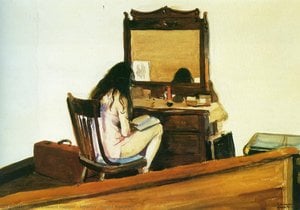
Edward Hopper's "Selbstporträt" (Self Portrait), painted between 1925 and 1930, isn’t merely a likeness of the artist; it’s a profound meditation on isolation, observation, and the quiet dignity of the individual within the burgeoning metropolis. This oil-on-canvas work, measuring approximately 64.5 x 51.8 centimeters, offers a remarkably intimate glimpse into Hopper's artistic psyche – a world steeped in subtle melancholy and punctuated by moments of poignant beauty. The painting’s power lies not in grand gestures or dramatic scenes, but rather in the carefully rendered details that speak volumes about the artist’s internal landscape.
Hopper’s signature style is immediately apparent: a masterful command of light and shadow, creating an atmosphere of subdued drama. He employs a limited palette – primarily browns, blues, and greys – to evoke a sense of stillness and introspection. The brushstrokes are deliberate and controlled, lending the portrait a remarkable solidity and presence. Notice how Hopper uses chiaroscuro—the dramatic contrast between light and dark—to sculpt the figure’s face and shoulders, drawing our attention to his gaze, which is direct yet melancholic. This technique isn't simply about representation; it’s about conveying mood and emotion with exceptional subtlety.
The Portrait as a Reflection of an Era
“Selbstporträt” was created during a pivotal period in Hopper’s career – a time when he was grappling with themes of urban alienation and the loneliness inherent in modern American life. The painting reflects the broader cultural anxieties of the 1920s and 30s, an era marked by rapid industrialization, social change, and a growing sense of detachment. Hopper wasn’t just documenting a scene; he was capturing the spirit of his time – a feeling of quiet desperation beneath the veneer of progress. The stark simplicity of the composition—a single figure against a neutral background—underscores this theme of isolation.
Interestingly, Hopper's self-portraits were not always straightforward representations of himself. He often used them as a means to explore different facets of his personality and to experiment with techniques. This particular portrait, painted during a period of relative artistic experimentation, reveals a more introspective and vulnerable side of the artist than many of his later works. The slightly hesitant posture and the thoughtful expression on his face suggest a man wrestling with complex emotions – a quiet contemplation that resonates deeply with viewers.
Symbolism and Emotional Resonance
Beyond its technical brilliance, “Selbstporträt” is rich in symbolic meaning. The brown hat, a recurring motif in Hopper’s work, can be interpreted as representing the weight of experience or perhaps even a sense of anonymity within the crowd. The blue shirt, while seemingly simple, adds a touch of formality and dignity to the figure. The direct gaze of the subject is particularly significant; it challenges the viewer to confront their own feelings of isolation and to consider the unspoken narratives behind every portrait.
Furthermore, the painting’s emotional impact stems from its ability to evoke a sense of familiarity—a feeling that we have all experienced moments of quiet solitude and introspection. Hopper doesn't offer easy answers or grand pronouncements; instead, he presents us with a raw and honest portrayal of the human condition – a testament to the enduring power of art to capture the complexities of our inner lives. It’s a poignant reminder that even in the midst of a bustling world, moments of profound solitude can be deeply meaningful.
A Reproduction for Your Space
WahooArt offers meticulously crafted hand-painted reproductions of Edward Hopper's “Selbstporträt,” allowing you to bring this iconic work into your home or office. Our skilled artists faithfully recreate Hopper’s masterful use of light, shadow, and color, ensuring that the essence of the original painting is preserved with stunning accuracy. Whether you are an art enthusiast, a collector, or simply seeking a piece of art that evokes emotion and contemplation, our reproduction provides a beautiful and authentic representation of this timeless masterpiece. Consider how its quiet intensity would complement your interior design—a subtle yet powerful statement about the beauty of introspection.



 In echtem Maßstab anzeigen
 Handgemalte Reproduktion kaufen
 Versenden als Grußkarte
 Teilen
 Details anzeigen

 Herunterladen
 Ähnliche Objekte
 Röntgenaufnahme
 Diashow
 Besucherstatistiken
 Mehr anzeigen






































 Die Glasoption ist nur für Größen unter 110 cm verfügbar.