Kostenlose Kunstberatung

x
Gemälde kaufen Gemälde kaufenBild kaufen Bild kaufen VersendenVersenden
DetailsDetails Zu Favoriten hinzufügen Zu Favoriten hinzufügen HerunterladenHerunterladen Ähnliche ObjekteÄhnliche Objekte RöntgenaufnahmeRöntgenaufnahme Diashow anzeigenDiashow anzeigen

el palacio

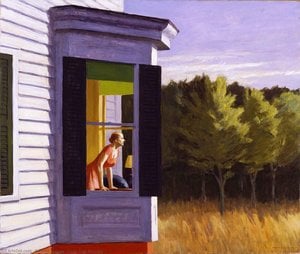
Edward Hopper's "El Palacio" captures urban solitude with striking realism—a black-and-white depiction of a city street, evoking quiet contemplation and the essence of American modern life.

Erkunden Sie die ikonischen amerikanischen Realistmalereien von Edward Hopper (1882-1967). Bekannt für seine eindringlichen städtische und ländliche Szenen, seine meisterhafte Verwendung von Licht und seine Themen der Einsamkeit und des modernen Lebens. Entdecken Sie 'House by the Railroad' & mehr bei WahooArt.

Giclée / Kunstdruck

Giclée- oder Leinwanddruck in Museumsqualität mit schneller Produktion und flexiblen Veredelungsoptionen.

P118B $10
P118H $10
P118W $10
P438Z $10
P508JH $12
P508YH $12
P805H $10
P805Z $10
P919BZ $10
P919G $10
P919XJ $10
P959ZH $10
P968JZ $12
W106C $8
W218G $10
W218JH $8
W218Y $10
W307PJ $10
W316G $10
W316PJ $8
W316Y $10
W398PJ $8
W4111J $10
W500HY $15
W500JH $15
W692G $12
W849H $8
W940BG $15
W953PJ $8

Standard
custom
CM
INCH

Wählen Sie aus unseren vordefinierten Größen, die den ursprünglichen Proportionen des Kunstwerks entsprechen.

Breite
Höhe

Sie können Ihre eigenen Maße eingeben, um ein bestimmtes Format oder einen speziellen Platz einzupassen. Wenn das von Ihnen gewählte Format nicht den Proportionen des Originalbildes entspricht, werden wir das Kunstwerk entweder beschneiden oder das Bild mit einem gespiegelten oder einfarbigen Rand erweitern. Ein digitaler Entwurf wird Ihnen zur Genehmigung zugesandt, bevor die Produktion beginnt.
Bitte beachten Sie, dass die Vorschau auf dem Bildschirm nicht den tatsächlichen Zuschnitt oder die Erweiterung widerspiegelt. Nur der Entwurf zeigt die endgültige Komposition präzise an.
Obwohl Sondermaße verfügbar sind, empfehlen wir die Auswahl eines Maßes aus der vordefinierten Liste, um die ursprünglichen Proportionen zu bewahren.

Weltweiter Versand () innerhalb von 2 Wochen statt der üblichen 4/5 Wochen. (3 Juli)

why_choose_icon
Kostenloser weltweiter Expressversand
why_choose_icon
Hochwertige Leinenleinwand
why_choose_icon
Umfassender Versicherungsschutz beim Versand
why_choose_icon
Zollsteuer-Rückerstattungsgarantie
why_choose_icon
Garantie für echte Farbtreue
why_choose_icon
60-Tage-Rückgaberecht (nur bei Mängeln)
why_choose_icon
100% Geld-zurück-Garantie
why_choose_icon
Mengenrabatt verfügbar

Gesamtpreis

-

reproduction

el palacio

Giclée / Kunstdruck

Größe der Reproduktion

-

Endpreis aller Optionen

-

Eckdaten auf einen Blick

  • Medium: Oil on canvas
  • Title: El Palacio
  • Location: Art Institute, Chicago
  • Subject: City street scene
  • Influences: Hemingway
  • Style: Urban realism
  • Notable elements: Signs, urban street

Kunst-Quiz

Jede Frage hat nur eine richtige Antwort.

Frage 1:
What is the primary subject depicted in Edward Hopper’s ‘El Palacio’?
Frage 2:
The painting ‘El Palacio’ was created in which year?
Frage 3:
What is prominently displayed on one of the signs visible in ‘El Palacio’?
Frage 4:
Edward Hopper is most known for his paintings that capture which theme?
Frage 5:
Based on the image description, what is the overall atmosphere conveyed by ‘El Palacio’?

Beschreibung des Sammlerstücks

A Silent Cityscape: Unveiling Edward Hopper's "El Palacio"

Edward Hopper’s 1946 painting, “El Palacio,” isn’t merely a depiction of a city street; it’s a carefully constructed tableau of urban solitude and the quiet anxieties of modern life. Rendered in stark black and white, the image immediately draws the viewer into a scene brimming with understated tension. The composition is dominated by towering buildings on either side, their windows like watchful eyes observing the few figures that populate the street below. The painting’s power lies not in dramatic action or vibrant color—rather, it resides in the subtle details and the palpable sense of detachment that permeates every element.

Hopper masterfully employs light and shadow to create a mood of melancholic introspection. The strong directional lighting emphasizes the textures of the buildings and casts deep shadows, contributing to the painting’s overall feeling of confinement. The open windows invite glimpses into private lives, yet they simultaneously reinforce the sense that these individuals are isolated within their own worlds. The signs visible in the scene—including the prominent “El Palacio”—add a layer of mystery, hinting at a grand establishment and perhaps suggesting a world beyond the immediate view.

The Painter’s Palette: Technique and Style

“El Palacio” exemplifies Hopper's signature style – a blend of realism and psychological insight. He was known for his ability to capture fleeting moments of human experience, often focusing on scenes of loneliness or alienation. Hopper’s technique is characterized by precise observation and meticulous detail. The buildings are rendered with remarkable accuracy, capturing their architectural forms and the subtle variations in surface texture. His use of line is particularly noteworthy; he employs clean, confident lines to define shapes and create a sense of solidity, while simultaneously suggesting movement through the arrangement of elements within the composition.

The painting’s monochromatic palette—a deliberate choice by Hopper—heightens its emotional impact. The absence of color forces the viewer to focus on form, light, and shadow, intensifying the feeling of isolation and emphasizing the starkness of the urban environment. Hopper's approach was rooted in a desire to represent reality as he perceived it, unburdened by sentimentality or romanticism. He sought to capture the essence of American life—its beauty, its challenges, and its inherent loneliness—with unflinching honesty.

Historical Context: The Post-War Landscape

“El Palacio” was created in 1946, a period marked by significant social and cultural shifts following World War II. America was grappling with the aftermath of conflict, experiencing rapid urbanization, and confronting new anxieties about identity and purpose. Hopper’s work resonated deeply with this mood, reflecting the growing sense of alienation and disillusionment that characterized the post-war era. The painting can be seen as a commentary on the changing nature of American society—a world increasingly defined by anonymity, isolation, and the breakdown of traditional social structures.

Interestingly, Hopper himself described the scene as “suggested by a restaurant on Greenwich Avenue where two streets meet.” This anecdote reveals his meticulous approach to composition and his desire to capture not just a literal representation but also an emotional truth. The painting’s enduring appeal lies in its ability to evoke a sense of familiarity—a recognition of the quiet, often overlooked moments that shape our lives.

Symbolism and Emotional Resonance

Beyond its realistic depiction of a city street, “El Palacio” is rich in symbolic meaning. The towering buildings represent the impersonal forces of urban life, while the open windows symbolize both opportunity and isolation. The figures within the scene—their faces obscured by shadow—suggest a sense of anonymity and detachment. Hopper’s masterful use of light and shadow creates a powerful emotional atmosphere, evoking feelings of loneliness, longing, and perhaps even a touch of melancholy.

Ultimately, “El Palacio” is a poignant meditation on the human condition – a reminder that even in the midst of bustling urban environments, we can still experience profound solitude. It’s a painting that invites contemplation and encourages us to consider our own place within the larger narrative of American life.


Biografie des Künstlers

**frühes Leben und Einflüsse**

Edward Hopper, ein bedeutender amerikanischer Realist-Maler und Grafiker, wurde am 22. Juli 1882 in Upper Nyack, New York, geboren. Seine Familie, von hauptsächlich niederländischer Abstammung, bot eine komfortable Erziehung, die es Hopper ermöglichte, seine künstlerischen Neigungen schon im frühen Alter zu verfolgen. - **Inspirationen:** Hoppers Werk wurde von den Schriften von Ralph Waldo Emerson und den französischen Impressionisten-Meistern Édouard Manet und Edgar Degas beeinflusst. - **Frühzeitige Ausbildung:** Er begann mit Kunststudien durch einen Korrespondenzkurs im Jahr 1899, wechselte später an die New York School of Art and Design.

**Künstlerischer Stil und Themen**

Edward Hopper's sparsame und präzise Darstellungen spiegelten seine persönliche Vision des modernen amerikanischen Lebens wider. Sein Werk lässt sich durch folgende Merkmale charakterisieren: - **Städtische und ländliche Szenen:** Beide Umgebungen wurden mit einer einzigartigen Mischung aus Realismus und emotionaler Tiefe dargestellt. - **Beleuchtung:** Eine Meisterschaft der Beleuchtung, oft eingesetzt, um Gefühle von Isolation oder Kontemplation hervorzurufen. - **Figuren:** Oft ohne Gesicht oder im Hintergrund platziert, wodurch die Umgebung gegenüber den Figuren betont wird.

**Bekannte Werke und ihre Bedeutung**

- House by the Railroad (Museum of Modern Art, New York, United States), ein Beispiel für Hoppers Fähigkeit, durch eine einfache, aber wirkungsvolle Komposition einen Hauch von Melancholie hervorzurufen. - Reclining Nude (50 x 35 cm, New Realism, Watercolour), das seine Vielseitigkeit bei der Darstellung des menschlichen Körpers demonstriert.

**Vermächtnis und Einfluss**

- **Einfluss auf zukünftige Künstler:** Hoppers einzigartiger Stil hat zahlreiche Künstler beeinflusst, darunter Pierre Sanford Ross, der für seine städtischen und ländlichen Szenen bekannt ist. - **dauernde Beliebtheit:** Seine Werke fesseln weiterhin das Publikum mit ihren zeitlosen Themen von Einsamkeit und dem menschlichen Dasein.

**Erfahren Sie mehr bei WahooArt**

- [https://WahooArt.com/@/edward-hopper](Edward Hoppers Werke) - [https://WahooArt.com/art.nsf/buy?open&ra=8xyffg](Kaufen Sie Kunst inspiriert von den Meistern)
  • Erkunden Sie die Welt der Kunst mit der umfangreichen Kollektion von WahooArt.
  • Entdecken Sie, wie Hoppers Vermächtnis weiterhin Künstler und Kunstliebhaber inspiriert.

**Referenzen**

- [https://WahooArt.com/@/edward-hopper](Wikipedia: Edward Hopper) - [https://en.wikipedia.org/wiki/edward_hopper](Wikipedia: Edward Hoppers Biografie)
Edward Hopper

Edward Hopper

1931 - 1967 , Vereinigte Staaten von Amerika

Kurzinfos

  • Beeinflusste Künstler: ['Pierre Sanford Ross']
  • Bemerkenswerte Werke:
    • House by the Railroad
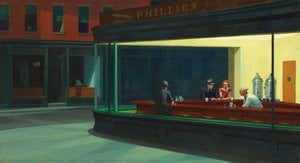
    • Nighthawks
    • Gas
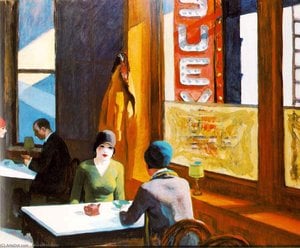
    • Chop Suey
    • Sommertime
  • Einflüsse:
    • Ralph Waldo Emerson
    • Édouard Manet
    • Edgar Degas
  • Geburtsdatum: 22. Juli 1882
  • Geburtsort: Upper Nyack, USA
  • Künstlerischer Stil: Amerikanischer Realismus
  • Nationalität: Amerikanisch
  • Sterbedatum: 1967
  • Vollständiger Name: Edward Hopper
Entdecken Sie Kunstwerke, die nach Themen, Stilen und Merkmalen sortiert sind.