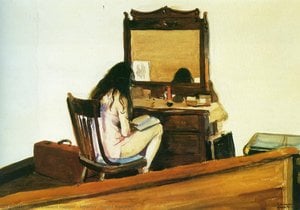
Handgemaltes Ölgemälde auf Leinwand in Ihrer Wunschgröße und mit Rahmen, auf Bestellung von unseren Künstlern angefertigt. ( Druck bestellen Bild kaufen)





























Wählen Sie aus unseren vordefinierten Formaten, die den ursprünglichen Proportionen des Kunstwerks entsprechen.

Sie können Ihre eigenen Maße eingeben, um einen bestimmten Rahmen oder Platz auszufüllen. Wenn die gewählte Größe nicht den Proportionen des Originalbildes entspricht, werden wir das Kunstwerk entweder beschneiden oder das Gemälde durch zusätzliche, handgemalte Elemente erweitern. Ein digitales Mockup wird Ihnen zur Genehmigung zugesandt, bevor die Produktion beginnt.
Bitte beachten Sie, dass die Bildschirmvorschau nicht die tatsächliche Beschneidung oder Erweiterung widerspiegelt. Nur das Mockup zeigt die endgültige Komposition exakt an.
Obwohl Sondermaße verfügbar sind, empfehlen wir, eine Größe aus der vordefinierten Liste zu wählen, um die ursprünglichen Proportionen beizubehalten.
Weltweiter Versand () in nur 3 bis 4 Wochen statt der üblichen 5 Wochen. (7 September). Keine Kompromisse bei der Qualität.


Circle Theatre
Format der Reproduktion
In the quiet, heavy atmosphere of Edward Hopper’s "Circle Theatre," we are invited to witness more than just a street corner in a bustling metropolis; we are invited to feel the profound weight of modern existence. Painted during a transformative era of American history, this masterpiece serves as a poignant meditation on the paradox of urban life—the way one can be surrounded by the movement of a city yet remain utterly alone. As the late afternoon light filters through the scene, it casts a diffused, almost cinematic glow over the weathered brickwork and the passing vintage automobile, creating a moment frozen in time that feels both intensely real and hauntingly dreamlike.
Hopper’s mastery of American Realism is on full display through his meticulous attention to detail and his unparalleled ability to manipulate light and shadow. Unlike the fleeting, bright impressions of the Impressionists, Hopper’s technique involves a deliberate, layered approach to oil on canvas. He renders the chrome gleam of a passing car and the stark geometry of the theater sign with such precision that the textures feel palpable to the viewer. His palette, dominated by muted yellows, deep reds, and earthy browns, does not merely decorate the scene; it builds an emotional landscape of melancholy and stillness. The way light interacts with the architectural surfaces creates a sense of depth that draws the eye into the shadows, where the true narrative of the painting resides.
To understand "Circle Theatre," one must look through the lens of the 1930s—a period defined by the Great Depression and a rapid, often disorienting shift toward urbanization. The theater itself stands as a powerful symbol of human aspiration and the desire for communal entertainment, yet in Hopper’s vision, it remains strangely vacant, a silent sentinel amidst the traffic. This disconnect between the grandeur of the urban infrastructure and the palpable emptiness within it reflects the growing anxieties of an era grappling with the impersonal nature of modern life. The presence of pedestrians and vehicles provides a rhythmic movement to the composition, yet they seem like ghosts passing through a stage, emphasizing the theme of transient connection.
For the discerning collector or interior designer, this artwork offers a sophisticated emotional anchor for any space. It is a piece that commands attention not through loud colors, but through its quiet, commanding presence. A high-quality reproduction of "Circle Theatre" brings a sense of intellectual depth and timeless elegance to a room, making it an ideal centerpiece for those who appreciate art that provokes thought and invites contemplation. Whether placed in a contemporary gallery setting or a classic study, the painting’s ability to evoke both the grandeur of the American cityscape and the intimate ache of solitude ensures its enduring relevance in the modern home.


1931 - 1967 , Vereinigte Staaten von Amerika

Entdecken Sie die 25 Meisterwerke von Edward Hopper! Tauchen Sie ein in amerikanische Kunst, Realismus & Isolation. Hochwertige Reproduktionen & Inspiration für Ihr Zuhause bei WahooArt.com.

Entdecken Sie die 10 Meisterwerke des Amerikanischen Realismus! Von Edward Hopper bis Winslow Homer – erleben Sie die Geschichten, Techniken & zeitlose Schönheit. Hochwertige Kunstdrucke auf WahooArt.com.

Explore the profound beauty of American Realism. From the Ashcan School's urban grit to intimate portraits, discover how artists captured the authentic soul of a nation through unvarnished truth and masterful observation.

Explore the evolution of cityscape painting from Realism to contemporary art with WahooArt. Discover key artists & invest in timeless urban visions. Expert guidance, museum-quality reproductions.

Explore the powerful social commentary & artistic representation of American Realism. Discover key artists like Bellows & Sloan, and understand the movement's lasting impact on 20th-century art history.

 Vorschau anzeigen
 Versenden
 Teilen
 Details anzeigen

 Herunterladen
 Ähnliche Objekte
 Röntgenaufnahme
 Diashow

 Weiterlesen







 Die Glasoption ist nur für Größen unter 110 cm verfügbar.