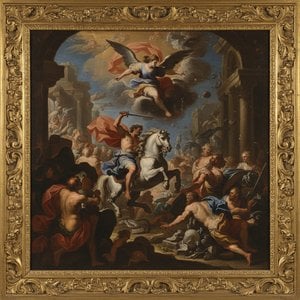
Der Meister von Licht und Schatten: Diego Velázquez
Diego Rodríguez de Silva y Velázquez, geboren in Sevilla im Jahr 1599, nimmt eine einzigartige Stellung in der Kunstgeschichte ein – nicht nur als spanischer Meister, sondern als zentrale Figur, deren Innovationen über Jahrhunderte hinweg nachwirkten. Sein Leben entfaltete sich während des spanischen Goldenen Zeitalters, einer Epoche geprägt von imperialer Macht und kultureller Blüte, und seine Kunst wurde untrennbar mit der Pracht und den Komplexitäten des Habsburgerhofes verbunden. Aus bescheidenen Verhältnissen stammend, stieg Velázquez zu mehr als nur einem Maler auf; er wurde ein visueller Interpret eines Reiches, der dessen Herrscher, Höflinge und das alltägliche Leben mit beispielloser Realitätstreue und psychologischer Tiefe festhielt. Seine künstlerische Reise begann unter der Anleitung von Francisco de Herrera el Viejo und entscheidend bei Francisco Pacheco, dessen strenge Ausbildung ihm eine Grundlage in Technik, Proportionen und klassischem Lernen vermittelte. Doch es war Velázquez’ angeborenes Talent – eine außergewöhnliche Sensibilität für Licht, Farbe und den menschlichen Charakter – das ihn wirklich auszeichnete. Selbst frühe Werke wie *Eine alte Frau brät Eier* deuteten bereits auf den revolutionären Ansatz hin, den er in der Genremalerei verfolgen würde, indem er alltäglichen Szenen eine Würde und Unmittelbarkeit verlieh, die zuvor unbekannt war.
Aufstieg zum Hofe Philipps IV.
Im Jahr 1623, im Alter von vierundzwanzig Jahren, traf Velázquez die folgenreiche Entscheidung, nach Madrid umzuziehen, um am Herzen der spanischen Macht Schutz zu suchen. Dieser Schritt erwies sich als entscheidend. Er erlangte schnell Anerkennung und wurde 1628 zum Hofmaler König Philipps IV. ernannt, eine Position, die er bis zu seinem Lebensende innehaben sollte. Diese Ernennung bedeutete nicht nur die Sicherstellung einer Anstellung; sie gewährte Velázquez beispiellosen Zugang zur königlichen Familie und dem Adel, der es ihm ermöglichte, durch seine Gemälde deren Chronist zu werden. Im Gegensatz zu vielen Hofkünstlern, die ihre Modelle idealisierten, strebte Velázquez nach unerbittlicher Realitätstreue. Er porträtierte Philipp IV. nicht als entferntes Symbol der Autorität, sondern als einen Mann – intelligent, melancholisch und von Verantwortung belastet. Dieses Engagement für Wahrhaftigkeit, verbunden mit seiner meisterhaften Technik, erwarb ihm das Vertrauen des Königs und zunehmende künstlerische Freiheit. Seine frühen Hofporträts zeigen einen sich entwickelnden Stil, der sich von der starren Formalität früherer spanischer Porträtmalerei hin zu einem naturalistischeren und psychologisch aufschlussreicheren Ansatz entfernt. Der Einfluss venezianischer Meister wie Tizian – dessen Werke Philipp IV. eifrig sammelte – ist in Velázquez’ zunehmend flüssiger Pinselstrich und reichen Farbpaletten erkennbar. Er absorbierte die Lektionen der venezianischen Malerei, insbesondere deren Betonung von Farbe und lockerem Pinselstrich, und verwandelte sie in etwas Einzigartig Eigenes.
Der Höhepunkt künstlerischer Innovation: *Las Meninas* und darüber hinaus
Velázquez’ künstlerisches Genie erreichte seinen Höhepunkt in den 1650er Jahren, kulminierend in der Schaffung seines Meisterwerks, *Las Meninas* (1656). Dieses Gemälde ist nicht nur ein Porträt; es ist eine komplexe Meditation über die Kunst selbst. Es zeigt die Infantin Margarita Teresa, umgeben von ihren Hofdamen, Zwergen und anderen Mitgliedern des Hofes, während Velázquez selbst vor einer großen Leinwand steht, scheinbar beim Malen überrascht. Die Einbeziehung des Königs und der Königin, die sich im Spiegel im Hintergrund des Raumes spiegeln, fügt eine weitere Ebene der Intrige hinzu, die die Grenzen zwischen Beobachter und Beobachtetem, Realität und Repräsentation verwischt. *Las Meninas* ist ein Tour de Force der Perspektive, Komposition und psychologischen Einsicht, das den Betrachter herausfordert, seine eigene Rolle im Akt des Betrachtens zu hinterfragen. Es ist ein Gemälde über Sehen, Gesehenwerden und die Natur künstlerischer Schöpfung selbst. Weitere bedeutende Werke aus dieser Zeit sind *Die Kapitulation von Breda*, eine kraftvolle Darstellung des spanischen Sieges mit bemerkenswerter Menschlichkeit, und Porträts wie *Dona Mariana von Österreich*, die seine Fähigkeit zeigen, sowohl königliche Würde als auch innere Verletzlichkeit einzufangen. Seine Technik entwickelte sich weiter, gekennzeichnet durch lockeren Pinselstrich, subtile Tonabstufungen und eine außergewöhnliche Sensibilität für Licht und Atmosphäre – ein Markenzeichen, das kommende Generationen von Künstlern tiefgreifend beeinflussen sollte.
Vermächtnis und bleibender Einfluss
Diego Velázquez starb 1660 in Madrid und hinterließ ein Werk, das den Verlauf der westlichen Kunst nachhaltig prägen sollte. Seine Betonung des Realismus, seine innovative Verwendung von Licht und Schatten sowie seine psychologische Tiefe brachen neue Wege in der Malerei. Er zeichnete nicht nur Erscheinungen auf; er fing die Essenz menschlicher Erfahrung ein. Im 19. Jahrhundert sahen französische Realisten wie Gustave Courbet in Velázquez ein Vorbild für ihr eigenes Engagement, das Leben ohne Idealisierung darzustellen. *Édouard Manet*, tief inspiriert von *Las Meninas*, bezog sich direkt auf Velázquez’ Komposition in seinen eigenen Werken und demonstrierte die bleibende Kraft der Vision des spanischen Meisters. Im 20. Jahrhundert beschäftigten sich Künstler wie Pablo Picasso und Francis Bacon mit Velázquez’ Gemälden durch Neuinterpretationen und Hommagen, die seine anhaltende Relevanz für die moderne Kunst erkannten.
Picasso schuf beispielsweise eine Reihe von Variationen von *Las Meninas*, in denen er deren kompositorische Struktur und psychologische Komplexität erforschte. Heute befinden sich Velázquez’ Meisterwerke in Museen auf der ganzen Welt, insbesondere im Museo del Prado in Madrid, wo Besucher die Brillanz dieses außergewöhnlichen Künstlers aus erster Hand erleben können. Sein Vermächtnis inspiriert weiterhin Ehrfurcht und Bewunderung und festigt seinen Platz als einer der größten Maler aller Zeiten – ein Meister von Licht, Schatten und dem menschlichen Geist.
Wichtige Werke & Sammlungen
- *Las Meninas* (1656): Museo del Prado, Madrid - Zweifellos sein berühmtestes Werk, ein komplexes Porträt der königlichen Familie.
- *Die Kapitulation von Breda* (1634-1635): Museo del Prado, Madrid – Eine kraftvolle Darstellung des spanischen Sieges mit bemerkenswerter Menschlichkeit.
- *Venus vor dem Spiegel* (ca. 1647–1651): Museo del Prado, Madrid - Demonstriert seine Fähigkeit, Realismus und Schönheit in Einklang zu bringen.
- *Dona Mariana von Österreich, Königin von Spanien* (1649): Museo del Prado, Madrid – Ein atemberaubendes Porträt, das königliche Eleganz zeigt.
- *Porträt von Papst Innozenz X.* (1650): Galleria Doria Pamphilj, Rom - Ein auffälliges und unkonventionelles Porträt des Pontifikats.
- *Selbstporträt* (1643): Musée des Beaux-Arts, Valence – Zeigt einen würdevollen und introspektiven Künstler.
Seine Werke sind prominent vertreten im: Museo del Prado (Madrid), Musée des Beaux-Arts (Valence) und zahlreichen anderen renommierten Sammlungen weltweit.



 In echtem Maßstab anzeigen
 Zum Druck wechseln
 Versenden als Grußkarte
 Teilen
 Details anzeigen
 Leitfaden

 Herunterladen
 Ähnliche Objekte
 Röntgenaufnahme
 Diashow
 Besucherstatistiken


 Mehr anzeigen






































 Die Glasoption ist nur für Größen unter 110 cm verfügbar.