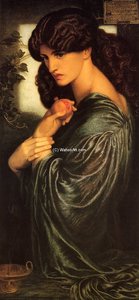
Das Geheimnis der Unterwelt: Eine Betrachtung von Rossettis "Proserpine"
Dante Gabriel Rossetti’s “Proserpine,” painted in 1874, is more than just a portrait; it's a poignant meditation on loss, longing, and the inescapable allure of the underworld. The painting, measuring a modest 6 x 125 cm, currently resides within the hallowed halls of Tate Britain in London, yet its impact transcends its physical dimensions. Rossetti’s masterful handling of color and light, combined with his profound understanding of Victorian sensibilities, creates an image that continues to resonate deeply with viewers today.
At the heart of the composition is Jane Morris, a muse both for Rossetti and her husband, Dante Gabriel Rossetti himself. Her languid pose, reminiscent of classical sculpture, immediately draws the eye. She holds a vibrant red apple – a potent symbol of temptation and forbidden knowledge – in her hand, while her gaze, direct and unwavering, seems to pierce through the veil between worlds. The blue dress she wears, rich and flowing, evokes both the serenity of the heavens and the shadowed depths of Pluto’s realm. The choice of blue is particularly significant; it represents melancholy, introspection, and a connection to the spiritual.
Die Symbolik der Frucht und des Untergangs
The central element of “Proserpine,” however, is undoubtedly the pomegranate she clutches. This fruit, laden with seeds representing the memories of her time spent in the underworld, embodies the very essence of Proserpine’s tragic fate. Pluto, the god of the dead, had lured her away from her beloved mother, Demeter, and confined her to his kingdom for half of each year. The pomegranate seeds symbolize not only her captivity but also the bittersweet nature of remembrance – a constant reminder of what was lost. Rossetti’s deliberate inclusion of this fruit is a powerful visual metaphor for the inescapable pull of the past and the enduring pain of separation.
The painting's setting, though largely undefined, subtly hints at the subterranean world. The muted tones and diffused light suggest an atmosphere of twilight and mystery, mirroring the perpetual gloom of Pluto’s realm. Rossetti skillfully employs chiaroscuro – the dramatic contrast between light and shadow – to create a sense of depth and drama, further emphasizing the emotional weight of Proserpine's plight.
Ein Blick in die Welt des Viktorianischen Romantikers
To fully appreciate “Proserpine,” it’s crucial to understand the artistic context in which it was created. Rossetti was a key figure in the Pre-Raphaelite Brotherhood, a group of artists who rejected the academic conventions of their time and sought inspiration from medieval art, literature, and mythology. The Pre-Raphaelites were deeply interested in symbolism and allegory, often using their works to explore complex themes related to love, death, and spirituality. “Proserpine” perfectly embodies these artistic principles, offering a richly layered visual narrative that invites contemplation and interpretation.
Rossetti’s technique is characterized by his meticulous attention to detail and his masterful use of color. He employed oil paints on canvas with a delicate brushwork, creating surfaces that shimmer with an almost ethereal quality. The rendering of Jane Morris's features – her expressive eyes, the graceful curve of her neck – demonstrates Rossetti’s exceptional skill as a portraitist. His ability to capture not only physical likeness but also emotional depth is truly remarkable.
Ein Kunstwerk für Sammler und Innendesigner
WahooArt offers exquisite, hand-painted reproductions of “Proserpine,” allowing art lovers to experience the beauty and power of this iconic painting in their own homes. Our meticulous process ensures that each reproduction faithfully captures the original’s nuances – from Rossetti's subtle color palette to his evocative brushstrokes. Whether you are a seasoned collector, an admirer of Pre-Raphaelite art, or simply seeking a stunning piece for your interior décor, a WahooArt reproduction of “Proserpine” is sure to be a treasured addition to your collection. It’s a window into the soul of a Victorian Romanticist and a timeless testament to the enduring power of myth and beauty.



 In echtem Maßstab anzeigen
 Zum Druck wechseln
 Versenden als Grußkarte
 Teilen
 Details anzeigen
 Leitfaden öffnen

 Herunterladen
 Ähnliche Objekte
 Röntgenaufnahme
 Diashow
 Besucherstatistiken


 Mehr anzeigen






































 Die Glasoption ist nur für Größen unter 110 cm verfügbar.