In echtem Maßstab anzeigen In AR an der Wand sehen Handgemalte Reproduktion kaufen Zum digitalen Bild wechseln Versenden als Grußkarte
Details anzeigen Leitfaden öffnen Zu Favoriten hinzufügen Herunterladen Ähnliche Objekte Röntgenaufnahme Diashow Besucherstatistiken

Untitled

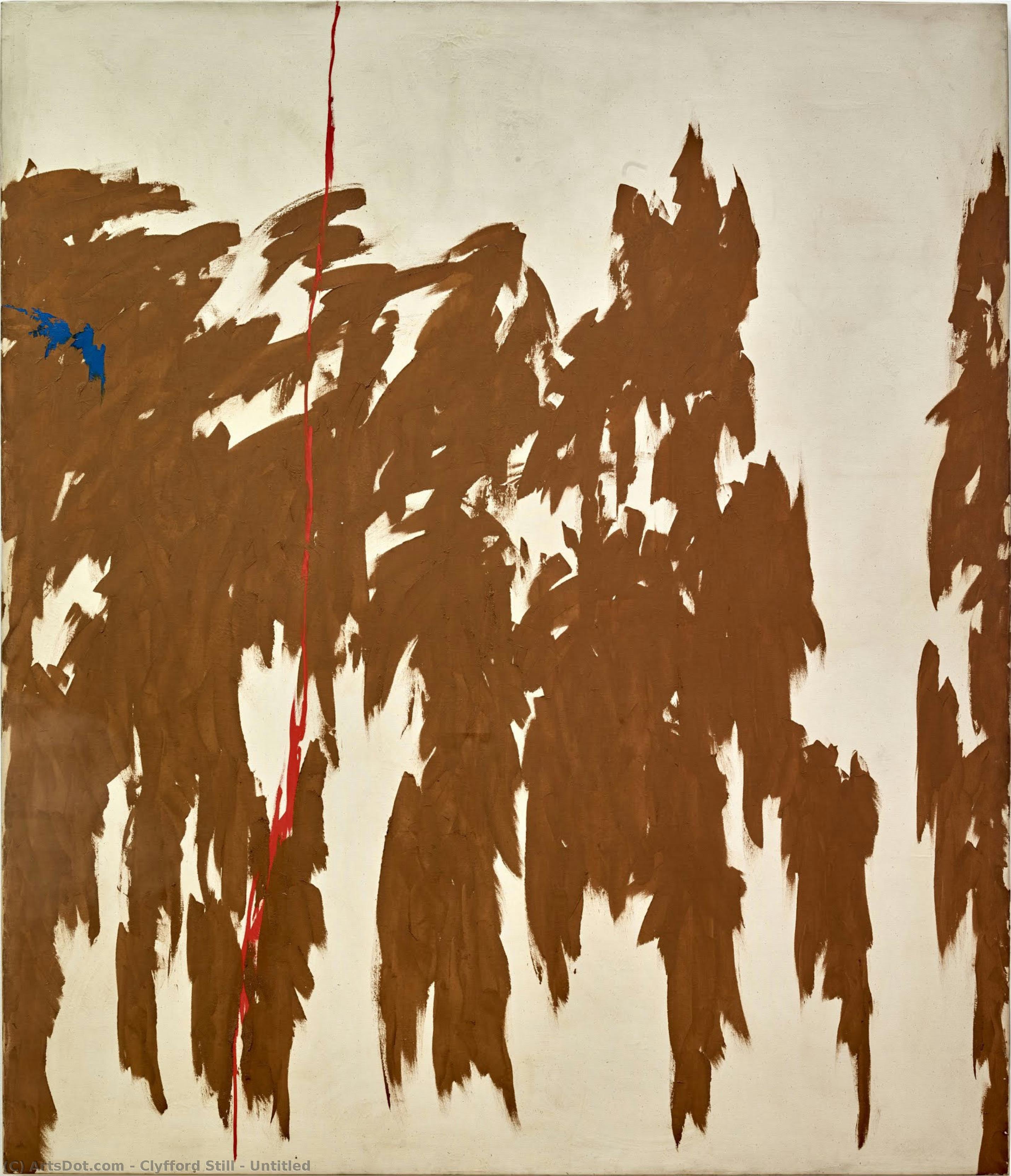
Experience Clyfford Still’s powerful Untitled (1964) – a monumental abstract expressionist canvas filled with vibrant red lines and textured forms, reflecting his unique vision of the American sublime.

Bay Area Abstraction 1946-1963* (2011) und *Women of Abstract Expressionism* (2016) vorgestellt

Die auf dieser Seite dargestellten Kunstwerke sind urheberrechtlich geschützt, was bedeutet, dass wir keine identische Reproduktion rechtmäßig erstellen oder verkaufen dürfen. Dieser Schutz wird durch internationale Abkommen wie die Berner Übereinkunft und durch nationale Gesetze, einschließlich derer, die von den ... festgelegt wurden US-Urheberrecht – Titel 17.

Diese Methode entspricht vollumfänglich den Urheberrechtsbestimmungen, da sie keine Kopie oder Vervielfältigung des geschützten Kunstwerks darstellt. Stattdessen handelt es sich um eine kreative Neuinterpretation – ein neues Gemälde, das vom Original inspiriert, aber nicht identisch mit ihm ist.

Giclée / Kunstdruck

Giclée- oder Leinwanddruck in Museumsqualität mit schneller Produktion und flexiblen Veredelungsoptionen. ( Handgemalte Reproduktion kaufen Zum digitalen Bild wechseln)

Corner sample of the P118B picture frame: moulded polystyrene, 5 cm wide and 3 cm thick
P118B €10
Corner sample of the P118H picture frame: moulded polystyrene, 5 cm wide and 3 cm thick
P118H €10
Corner sample of the P118W picture frame: moulded polystyrene, 5 cm wide and 3 cm thick
P118W €10
Corner sample of the P438Z picture frame: moulded polystyrene, 5.5 cm wide and 3.5 cm thick
P438Z €10
Corner sample of the P508JH picture frame: moulded polystyrene, 7 cm wide and 3.5 cm thick
P508JH €12
Corner sample of the P508YH picture frame: moulded polystyrene, 7 cm wide and 3.5 cm thick
P508YH €12
Corner sample of the P805H picture frame: moulded polystyrene, 5 cm wide and 3.5 cm thick
P805H €10
Corner sample of the P805Z picture frame: moulded polystyrene, 5 cm wide and 3.5 cm thick
P805Z €10
Corner sample of the P919BZ picture frame: moulded polystyrene, 7 cm wide and 3.5 cm thick
P919BZ €10
Corner sample of the P919G picture frame: moulded polystyrene, 7 cm wide and 3.5 cm thick
P919G €10
Corner sample of the P919XJ picture frame: moulded polystyrene, 7 cm wide and 3.5 cm thick
P919XJ €10
Corner sample of the P959ZH picture frame: moulded polystyrene, 5 cm wide and 3 cm thick
P959ZH €10
Corner sample of the P968JZ picture frame: moulded polystyrene, 6 cm wide and 4 cm thick
P968JZ €12
Corner sample of the W106C picture frame: solid wood, 5 cm wide and 3 cm thick
W106C €8
Corner sample of the W218G picture frame: solid wood, 5 cm wide and 3 cm thick
W218G €10
Corner sample of the W218JH picture frame: solid wood, 5 cm wide and 3 cm thick
W218JH €8
Corner sample of the W218Y picture frame: solid wood, 5 cm wide and 3 cm thick
W218Y €10
Corner sample of the W307PJ picture frame: solid wood, 6 cm wide and 3 cm thick
W307PJ €10
Corner sample of the W316G picture frame: solid wood, 6 cm wide and 3 cm thick
W316G €10
Corner sample of the W316PJ picture frame: solid wood, 6 cm wide and 3 cm thick
W316PJ €8
Corner sample of the W316Y picture frame: solid wood, 6 cm wide and 3 cm thick
W316Y €10
Corner sample of the W398PJ picture frame: solid wood, 5 cm wide and 3 cm thick
W398PJ €8
Corner sample of the W4111J picture frame: solid wood, 6.5 cm wide and 3.5 cm thick
W4111J €10
Corner sample of the W500HY picture frame: solid wood, 7 cm wide and 5 cm thick
W500HY €15
Corner sample of the W500JH picture frame: solid wood, 7 cm wide and 5 cm thick
W500JH €15
Corner sample of the W692G picture frame: solid wood, 8 cm wide and 4 cm thick
W692G €12
Corner sample of the W849H picture frame: solid wood, 5 cm wide and 3 cm thick
W849H €8
Corner sample of the W940BG picture frame: solid wood, 7.5 cm wide and 4.5 cm thick
W940BG €15
Corner sample of the W953PJ picture frame: solid wood, 6 cm wide and 3.5 cm thick
W953PJ €8

Standardformat
individuell anpassbar
CM
INCH

Wählen Sie aus unseren vordefinierten Formaten, die den ursprünglichen Proportionen des Kunstwerks entsprechen.

Breite
Höhe

Sie können Ihre eigenen Maße eingeben, um ein bestimmtes Format oder einen speziellen Platz einzupassen. Wenn das von Ihnen gewählte Format nicht den Proportionen des Originalbildes entspricht, werden wir das Kunstwerk entweder beschneiden oder das Bild mit einem gespiegelten oder einfarbigen Rand erweitern. Ein digitaler Entwurf wird Ihnen zur Genehmigung zugesandt, bevor die Produktion beginnt.
Bitte beachten Sie, dass die Vorschau auf dem Bildschirm nicht den tatsächlichen Zuschnitt oder die Erweiterung widerspiegelt. Nur der Entwurf zeigt die endgültige Komposition präzise an.
Obwohl Sondermaße verfügbar sind, empfehlen wir die Auswahl eines Maßes aus der vordefinierten Liste, um die ursprünglichen Proportionen zu bewahren.

Weltweiter Versand () innerhalb von 2 Wochen statt der üblichen 4/5 Wochen. (10 Oktober)

Kostenloser weltweiter Expressversand
Hochwertige Leinenleinwand
Vollständiger Versicherungsschutz beim Versand
Zollgebühren-Rückerstattungsgarantie
Garantie für exakte Farbtreue
100-tägiges Rückgaberecht (nur bei Mängeln)
100% Geld-zurück-Garantie
Angebot für Mengenrabatt

Gesamtpreis

€ 59

Untitled

Giclée / Kunstdruck

Format der Reproduktion

-

Gesamtpreis

€ 59

Kurzübersicht

  • Subject or theme: Transcendental experience
  • Medium: Oil on Canvas
  • Title: Untitled
  • Artistic style: Non-figurative painting
  • Dimensions: 236 x 273 cm
  • Year: 1964
  • Notable elements or techniques: Bare canvas, verticality

Kunst-Quiz

Jede Frage hat nur eine richtige Antwort.

Frage 1:
What is the primary subject matter depicted in Clyfford Still’s ‘Untitled’?
Frage 2:
The prominent bare canvas in ‘Untitled’ is significant because it:
Frage 3:
According to the description, what artistic movement is Clyfford Still most closely associated with?
Frage 4:
What year was ‘Untitled’ created, according to the provided information?
Frage 5:
The verticality of ‘Untitled’ is emphasized by:

The Raw Essence of Form: An Exploration of Clyfford Still's Untitled

Clyfford Still’s “Untitled,” a monumental canvas from 1964, isn’t merely a painting; it’s an immersion into the heart of Abstract Expressionism and a profound meditation on American identity. Measuring a substantial 236 x 273 centimeters, this work immediately commands attention with its scale and the sheer physicality of its execution. Yet, it's not the size that dominates, but rather the intensely concentrated field of color – a restless interplay of ochre, red, and the stark, almost unsettling presence of bare canvas – that draws the viewer in. Still, a pivotal figure who largely shunned the limelight, deliberately eschewed representational imagery, opting instead to explore the very essence of form and color as conduits for emotional and philosophical experience.

The painting’s genesis lies within a specific period of Still's life – 1961 – following his deliberate retreat from New York City. This isolation in rural Maryland profoundly shaped his artistic vision, fostering a sense of detachment and a focus on the elemental. The work embodies this shift; it feels less like a depiction of something external and more like an articulation of internal states. The prominent bare canvas isn’t simply a compositional element; it acts as a visual anchor, a deliberate void that invites contemplation and forces the viewer to confront the raw materiality of the paint itself.

A Symphony of Verticality: Deconstructing Space

Perhaps the most striking aspect of “Untitled” is its insistent verticality. A dominant, deep red line – approximately two and a half meters in height – cuts diagonally across the canvas, acting as both a structural element and a powerful directional force. This line isn’t static; it appears to thrust upward, almost aggressively, challenging any sense of conventional spatial boundaries. The ochre forms that surround this central vertical are similarly oriented, creating a dynamic tension between horizontal and vertical planes. It's a deliberate disruption of perspective, suggesting an attempt to transcend the limitations of traditional representation and access a more primal, visceral experience.

This emphasis on verticality resonates with broader themes within Still’s oeuvre – his exploration of American ideals of freedom and individuality. The upward thrust can be interpreted as a symbolic reaching for something beyond the earthly realm, a striving towards an abstract notion of transcendence. The painting isn't about capturing a specific landscape or object; it’s about conveying a feeling, a state of being—a powerful declaration of independence from the constraints of the material world.

Technique and Materiality: The Language of Paint

Still’s technique is characterized by a remarkable directness. He applied paint with broad, gestural strokes, often layering colors directly onto the canvas without any intervening underpainting. This creates a palpable sense of texture and physicality – the ridges of the paint, the drips and splatters, all contribute to the painting's raw energy. The use of unprimed canvas allows the inherent qualities of the material to shine through, further emphasizing the painting’s materiality.

The color palette is deliberately restrained, yet intensely evocative. The dominant red is not a cheerful hue; it possesses an almost brooding quality, suggesting both passion and danger. The ochre tones are earthy and grounding, providing a counterpoint to the intensity of the red. It’s a carefully calibrated balance between opposing forces – chaos and order, emotion and restraint.

Symbolism and Emotional Resonance: A Portrait of an Era

“Untitled” is more than just a visually arresting composition; it's a potent symbol of its time—the mid-1960s in America. The painting reflects the anxieties and aspirations of a nation grappling with profound social and political change, while simultaneously seeking to redefine its identity. Still’s rejection of traditional representation can be seen as a deliberate act of rebellion against the prevailing cultural norms, mirroring the broader countercultural movements of the era.

Ultimately, “Untitled” invites viewers to engage in a deeply personal dialogue with the artwork. It's a painting that demands attention, provoking contemplation and eliciting a range of emotional responses—from awe and wonder to unease and perhaps even a sense of disorientation. It remains a powerful testament to Clyfford Still’s unique vision and his enduring legacy as one of America’s most important Abstract Expressionist painters.

Fragen & Antworten

Wie alt war Clyfford Still, als „Untitled“ geschaffen wurde?

Clyfford Still schuf „Untitled“ im Alter von 60. Der Künstler wurde 1904 geboren, und das Werk datiert auf 1964.

Welchem Künstler wird "Untitled" zugeschrieben?

Der Künstler hinter „Untitled“ ist Clyfford Still. Das Werk ist unter dem Namen von Clyfford Still katalogisiert.

Welches Druckformat wird für "Untitled" von Clyfford Still empfohlen?

Für einen Druck von "Untitled" von Clyfford Still wird ein Format von Large in der Ausrichtung Portrait empfohlen.

In welcher Phase der Karriere von Clyfford Still lässt sich „Untitled“ angesichts seines Entstehungsdatums einordnen?

Die Datierung auf 1964 ordnet „Untitled“ der Late Period von Clyfford Stills künstlerischer Entwicklung zu.

Welcher Raum passt farblich zu "Untitled" von Clyfford Still?

Angesichts seiner Neutrals Farben wird „Untitled“ für ein Living Room empfohlen.

In welchem Jahr wurde "Untitled" von Clyfford Still geschaffen?

"Untitled" stammt aus dem Jahr 1964. Dieses Datum ordnet das Werk in die Schaffensperiode von Clyfford Still sowie in dessen Epoche ein.

Warum ist der Urheberrechtsstatus von "Untitled" so, wie er ist?

"Untitled" von Clyfford Still ist noch urheberrechtlich geschützt. Die Urheberrechtsfristen werden ab dem Todesjahr des Künstlers berechnet, und Clyfford Still verstarb im Jahr 1980.


Biografie des Künstlers

Clyfford Still

Clyfford Still (* 30. November 1904 in Grandin, North Dakota; † 23. Juni 1980 in New York) war ein US-amerikanischer Maler und einer der bedeutendsten Vertreter des Abstrakten Expressionismus, der sich zwischen den Jahren 1938 und 1942 von der Darstellung konkreter Objekte und Landschaften zur Entwicklung eines neuen, kraftvollen künstlerischen Ansatzes wandte. Er gilt als Vorläufer dieser Bewegung und prägte damit die Kunstgeschichte des 20. Jahrhunderts nachhaltig. Seine frühen Lebensjahre verbrachte er in Spokane, Washington und Bow Island im südlichen Alberta, Kanada, wo er eine tiefe Verbindung zur Natur entwickelte – ein Gefühl für diese Verbindung würde sich weiterhin durch seine künstlerische Tätigkeit ziehen. Ein kurzer Aufenthalt an der Art Students League in New York City im Jahr 1925 eröffnete ihm ersten Kontakt zur Kunstwelt, doch es waren seine Erfahrungen als Lehrer und Maler auf der Westküste, die seinen einzigartigen Blick prägten. Er wollte nicht einfach die Natur darstellen; er strebte danach, ihre ursprüngliche Essenz einzufangen – ihre Kräfte der Schöpfung und Zerstörung.

Von Darstellung zur Abstraktion: Die Entwicklung eines Einzigartigen Stils

Die Übertragung von figurativen Arbeiten zum radikalen Abstrakten, für den Still gefeiert wird, erfolgte zwischen 1938 und 1942 und stellte eine tiefgreifende philosophische Veränderung dar. Er wollte sich von allen erkennbaren Bildern lösen und glaubte, dass wahre künstlerische Ausdruckskraft darin liegt, sich direkt mit den grundlegenden Elementen der Malerei auseinanderzusetzen – Farbe, Form und Oberfläche. Frühe Arbeiten wie PH-616 (1929) geben einen Einblick in diese Übergangsphase und zeigen seine erste Erforschung des Landeslebens dargestellt mit einer gedämpften Farbpalette und aussagekräftigen Symbolen. Diese Gemälde waren nicht nur Darstellungen; sie waren durch Sehnsucht und stille Kontemplation des menschlichen Zustandes im Vergleich zur Weite der amerikanischen Landschaft geprägt. Als er sich zunehmend der Abstraktion näherte, lösten sich diese repräsentativen Elemente langsam auf in zerbrochene Farbflächen und ungeordneten Formen. Diese Formen waren nicht nur abstrakte Formen; sie waren durch reine Emotionen und existenzielle Ängste sowie die überwältigende Macht der Natur aufgeladen. Er arbeitete hauptsächlich mit Ölfarbe auf Paletteknauf auf, wodurch er eine dynamische Wechselwirkung zwischen Licht und Schatten erzeugte – eine Technik, die ihm ermöglichte, Oberflächen zu schaffen, die Energie ausstrahlten und Betrachter in ein immersives Erlebnis einträgt – eine Konfrontation mit dem eigentlichen Akt des Malens.

Die Sprache der Farbe und Form: Schlüsselmerkmale von Stills Werk

Stills reife Gemälde zeichnen sich durch ihre monumentale Größe und dramatische Farbkompositionen aus. Er bevorzugte große Leinwände, da er nur damit die volle emotionale Gewichtigkeit seiner Vision vermitteln konnte. Seine Kompositionen bestehen meistens aus ungeordneten Farbflächen – oft düster und nachdenklich gefärbt und unterbrochen von vereinzelten helleren Akzenten. Diese Formen werden nicht einfach auf der Leinwand angeordnet; sie scheinen daraus hervorzustehen und schaffen eine Tiefe und räumliche Ambivalenz. Das vertikale Element ist besonders wichtig in Stills Werk und steht für das sogenannte „vertikale Bedürfnis des Lebens“ – eine trotzige Aussage des menschlichen Geistes gegen überwältigende Kräfte. 1957-D No. 1 beeindruckt mit seiner hauptsächlich schwarzen und gelben Farbgebung, die durch Weiß und Rot betont wird und somit ein Schlüsselmerkmal dieser besonderen Verwendung von Farbe und Form ist, um starke emotionale Reaktionen hervorzurufen. Er verzichtete bewusst auf Titel, die spezifische Interpretationen suggerieren wollten und bevorzugte daher ein nummerisches System (z. B. „1957-D No. 1“), das die Leinwand selbst zum Fokus machte und damit eine gewisse Distanz zur äußeren Betrachtung bewahrte. Er wollte, dass Betrachter das Werk direkt erfahren würden – ohne vorgefasste Vorstellungen oder externe Erzählungen.

Ein Einflussreicher Künstler

Stills Werk hatte einen tiefgreifenden Einfluss auf die Entwicklung der amerikanischen Kunst und insbesondere auf den Abstrakten Expressionismus. Er gilt als einer der ersten Vertreter dieser Bewegung und prägte damit die künstlerische Sprache seiner Zeit maßgeblich. Seine Werke wurden weltweit gefeiert und inspirierten zahlreiche andere Künstler zu neuen kreativen Ansätzen. Trotz seiner oft distanzierten Haltung zur New Yorker Kunstwelt hinterließ Still einen nachhaltigen Eindruck in ihrer Geschichte und wird bis heute als einer der bedeutendsten amerikanischen Maler des 20. Jahrhunderts gewürdigt. Sein Werk lebt weiter und bietet eine kraftvolle Meditation über den menschlichen Zustand und die tiefen Geheimnisse der Existenz. ## Weitere Erkundung * Erforschen Sie mehr über Clyfford Still’s Kunstwerke auf WahooArt.com. * Entdecken Sie die Bewegung des Farbflächenbilders. * Lernen Sie von Künstlern wie Mark Rothko und ihrem Einfluss auf die Kunstwelt.
Clyfford Still

Clyfford Still

1904 - 1980 , Vereinigte Staaten von Amerika

Eckdaten zum Künstler

  • Artistic Movement Or Style: Abstrakter Expressionismus
  • Artists Who Influenced This Artist:
    • Jackson Pollock
    • Mark Rothko
  • Date Of Birth: 30. November 1904
  • Date Of Death: 23. Juni 1980
  • Full Name: Clyfford Elmer Still
  • Nationality: Amerikaner
  • Notable Artworks:
    • PH-616
    • 1957-D No. 1
  • Place Of Birth: Grandin, USA
Entdecken Sie Kunstwerke, die nach Themen, Stilen und Merkmalen sortiert sind.