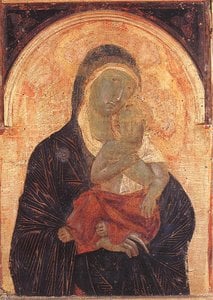
das Brechen des italo-byzantinischen Stils
Cimabue, geboren um 1240 und gestorben im Jahr 1302, war ein einflussreicher italienischer Maler und Mosaikdesigner aus Florenz, auch bekannt als
Cenni di Pepo. Als Pionier des Brechens mit dem italo-byzantinischen Stil wird Cimabue für die Einführung von realistischeren Proportionen und Schattierung in seiner Arbeit gefeiert, was einen bedeutenden Übergang zum Realismus in der mittelalterlichen Kunst markierte.
Frühes Leben und Ausbildung
Über Cimabues frühes Leben ist wenig bekannt. Eine Quelle, die über seine Karriere berichtet, ist Giorgio Vasaris
Lives of the Most Excellent Painters, Sculptors and Architects, deren Genauigkeit jedoch ungewiss ist. Er wurde in Florenz geboren und starb in Pisa. Laut Kunsthistoriker Pietro Tosca ist Cimabues früheste zugeschriebene Arbeit, die Kreuzigung in der Kirche
San Domenico in Arezzo, aus dem Jahr 1270 und zeigt eine Abweichung vom byzantinischen Stil.
Bekannte Werke
* Maestà (ursprünglich in der Kirche
San Francesco in Pisa ausgestellt, jetzt im Louvre): Dieses Werk etablierte einen Stil, der von zahlreichen Künstlern fortgesetzt wurde, darunter
Duccio di Buoninsegna in seiner
Ruccellai Madonna (früher fälschlicherweise Cimabue zugeschrieben). * Flagellation (
Frick Collection): Ein Werkstattgemälde, das möglicherweise einer späteren Periode zuzuordnen ist. * Mosaike für die
Florenzer Baptisterium (jetzt weitgehend restauriert): Im schlechten Zustand aufgrund der Oxidation der helleren Farben.
Einfluss und Vermächtnis
Cimabues Kunst spielte eine entscheidende Rolle bei der Übergang von byzantinischen zu realistischeren Darstellungen in der italienischen Malerei, und sein Einfluss auf nachfolgende Künstler war tiefgreifend. Seine Werke, die durch einen Zusammenschnitt traditioneller und innovativer Techniken gekennzeichnet sind, markieren ein wichtiges Kapitel in der Kunstgeschichte, das den Übergang zwischen mittelalterlichen und Renaissance-Stilen überspannte.
**Entdecken Sie die Welt der Kunst mit WahooArt.com, wo Sie eine umfangreiche Sammlung von Kunstwerken finden, darunter auch Werke von Cimabue und anderen renommierten Künstlern.**



 Vorschau anzeigen
 Switch to Print
 Versenden
 Teilen
 Details anzeigen

 Herunterladen
 Ähnliche Objekte
 Röntgenaufnahme
 Diashow
 Stats
Stats

 Weiterlesen






































 Die Glasoption ist nur für Größen unter 110 cm verfügbar.