x
Vorschau anzeigenVorschau anzeigen In AR erlebenIn AR erleben Handgemalte Reproduktion bestellen Handgemalte Reproduktion bestellenBild kaufen Bild kaufen VersendenVersenden
Details anzeigenDetails anzeigen Zu Favoriten hinzufügen Zu Favoriten hinzufügen HerunterladenHerunterladen Ähnliche ObjekteÄhnliche Objekte RöntgenaufnahmeRöntgenaufnahme DiashowDiashow

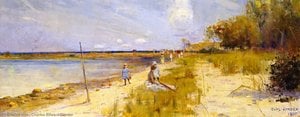
MIrage

Discover "Mirage" by Charles Conder – a captivating Australian Impressionist painting of a woman and a ball. Explore this iconic work's details & history on WahooArt.

Entdecken Sie Charles Edward Conders (1868-1909) faszinierende Landschafts- & Impressionismuswerke! Schlüsselfigur der Heidelberg School – Häfen, Strände & mehr auf WahooArt.

Giclée / Kunstdruck

Giclée- oder Leinwanddruck in Museumsqualität mit schneller Produktion und flexiblen Veredelungsoptionen. (Handgemalte Reproduktion bestellen Handgemalte Reproduktion bestellenBild kaufen Bild kaufen)

P118B $10
P118H $10
P118W $10
P438Z $10
P508JH $12
P508YH $12
P805H $10
P805Z $10
P919BZ $10
P919G $10
P919XJ $10
P959ZH $10
P968JZ $12
W106C $8
W218G $10
W218JH $8
W218Y $10
W307PJ $10
W316G $10
W316PJ $8
W316Y $10
W398PJ $8
W4111J $10
W500HY $15
W500JH $15
W692G $12
W849H $8
W940BG $15
W953PJ $8

Standardformat
individuell anpassbar
CM
INCH

Wählen Sie aus unseren vordefinierten Formaten, die den ursprünglichen Proportionen des Kunstwerks entsprechen.

Breite
Höhe

Sie können Ihre eigenen Maße eingeben, um ein bestimmtes Format oder einen speziellen Platz einzupassen. Wenn das von Ihnen gewählte Format nicht den Proportionen des Originalbildes entspricht, werden wir das Kunstwerk entweder beschneiden oder das Bild mit einem gespiegelten oder einfarbigen Rand erweitern. Ein digitaler Entwurf wird Ihnen zur Genehmigung zugesandt, bevor die Produktion beginnt.
Bitte beachten Sie, dass die Vorschau auf dem Bildschirm nicht den tatsächlichen Zuschnitt oder die Erweiterung widerspiegelt. Nur der Entwurf zeigt die endgültige Komposition präzise an.
Obwohl Sondermaße verfügbar sind, empfehlen wir die Auswahl eines Maßes aus der vordefinierten Liste, um die ursprünglichen Proportionen zu bewahren.

Weltweiter Versand () innerhalb von 2 Wochen statt der üblichen 4/5 Wochen. (3 September)

why_choose_icon
Kostenloser weltweiter Expressversand
why_choose_icon
Hochwertige Leinenleinwand
why_choose_icon
Umfassender Versicherungsschutz beim Versand
why_choose_icon
Zollgebühren-Rückerstattungsgarantie
why_choose_icon
Garantie für exakte Farbtreue
why_choose_icon
60 Tage Rückgaberecht (nur bei Mängeln)
why_choose_icon
100% Geld-zurück-Garantie
why_choose_icon
Mengenrabatt verfügbar

Gesamtpreis

$ 68

reproduction

MIrage

Giclée / Kunstdruck

Format der Reproduktion

-

Gesamtpreis

$ 68

Eckdaten

  • Artistic style: Impressionism
  • Movement: Heidelberg School
  • Medium: Watercolor on paper
  • Title: Mirage
  • Location: Private Collection
  • Year: 1889
  • Artist: Charles Conder

Kunst-Quiz

Jede Frage hat nur eine richtige Antwort.

Frage 1:
What artistic movement is Charles Conder most associated with?
Frage 2:
In 'Mirage,' what prominent element is depicted near the center of the painting, suggesting a change in weather conditions?
Frage 3:
What year was 'Mirage' painted by Charles Edward Conder?
Frage 4:
Charles Conder was born in which city?
Frage 5:
The painting 'Mirage' primarily showcases a scene of:

A Mirage of Light and Leisure: Charles Edward Conder’s “Mirage”

Charles Edward Conder's "Mirage," painted in 1889, isn’t merely a depiction of a landscape; it’s an invitation into a realm where reality subtly bends, inviting contemplation on the ephemeral nature of perception and the allure of the Australian outback. Born in Tottenham, London, Conder’s journey led him to Australia, where he became a pivotal figure within the Heidelberg School – a movement that championed a distinctly Australian artistic voice, rejecting European academic traditions in favor of capturing the light, color, and spirit of the continent.

The painting immediately draws the eye with its vibrant palette. Warm ochres dominate the foreground, punctuated by the cool blues and greens of distant trees and sky. Conder masterfully employs an Impressionistic technique, utilizing loose brushstrokes and broken colors to capture the shimmering heat haze that defines the Australian landscape. This isn’t a photographic representation; rather, it's a subjective experience translated onto canvas – a distillation of light, color, and atmosphere. The composition itself is deceptively simple: a woman holding a ball in her hand, positioned beside a solitary tree against a backdrop of rolling hills. Yet, within this apparent stillness lies a subtle dynamism, a sense of movement created by the play of light and shadow.

The Symbolism of Leisure and Illusion

While superficially appearing as a charming pastoral scene, “Mirage” is rich in symbolic meaning. The woman holding the ball evokes a sense of carefree leisure – a quintessential image of Australian summer. It speaks to a time of relaxation, social gatherings, and the simple pleasures of life. However, the presence of the ball itself introduces an element of illusion. Balls are often associated with games, entertainment, and even fleeting moments of joy. In this context, it suggests that these experiences, like the mirage itself, can be deceptive – beautiful but ultimately transient.

The solitary tree further amplifies this theme. Trees represent resilience, strength, and connection to the earth. Yet, its isolation within the vast landscape hints at a sense of loneliness or detachment. The woman’s position beside it suggests a moment of quiet contemplation, perhaps questioning the nature of her own place in this world.

A Window into the Heidelberg School

"Mirage" exemplifies the core tenets of the Heidelberg School – a group of Australian artists who sought to capture the unique character of their homeland. Unlike their European counterparts, they were deeply interested in portraying the light and color of the Australian landscape, often focusing on scenes of rural life and leisure. Conder’s work is characterized by its vibrant colors, loose brushstrokes, and emphasis on capturing the fleeting effects of light and atmosphere. His use of local pigments and his rejection of academic conventions firmly established him as a key figure in shaping Australian art.

Capturing the Essence of an Illusion

Conder’s skill lies not just in depicting a scene, but in conveying its *feeling*. The painting isn't about literal accuracy; it’s about capturing the subjective experience of being immersed in the heat haze of the Australian outback. The shimmering quality of the landscape, the sense of distance and ambiguity, all contribute to a powerful emotional impact. “Mirage” invites us to question our perceptions, to appreciate the beauty of illusion, and to contemplate the transient nature of life itself. It remains a captivating testament to Conder’s artistic vision and his profound connection to the Australian landscape.


Über den Künstler

Frühes Leben und künstlerischer Werdegang

Charles Edward Conder, ein in Großbritannien geborener Maler, Lithograf und Designer, hinterließ einen bleibenden Eindruck auf die Kunstwelt. Geboren am 24. Oktober 1868 in Tottenham, Middlesex, war Conder's frühes Leben von dem Tod seiner Mutter in Indien geprägt, als er gerade vier Jahre alt war.

Künstlerische Karriere in Australien

Im Jahr 1884 zog Conder im Alter von 16 Jahren nach Sydney, Australien, und arbeitete für seinen Onkel als Landvermesser. Er entdeckte jedoch bald seine wahre Leidenschaft im Zeichnen der Landschaft statt in der Vermessung. Bereits 1886 wurde er Künstler für die Illustrated Sydney News, zusammen mit namhaften Künstlern wie Albert Henry Fullwood und Frank Mahony.

Die Heidelberg School und bedeutende Werke

Conders Meisterwerk, Departure of the Orient – Circular Quay (1888), demonstrierte seine neu gewonnene Meisterschaft in Form und Pinselstrich. Diese Hafenszene, die das geschäftige Treiben am Sydney Cove darstellt, wurde schnell von der Art Gallery of New South Wales erworben und wurde damit Conders erstes Werk, das in eine öffentliche Sammlung gelangte.
  • A Holiday at Mentone (1888), ein fröhliches Gemälde, das Männer und Frauen beim Entspannen am Strand zeigt, ist ein weiteres bemerkenswertes Beispiel für Conders Werk.
  • Conders Verbindung mit G. P. Nerli, einem wandernden italienischen Maler, beeinflusste seine künstlerische Entwicklung maßgeblich.
  • Sein Beitrag zur 9 by 5 Impression Exhibition in Melbourne, zusammen mit Tom Roberts und Arthur Streeton, festigte seine Position innerhalb der Heidelberg School Bewegung.

Vermächtnis und spätere Jahre

Conders späte Jahre waren von gesundheitlichen Problemen geplagt, darunter Lähmungen und ein Delirium tremens. Trotzdem malte er weiter und hinterließ ein Vermächtnis als eine Schlüsselfigur der Heidelberg School. Seine Kunst wurde in England besser aufgenommen als in Paris, wobei sein Porträt von Henri de Toulouse-Lautrec im Jahr 1892 gemalt wurde. Betrachten Sie Conders Werke in der Art Gallery of New South Wales oder erkunden Sie mehr über die Heidelberg School auf WahooArts Charles Edward Conder Seite.

Schlussfolgerung

Charles Edward Conders Einfluss auf den australischen Impressionismus ist unbestreitbar. Sein Vermächtnis, das durch seine fesselnden Gemälde und seine Verbindung zur Heidelberg School gekennzeichnet ist, inspiriert weiterhin Kunstliebhaber weltweit.
Charles Edward Conder

Charles Edward Conder

1868 - 1909 , Vereinigtes Königreich

Kurzinfos

  • Bemerkenswerte Werke:
    • Departure of the Orient
    • A Holiday at Mentone
  • Geburtsdatum: 24. Oktober 1868
  • Geburtsort (Stadt, Land): Tottenham, Vereinigtes Königreich
  • Künstler, Die Diesen Künstler Beeinflussten: ['G. P. Nerli']

  • Künstlerische Bewegung/Stil: Heidelberg School, Impressionismus
  • Nationalität: Britisch
  • Sterbedatum: 1909
  • Vollständiger Name: Charles Edward Conder
Entdecken Sie Kunstwerke, die nach Themen, Stilen und Merkmalen sortiert sind.