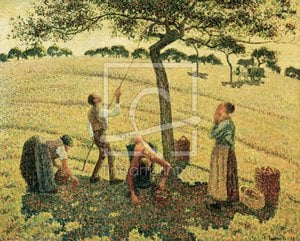
Picking Peas (1880) by Camille Pissarro, hand-painted oil painting reproduction by a master artist
Vorschau anzeigen In AR ansehen Zum Druck wechseln Zum digitalen Bild wechseln Versenden
Details anzeigen Leitfaden Zu Favoriten hinzufügen Herunterladen Ähnliche Objekte Röntgenaufnahme Diashow Q&A Statistiken

Picking Peas Hand-painted oil painting reproduction

Ein beeindruckendes Gemälde von Camille Pissarro aus dem Jahr 1880 im Stil des Impressionismus zeigt eine idyllische Landschaft mit Bauernarbeit und prächtigem Farbspiel – ein Meisterwerk der französischen Kunstgeschichte.

Erkunden Sie die Kunst von Camille Pissarro: Impressionistische und Neo-Impressionistische Landschaften und Alltagsszenen. Eine zentrale Figur, die Van Gogh, Cézanne und mehr beeinflusste.

Handgefertigte Ölreproduktion

Handgemaltes Ölgemälde auf Leinwand in Ihrer Wunschgröße und mit Rahmen, auf Bestellung von unseren Künstlern angefertigt. ( Zum Druck wechseln Zum digitalen Bild wechseln)

Corner sample of the P118B picture frame: formgepresstes Polystyrol, 5 cm wide and 3 cm thick
P118B €10
Corner sample of the P118H picture frame: formgepresstes Polystyrol, 5 cm wide and 3 cm thick
P118H €10
Corner sample of the P118W picture frame: formgepresstes Polystyrol, 5 cm wide and 3 cm thick
P118W €10
Corner sample of the P438Z picture frame: formgepresstes Polystyrol, 5.5 cm wide and 3.5 cm thick
P438Z €10
Corner sample of the P508JH picture frame: formgepresstes Polystyrol, 7 cm wide and 3.5 cm thick
P508JH €12
Corner sample of the P508YH picture frame: formgepresstes Polystyrol, 7 cm wide and 3.5 cm thick
P508YH €12
Corner sample of the P805H picture frame: formgepresstes Polystyrol, 5 cm wide and 3.5 cm thick
P805H €10
Corner sample of the P805Z picture frame: formgepresstes Polystyrol, 5 cm wide and 3.5 cm thick
P805Z €10
Corner sample of the P919BZ picture frame: formgepresstes Polystyrol, 7 cm wide and 3.5 cm thick
P919BZ €10
Corner sample of the P919G picture frame: formgepresstes Polystyrol, 7 cm wide and 3.5 cm thick
P919G €10
Corner sample of the P919XJ picture frame: formgepresstes Polystyrol, 7 cm wide and 3.5 cm thick
P919XJ €10
Corner sample of the P959ZH picture frame: formgepresstes Polystyrol, 5 cm wide and 3 cm thick
P959ZH €10
Corner sample of the P968JZ picture frame: formgepresstes Polystyrol, 6 cm wide and 4 cm thick
P968JZ €12
Corner sample of the W106C picture frame: Massivholz, 5 cm wide and 3 cm thick
W106C €8
Corner sample of the W218G picture frame: Massivholz, 5 cm wide and 3 cm thick
W218G €10
Corner sample of the W218JH picture frame: Massivholz, 5 cm wide and 3 cm thick
W218JH €8
Corner sample of the W218Y picture frame: Massivholz, 5 cm wide and 3 cm thick
W218Y €10
Corner sample of the W307PJ picture frame: Massivholz, 6 cm wide and 3 cm thick
W307PJ €10
Corner sample of the W316G picture frame: Massivholz, 6 cm wide and 3 cm thick
W316G €10
Corner sample of the W316PJ picture frame: Massivholz, 6 cm wide and 3 cm thick
W316PJ €8
Corner sample of the W316Y picture frame: Massivholz, 6 cm wide and 3 cm thick
W316Y €10
Corner sample of the W398PJ picture frame: Massivholz, 5 cm wide and 3 cm thick
W398PJ €8
Corner sample of the W4111J picture frame: Massivholz, 6.5 cm wide and 3.5 cm thick
W4111J €10
Corner sample of the W500HY picture frame: Massivholz, 7 cm wide and 5 cm thick
W500HY €15
Corner sample of the W500JH picture frame: Massivholz, 7 cm wide and 5 cm thick
W500JH €15
Corner sample of the W692G picture frame: Massivholz, 8 cm wide and 4 cm thick
W692G €12
Corner sample of the W849H picture frame: Massivholz, 5 cm wide and 3 cm thick
W849H €8
Corner sample of the W940BG picture frame: Massivholz, 7.5 cm wide and 4.5 cm thick
W940BG €15
Corner sample of the W953PJ picture frame: Massivholz, 6 cm wide and 3.5 cm thick
W953PJ €8

Standardformat
individuell anpassbar
CM
INCH

Wählen Sie aus unseren vordefinierten Formaten, die den ursprünglichen Proportionen des Kunstwerks entsprechen.

Breite
Höhe

Geben Sie die Breite und die Höhe an, die Sie für Ihren Rahmen oder Ihre Wand benötigen. Da dieses Werk handgemalt ist, kann der Künstler bei einer anderen Form etwas mehr um das Bild herum malen oder etwas abschneiden – Sie entscheiden. Wir senden Ihnen ein digitales Mockup zur Freigabe, bevor mit dem Malen begonnen wird. Das auf dieser Seite gezeigte Bild stellt nicht das tatsächliche Ergebnis dar – dies tut nur das Mockup.

Beispiele für Anpassungsmöglichkeiten: Gesicht durch Kundenfoto ersetzen; Haustier hinzufügen (z. B. Katze durch Hund ersetzen); eine versteckte Nachricht im Hintergrund einfügen; Hintergrundlandschaft oder -elemente ändern.
Nach der Bestellung wird das WahooArt.com-Team dem Kunden Anweisungen per E-Mail zusenden und eine Mockup-Vorschau bereitstellen.

Weltweiter Versand () in nur 3 bis 4 Wochen statt der üblichen 5 Wochen. (2 November). Keine Kompromisse bei der Qualität.

Kostenloser weltweiter Expressversand
Hochwertige Leinenleinwand
Umfassender Versicherungsschutz beim Versand
Zollgebühren-Rückerstattungsgarantie
Garantie für exakte Farbtreue
100 Tage Rückgaberecht (nur bei Mängeln)
100% Geld-zurück-Garantie
Mengenrabatt verfügbar

Gesamtpreis

€ 242

Picking Peas

Art der Reproduktion

Format der Reproduktion

-

Endpreis

€ 242

Eckdaten

  • Artist: Camille Pissarro
  • Notable elements or techniques: Pointillist Style
  • Year: 1880
  • Subject or theme: Rural Life
  • Title: Picking Peas

Kunst-Quiz

Jede Frage hat nur eine richtige Antwort.

Frage 1:
¿Quién pintó esta obra maestra?
Frage 2:
¿En qué estilo artístico se caracteriza esta pintura?
Frage 3:
¿Dónde actualmente se encuentra esta obra?
Frage 4:
¿Qué técnica pictórica predominó en la creación de esta pintura?
Frage 5:
¿Cuál es el tema principal representado en esta imagen?

A Window Into Rural Tranquility: Camille Pissarro’s “Picking Peas”

“Picking Peas,” painted circa 1887 by Camille Pissarro, isn't merely a depiction of agricultural labor; it’s an embodiment of Impressionist philosophy—a celebration of fleeting beauty and the immediacy of experience. Located at The Museum Langmatt in Switzerland, this unassuming canvas offers a profound glimpse into the artistic spirit of its time and continues to resonate with viewers today.

The Style of Pointillism: Capturing Light's Dance

Pissarro’s masterful use of Pointillist technique elevates “Picking Peas” beyond simple observation. Rather than blending colors directly onto the canvas, he applied tiny dots of pigment—primarily yellows, greens, and blues—to create an illusion of luminosity and vibrancy. This revolutionary approach, pioneered by Georges Seurat and championed by Pissarro himself, aimed to reproduce the effects of sunlight on surfaces with unprecedented accuracy. The resulting textured surface captures the shimmering light filtering through the foliage, conveying a palpable sense of warmth and freshness. It’s a technique that prioritizes scientific precision while simultaneously embracing artistic intuition—a duality characteristic of Impressionism's core tenets.

A Snapshot of Rural Life: Contextualizing the Scene

Painted during Pissarro’s prolific Parisian period, “Picking Peas” reflects the broader trend toward portraying everyday life with sensitivity and nuance. The idyllic meadow setting speaks to a fascination with the natural world—a reaction against the grand narratives favored by academic art institutions. Observe the figures diligently tending to their crops; they represent not just labor but also connection to the land and its rhythms. Notably, the inclusion of handbags adds an element of domesticity, subtly hinting at the lives unfolding beyond the immediate visual field. This deliberate choice underscores Pissarro’s desire to capture a holistic impression—a feeling rather than simply a representation.

Symbolism Beneath the Surface: Harmony and Reflection

Beyond its technical brilliance and realistic portrayal of rural activity, “Picking Peas” possesses symbolic depth. The verdant meadow symbolizes fertility and renewal – themes prevalent in Impressionist art's exploration of nature’s restorative power. The sheep grazing peacefully contribute to this sense of tranquility, representing innocence and pastoral contentment. Furthermore, the careful composition invites contemplation; the figures are positioned against a backdrop that encourages viewers to pause and absorb the beauty of the moment. Pissarro’s intention wasn’t merely to depict what he saw but to convey an emotional response—a feeling of serenity and appreciation for the simple pleasures of rural existence.

Emotional Resonance: An Impressionist Legacy

“Picking Peas” remains a powerful testament to Camille Pissarro's artistic vision and the enduring legacy of Impressionism. Its luminous palette, textured surface, and evocative depiction of rural life continue to inspire artists and collectors alike. Viewing this painting is akin to stepping back in time—experiencing firsthand the groundbreaking approach that redefined art history and cemented Pissarro’s place as one of the movement's foremost luminaries. It serves as a beautiful reminder that true artistic achievement lies not just in technical skill but also in capturing the essence of human experience.

Fragen & Antworten

Kann "Picking Peas" in Augmented Reality vorab betrachtet werden?

„Picking Peas“ verfügt über eine Augmented-Reality-Vorschau: Die AR-Vorschau-Seite des Kunstwerks zeigt es auf einem kompatiblen Gerät in Ihrem eigenen Raum.

Welche Leuchtkraft weist "Picking Peas" von Camille Pissarro auf?

Die Farben von "Picking Peas" weisen eine Weicher Schatten Luminanz auf.

Wer hat "Picking Peas" geschaffen und in welchem Stil ist es gehalten?

Camille Pissarro schuf „Picking Peas“ im Rahmen der Impressionist Landscape-Bewegung.


Künstlerbiografie

Camille Pissarro: Ein Leben in der Kunst

Frühes Leben und Ausbildung

Jacob Abraham Camille Pissarro wurde am 10. Juli 1830 in Charlotte Amalie, St. Thomas (damals die Dänische Westindien, heute die US-Virginischen Inseln) geboren. Sein Vater, Frederick Abraham Gabriel Pissarro, stammte aus portugiesisch-jüdischer Abstammung mit französischer Staatsbürgerschaft, und seine Mutter, Rachel Manzano-Pomié, kam aus einer französischen jüdischen Familie. Seine Erziehung war aufgrund der Herkunft und Umstände seiner Eltern etwas ungewöhnlich. Er erhielt seine frühe künstlerische Ausbildung an der Savary Academy in Passy in der Nähe von Paris, wo er die Wertschätzung für französische Kunstmeister entwickelte und ermutigt wurde, von der Natur zu zeichnen.

Mit 17 kehrte Pissarro nach St. Thomas zurück und zeichnete während seiner Pausen weiter, während er als Hafenarbeiter arbeitete. Diese Zeit verinnerlichte bei ihm eine scharfe Beobachtung des Alltagslebens und der natürlichen Welt – Themen, die sich in seinem Kunstwerk manifestieren sollten.

Künstlerische Entwicklung & Einflüsse

Im Jahr 1855 zog Pissarro nach Paris zurück und arbeitete als Assistent des dänischen Malers Anton Melbye. Er studierte die Werke von Gustave Courbet, Jean-Baptiste-Camille Corot, Honoré Daumier, und Charles-François Daubigny, deren Stile seine frühe Arbeit maßgeblich beeinflussten. Er fand eine formale Kunstausbildung in Institutionen wie der École des Beaux-Arts als erstickend und suchte alternative Anleitungen bei Corot.

Anfangs entsprachen Pissarros Gemälde traditionellen Standards und wurden auf dem Pariser Salon ausgestellt. Sein erstes Gemälde wurde 1859 angenommen. Bald begann er jedoch, mit lockererer Malweise und einem Fokus auf die flüchtenden Lichteffekte zu experimentieren – Markenzeichen des Impressionismus.

Beitrag zum Impressionismus & darüber hinaus

Camille Pissarro gilt als eine zentrale Figur sowohl im Impressionismus als auch im Post-Impressionismus. Er war der einzige Künstler, der an allen acht Pariser Impressionistenausstellungen (1874–1886) teilnahm und damit eine stabilisierende Kraft innerhalb der Gruppe darstellte. Er war nicht nur ein Aussteller; er ermutigte und unterstützte seine Kollegen aktiv und verdiente sich den Spitznamen „der Vaterfigur“ des Movements.

Später in seiner Karriere erkundete Pissarro Neo-Impressionismus, beeinflusst von Georges Seurat und Paul Signac, und setzte für eine Zeit eine Punktmaltechnik ein, bevor er zu einem persönlicheren Stil zurückkehrte.

Wichtige Leistungen & Themen

  • Landschaften: Pissarro ist bekannt für seine Darstellungen von ländlichen und städtischen Landschaften, die oft Szenen des Alltags zeigen.
  • Szenen aus dem Pariser Leben: Er erfasste die belebten Straßen und die lebendige Atmosphäre von Paris während einer Zeit des schnellen Wandels.
  • Bauernleben: Seine Gemälde stellen häufig das Leben und die Arbeit der Bauern dar und spiegeln sein soziales Bewusstsein wider.
  • Einfluss auf jüngere Künstler: Pissarro betreute und beeinflusste maßgeblich Paul Cézanne, Vincent van Gogh, und Paul Gauguin, die seine künstlerische Entwicklung prägten.

Historische Bedeutung & Vermächtnis

Camille Pissarros Vermächtnis reicht über seine schönen Gemälde hinaus. Er war ein Verfechter der künstlerischen Freiheit und Innovation und spielte eine entscheidende Rolle bei der Entwicklung der modernen Kunst. Sein Engagement für das Malen *en plein air* (im Freien) und die Erfassung des unmittelbaren Erlebnisses revolutionierte die Landschaftsmalerei. Seine Bereitschaft, verschiedene Stile und Techniken zu experimentieren, demonstrierte seine intellektuelle Neugierde und künstlerische Kühnheit.

Heute werden Pissarros Werke in großen Museen auf der ganzen Welt ausgestellt, darunter das Museum Kunstsalon Franke Schenk und das Museum Frieder Burda, die weiterhin Künstler und Kunstliebhaber inspirieren. Er bleibt eine gefeierte Persönlichkeit, deren Beiträge weiterhin studiert und geschätzt werden.

Camille Pissarro

Camille Pissarro

1830 - 1903 , Vereinigte Staaten von Amerika

Kurzinfos

  • Beeinflusste Künstler:
    • Paul Cézanne
    • Vincent van Gogh
    • Paul Gauguin
  • Bemerkenswerte Werke:
    • Portrait von Rodo Pissarro
    • Pont Royal, Flore Pavillon
    • Portrait von Felix Pissarro
    • Lucien Pissarro im Interieur
    • Eingeschlossenes Feld in Eragny
    • Rosa Pfingstrosen
    • Madame Pissarro beim Nähen
    • Sitzender Bauer
    • Das Rondell
    • Pont Corneille, Rouen
  • Geburtsdatum: 10. Juli 1830
  • Geburtsort: Charlotte Amalie, St. Thomas
  • Künstlerische Einflüsse:
    • Gustave Courbet
    • Jean-Baptiste Corot
    • Honoré Daumier
  • Künstlerische Richtung: Impressionismus, Neo-Impressionismus
  • Nationalität: Dänisch-Französisch
  • Sterbedatum: 13. November 1903
  • Vollständiger Name: Camille Pissarro
Entdecken Sie Kunstwerke, die nach Themen, Stilen und Merkmalen sortiert sind.