In echtem Maßstab anzeigen In AR an der Wand sehen Zum Druck wechseln Zum digitalen Bild wechseln Versenden als Grußkarte
Details anzeigen Leitfaden öffnen Zu Favoriten hinzufügen Herunterladen Ähnliche Objekte Röntgenaufnahme Diashow Besucherstatistiken

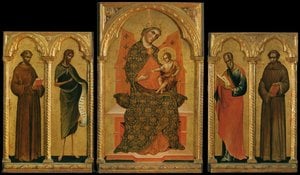
Conversano Polyptych

Explore Bartolomeo Vivarini’s Conversano Polyptych – a stunning 1475 Renaissance altarpiece! Admire its intricate details, gold leaf & religious symbolism at the Gallerie dell'Accademia.

Ein Meister der venezianischen Renaissance, bekannt für leuchtende Temperawerke wie die Madonna mit Kind, verband Bartolomeo Vivarini byzantinische Tradition mit neuen Öltechniken und schuf ein Erbe voller Entdeckungen.

Handgefertigte Ölreproduktion

Handgemaltes Ölgemälde auf Leinwand in Ihrer Wunschgröße und mit Rahmen, auf Bestellung von unseren Künstlern angefertigt. ( Zum Druck wechseln Zum digitalen Bild wechseln)

Corner sample of the P118B picture frame: formgepresstes Polystyrol, 5 cm wide and 3 cm thick
P118B €10
Corner sample of the P118H picture frame: formgepresstes Polystyrol, 5 cm wide and 3 cm thick
P118H €10
Corner sample of the P118W picture frame: formgepresstes Polystyrol, 5 cm wide and 3 cm thick
P118W €10
Corner sample of the P438Z picture frame: formgepresstes Polystyrol, 5.5 cm wide and 3.5 cm thick
P438Z €10
Corner sample of the P508JH picture frame: formgepresstes Polystyrol, 7 cm wide and 3.5 cm thick
P508JH €12
Corner sample of the P508YH picture frame: formgepresstes Polystyrol, 7 cm wide and 3.5 cm thick
P508YH €12
Corner sample of the P805H picture frame: formgepresstes Polystyrol, 5 cm wide and 3.5 cm thick
P805H €10
Corner sample of the P805Z picture frame: formgepresstes Polystyrol, 5 cm wide and 3.5 cm thick
P805Z €10
Corner sample of the P919BZ picture frame: formgepresstes Polystyrol, 7 cm wide and 3.5 cm thick
P919BZ €10
Corner sample of the P919G picture frame: formgepresstes Polystyrol, 7 cm wide and 3.5 cm thick
P919G €10
Corner sample of the P919XJ picture frame: formgepresstes Polystyrol, 7 cm wide and 3.5 cm thick
P919XJ €10
Corner sample of the P959ZH picture frame: formgepresstes Polystyrol, 5 cm wide and 3 cm thick
P959ZH €10
Corner sample of the P968JZ picture frame: formgepresstes Polystyrol, 6 cm wide and 4 cm thick
P968JZ €12
Corner sample of the W106C picture frame: Massivholz, 5 cm wide and 3 cm thick
W106C €8
Corner sample of the W218G picture frame: Massivholz, 5 cm wide and 3 cm thick
W218G €10
Corner sample of the W218JH picture frame: Massivholz, 5 cm wide and 3 cm thick
W218JH €8
Corner sample of the W218Y picture frame: Massivholz, 5 cm wide and 3 cm thick
W218Y €10
Corner sample of the W307PJ picture frame: Massivholz, 6 cm wide and 3 cm thick
W307PJ €10
Corner sample of the W316G picture frame: Massivholz, 6 cm wide and 3 cm thick
W316G €10
Corner sample of the W316PJ picture frame: Massivholz, 6 cm wide and 3 cm thick
W316PJ €8
Corner sample of the W316Y picture frame: Massivholz, 6 cm wide and 3 cm thick
W316Y €10
Corner sample of the W398PJ picture frame: Massivholz, 5 cm wide and 3 cm thick
W398PJ €8
Corner sample of the W4111J picture frame: Massivholz, 6.5 cm wide and 3.5 cm thick
W4111J €10
Corner sample of the W500HY picture frame: Massivholz, 7 cm wide and 5 cm thick
W500HY €15
Corner sample of the W500JH picture frame: Massivholz, 7 cm wide and 5 cm thick
W500JH €15
Corner sample of the W692G picture frame: Massivholz, 8 cm wide and 4 cm thick
W692G €12
Corner sample of the W849H picture frame: Massivholz, 5 cm wide and 3 cm thick
W849H €8
Corner sample of the W940BG picture frame: Massivholz, 7.5 cm wide and 4.5 cm thick
W940BG €15
Corner sample of the W953PJ picture frame: Massivholz, 6 cm wide and 3.5 cm thick
W953PJ €8

Standardformat
individuell anpassbar
CM
INCH

Wählen Sie aus unseren vordefinierten Formaten, die den ursprünglichen Proportionen des Kunstwerks entsprechen.

Breite
Höhe

Geben Sie die Breite und die Höhe an, die Sie für Ihren Rahmen oder Ihre Wand benötigen. Da dieses Werk handgemalt ist, kann der Künstler bei einer anderen Form etwas mehr um das Bild herum malen oder etwas abschneiden – Sie entscheiden. Wir senden Ihnen ein digitales Mockup zur Freigabe, bevor mit dem Malen begonnen wird. Das auf dieser Seite gezeigte Bild stellt nicht das tatsächliche Ergebnis dar – dies tut nur das Mockup.

Beispiele für Anpassungsmöglichkeiten: Gesicht durch Kundenfoto ersetzen; Haustier hinzufügen (z. B. Katze durch Hund ersetzen); eine versteckte Nachricht im Hintergrund einfügen; Hintergrundlandschaft oder -elemente ändern.
Nach der Bestellung wird das WahooArt.com-Team dem Kunden Anweisungen per E-Mail zusenden und eine Mockup-Vorschau bereitstellen.

Weltweiter Versand () in nur 3 bis 4 Wochen statt der üblichen 5 Wochen. (24 Oktober). Keine Kompromisse bei der Qualität.

Kostenloser weltweiter Expressversand
Hochwertige Leinenleinwand
Vollständiger Versicherungsschutz beim Versand
Zollgebühren-Rückerstattungsgarantie
Garantie für exakte Farbtreue
100-tägiges Rückgaberecht (nur bei Mängeln)
100% Geld-zurück-Garantie
Angebot für Mengenrabatt

Gesamtpreis

€ 414

Conversano Polyptych

Reproduktionsmedium

Format der Reproduktion

-

Gesamtpreis

€ 414

Kurzübersicht

  • Title: Conversano Polyptych
  • Dimensions: 157 x 271 cm
  • Subject or theme: Religious scenes and biblical figures
  • Year: 1475
  • Movement: Renaissance

A Divine Vision in Gold: The Majesty of the Conversano Polyptych

In the heart of the Venetian Renaissance, where the light of the lagoons meets the profound devotion of the era, Bartolomeo Vivarini crafted a masterpiece that transcends time. The Conversano Polyptych, completed in 1475, is not merely an altarpiece but a celestial window into the late Gothic and early Renaissance spirit. As one gazes upon this monumental work, housed within the prestigious Gallerie dell'Accademia, there is an immediate sense of being transported to a sacred realm. The composition, a complex arrangement of multiple panels, orchestrates a narrative of profound religious significance, centered around the Nativity and the presence of holy figures that seem to emerge from a gilded eternity.

The artistry of Vivarini is revealed through his masterful use of tempera on wood panels, a technique that demands absolute precision and foresight. This method allows for an extraordinary level of detail and a saturation of color that remains vibrant centuries later. The central panel serves as the emotional anchor, drawing the viewer into a gathering of figures surrounding a sacred relic, their faces etched with piety and reverence. The use of gold leaf in the background is particularly breathtaking; it does not merely decorate but creates an atmospheric opulence, suggesting a divine light that radiates from within the painting itself, casting a glow upon the intricate headdresses and heavy, embroidered robes of the saints.

Symbolism and the Language of Devotion

Every element within this polyptych is imbued with deep symbolic meaning, designed to guide the faithful through a visual liturgy. The architecture of the piece—divided into distinct sections that separate the heavenly from the earthly—mirrors the hierarchical structure of the universe as understood in the 15th century. Within these frames, the soft curves of halos and the rhythmic placement of figures create a sense of divine order. The Nativity scenes are rich with iconography: the humble manger, the swaddling clothes, and the watchful eyes of Mary and Joseph all serve to ground the miraculous event in a tangible, human reality.

For the discerning collector or interior designer, the Conversano Polyptych offers more than just historical value; it offers an unparalleled aesthetic experience. The interplay of chiaroscuro—the dramatic contrast between light and shadow—adds a sculptural depth to the figures, making them appear almost lifelike within their gilded niches. This tension between the flat, decorative tradition of the Gothic period and the emerging realism of the Renaissance creates a visual complexity that is both intellectually stimulating and emotionally resonant. It is a work that commands attention, bringing a sense of historical weight and spiritual serenity to any space it inhabits.

A Legacy for the Modern Collector

To possess a high-quality reproduction of such a significant work is to invite a piece of Venetian history into one's personal sanctuary. The warmth of the color palette, dominated by rich ochres, deep blues, and radiant golds, provides a sophisticated foundation for luxurious interior design. Whether placed in a grand gallery or a quiet study, the polyptych acts as a focal point of contemplation, echoing the craftsmanship of Bartolomeo Vivarini and the enduring legacy of the Italian masters. It remains a testament to an era where art was the ultimate bridge between the human soul and the divine.

Fragen & Antworten

Um welche Art von Kunstwerk handelt es sich bei "Conversano Polyptych" von Bartolomeo Vivarini?

"Conversano Polyptych" ist ein Werk der Art wall art.

Welche Druckgröße wird für "Conversano Polyptych" von Bartolomeo Vivarini empfohlen?

Für "Conversano Polyptych" wird ein Druckformat von Large empfohlen. Weitere Größen sind im gleichen Seitenverhältnis verfügbar.

Welches Format hat "Conversano Polyptych" von Bartolomeo Vivarini?

Das Format von „Conversano Polyptych“ ist Panoramic. Dies ist hilfreich bei der Planung, wo eine Reproduktion platziert werden soll.


Biografie des Künstlers

Ein Vermächtnis venezianischen Lichts und der Hingabe

In der lebendigen, schimmernden Atmosphäre des Quattrocento trat Bartolomeo Vivarini als eine zentrale Figur in der Entwicklung der venezianischen Malerei hervor. Geboren im geschichtsträchtigen Zentrum der Glasherstellung auf Murano, Italien, war er Teil einer einflussreichen Künstlerdynastie, die maßgeblich zur visuellen Identität der Republik Venedig beitrug. Als Mitglied der Familie Vivarini waren sein Leben und sein Schaffen tief mit dem künstlerischen Puls seiner Heimat verwoben, wobei er den Übergang von den prunkvollen, vergoldeten Traditionen der Spätgotik zum aufstrebenden Humanismus der frühen Renaissance überbrückte.

Die Kunstfertigkeit Vivarinis zeichnet sich durch ein tiefes Gefühl spiritueller Tiefe und technischer Präzision aus. Während er ein Meister der Tempera war und oft Blattgold verwendete, um seinen Kompositionen einen himmlischen Luxus zu verleihen, war er zugleich ein Innovator im Umgang mit neuen Medien. Es ist bekannt, dass er die Kunst der Ölmalerei von Antonello da Messina lernte, und ihm wird zugeschrieben, um 1473 das erste Werk geschaffen zu haben, das als das erste Ölgemälde in Venedig gilt. Diese Meisterschaft erlaubte es ihm, Licht und Textur auf eine Weise zu manipulieren, die seinen religiösen Motiven ein neues Maß an Intimität und Gelassenheit verlieh.

Meisterschaft von Form und Symbolik

Vivarini’s Werk präsentiert oft ein beeindruckendes Gleichgewicht zwischen harten, definierten Umrissen und einer reichen, emotionalen Farbpalette. Seine Figuren besitzen häufig einen würdevollen und frommen Ausdruck, der die Feierlichkeit einfängt, die für die Altäre der venezianischen Basiliken erforderlich war. Diese Fähigkeit, menschliche Emotionen durch strukturierte Formen zu vermitteln, machte ihn zu einem gefragten Maler für bedeutende religiöse Aufträge. Ein bemerkenswertes Beispiel seines Könnens findet sich in seiner Madonna und Kind, in der er einfallendes Licht durch Fenster und tiefrote Gewänder nutzt, um ein Gefühl des heiligen Raumes zu erzeugen.

Über die Figuren selbst hinaus sind Vivarinis Gemälde oft mit symbolischen Bedeutungsschichten überzogen:

  • Die Verwendung von Gold: Sein häufiger Einsatz von Blattgold dient nicht nur der Dekoration, sondern als Medium, um das göttliche Licht darzustellen.
  • Naturmotive: In einer charmanten Anspielung auf seinen Namen – da vivarino im Italienischen Störche oder Distelfinken bedeuten kann – fügte er gelegentlich den kleinen Vogel als subtile Signatur in seine Werke ein.
  • Architektonische Tiefe: Seine Kompositionen, wie das Conversano-Polyptychon, demonstrieren ein anspruchsvolles Verständnis der Perspektive und die Integration heiliger Figuren in komplexe, mehrteilige Strukturen.

Historische Bedeutung und künstlerischer Einfluss

Die historische Bedeutung von Bartolomeo Vivarini liegt in seiner Rolle als Brückenbauer zwischen den Epochen. Er stand am Scheideweg zwischen den byzantinisch beeinflussten Traditionen seiner Vorgänger und den revolutionären Renaissance-Stilen, die durch Künstler wie Fra Angelico und Giovanni Bellini nach Venedig gebracht wurden. Durch die Verschmelzung dieser vielfältigen Einflüsse half er dabei, eine einzigartige venezianische Bildsprache zu etablieren – eine Sprache, die leuchtende Farben und emotionale Resonanz in den Vordergrund stellte.

Sein Einfluss erstreckte sich über seine gesamte Familienlinie und prägte insbesondere das Werk seines Neffen Alvise Vivarini, der vor dem Aufstieg Bellinis zu einem führenden Künstler in Venedig wurde. Durch seine akribische Detailtreue und seine wegweisende Einführung der Öltechnik hinterließ Bartolomeo Vivarini eine unauslöschliche Spur in der Geschichte der italienischen Kunst und stellte sicher, dass die spirituelle und ästhetische Pracht von Murano und Venedig für kommende Generationen bewahrt blieb.

Bartolomeo Vivarini

Bartolomeo Vivarini

1440 - 1499 , Italien

Eckdaten zum Künstler

  • Artistic Movement Or Style: Venetianische Renaissance
  • Artists Or Movements Influenced By This Artist: ['Alvise Vivarini']
  • Artists Who Influenced This Artist:
    • Antonello da Messina
    • Fra Angelico
  • Date Of Birth: 1440
  • Date Of Death: 1499
  • Full Name: Bartolomeo Vivarini
  • Nationality: Italienisch
  • Notable Artworks:
    • Madonna mit Kind
    • Conversano-Polyptychon
    • Triptychon (Detail)
  • Place Of Birth: Murano, Italien
Entdecken Sie Kunstwerke, die nach Themen, Stilen und Merkmalen sortiert sind.