Handgemalte Reproduktion kaufen Zum digitalen Bild wechseln Versenden als Grußkarte
Details anzeigen Leitfaden Zu Favoriten hinzufügen Herunterladen Ähnliche Objekte Diashow Besucherstatistiken

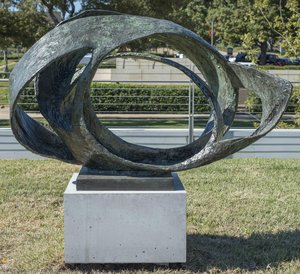
Pierced Hemisphere I

Explore 'Pierced Hemisphere I' by Dame Barbara Hepworth – a striking 1937 marble sculpture embodying modernism & abstract form. Discover its texture, symbolism & artistic significance.

Entdecken Sie Barbara Hepworth (1903-1975): Pionierin der abstrakten Skulptur! Ihre Werke, darunter 'Oval Form' & 'Two Forms', verbinden Surrealismus und Abstraktion. Besuchen Sie das Hepworth Wakefield!

Giclée / Kunstdruck

Giclée- oder Leinwanddruck in Museumsqualität mit schneller Produktion und flexiblen Veredelungsoptionen. ( Handgemalte Reproduktion kaufen Zum digitalen Bild wechseln)

Standardformat
individuell anpassbar
CM
INCH

Wählen Sie aus unseren vordefinierten Formaten, die den ursprünglichen Proportionen des Kunstwerks entsprechen.

Breite
Höhe

Sie können Ihre eigenen Maße eingeben, um ein bestimmtes Format oder einen speziellen Platz einzupassen. Wenn das von Ihnen gewählte Format nicht den Proportionen des Originalbildes entspricht, werden wir das Kunstwerk entweder beschneiden oder das Bild mit einem gespiegelten oder einfarbigen Rand erweitern. Ein digitaler Entwurf wird Ihnen zur Genehmigung zugesandt, bevor die Produktion beginnt.
Bitte beachten Sie, dass die Vorschau auf dem Bildschirm nicht den tatsächlichen Zuschnitt oder die Erweiterung widerspiegelt. Nur der Entwurf zeigt die endgültige Komposition präzise an.
Obwohl Sondermaße verfügbar sind, empfehlen wir die Auswahl eines Maßes aus der vordefinierten Liste, um die ursprünglichen Proportionen zu bewahren.

Weltweiter Versand () innerhalb von 2 Wochen statt der üblichen 4/5 Wochen. (20 September)

why_choose_icon
Kostenloser weltweiter Expressversand
why_choose_icon
Hochwertige Leinenleinwand
why_choose_icon
Vollständiger Versicherungsschutz beim Versand
why_choose_icon
Zollgebühren-Rückerstattungsgarantie
why_choose_icon
Garantie für exakte Farbtreue
why_choose_icon
100-tägiges Rückgaberecht (nur bei Mängeln)
why_choose_icon
100% Geld-zurück-Garantie
why_choose_icon
Angebot für Mengenrabatt

Gesamtpreis

$ 68

reproduction

Pierced Hemisphere I

Giclée / Kunstdruck

Format der Reproduktion

-

Gesamtpreis

$ 68

Kurzübersicht

  • Notable elements: Fragmented sphere, curved lines
  • Dimensions: 35 x 38 cm
  • Artistic style: Abstract Sculpture
  • Subject or theme: Geometric Form
  • Year: 1937
  • Artist: Barbara Hepworth
  • Title: Pierced Hemisphere I

A Fragmented Sphere: Barbara Hepworth’s Pierced Hemisphere I

Barbara Hepworth's "Pierced Hemisphere I," crafted in 1937 from pristine white marble, isn’t merely a sculpture; it’s an invitation to contemplate the delicate balance between wholeness and disruption. This arresting piece, currently housed at The Hepworth Wakefield, embodies the core tenets of Hepworth’s modernist approach – a profound exploration of form, texture, and the inherent dynamism within static materials. It speaks to a world grappling with change, mirroring both the beauty of natural processes and the unsettling implications of fragmentation.

The sculpture itself presents as a subtly distorted hemisphere, its surface punctuated by a decisive, almost violent, incision. This ‘piercing’ isn't destructive in the traditional sense; rather, it reveals an inner structure, suggesting a hidden geometry beneath the apparent solidity of the stone. The curve is not perfectly smooth – instead, it possesses a gentle undulation, hinting at movement and echoing the rhythms found in nature. The choice of white marble is crucial, lending an ethereal quality to the work. Marble’s inherent translucence allows light to penetrate and play across its surface, creating a shifting interplay of shadows that further emphasize the sculpture's three-dimensional form.

The Context of Modernism and Abstraction

To fully appreciate "Pierced Hemisphere I," it’s essential to situate it within the broader context of early 20th-century art. Hepworth, along with figures like Ben Nicholson and Paul Nash, was a pivotal member of the Unit One group – an avant-garde collective dedicated to forging a distinctly British approach to modernism. Unit One sought to move beyond representational art, embracing abstraction and exploring new ways of expressing form and space. This period witnessed a significant shift away from traditional sculptural techniques, with artists experimenting with materials like wood, metal, and, crucially for Hepworth, stone.

Hepworth’s work during this time was deeply influenced by the principles of Cubism and Constructivism – movements that emphasized geometric forms and explored the relationship between two-dimensional and three-dimensional space. However, she resisted rigid adherence to these styles, developing a uniquely personal language characterized by flowing lines, subtle curves, and an intuitive understanding of material properties. The influence of Surrealism is also evident in her exploration of subconscious imagery and the evocative power of abstract forms.

Symbolic Resonance: Wholeness and Disruption

The symbolism embedded within "Pierced Hemisphere I" is layered and open to interpretation. The hemisphere itself represents wholeness, a complete form – a symbol often associated with the cosmos or the human psyche. Yet, the incision disrupts this perfect unity, suggesting a loss of innocence, a confrontation with reality, or perhaps even an acknowledgement of inherent imperfection. It’s not simply a break; it's a revelation, exposing a new dimension within the original shape.

Some art historians have linked the pierced form to Hepworth’s personal experiences – her divorce and subsequent move to St Ives, where she found inspiration in the rugged Cornish coastline. The sculpture can be seen as a metaphor for navigating life's challenges, embracing both beauty and sorrow, and finding strength in resilience. The subtle variations in tone within the marble further contribute to this sense of complexity, mirroring the nuances of human emotion.

Craftsmanship and Technique

Hepworth’s mastery of her chosen medium – white marble – is undeniable. The sculpture demonstrates a remarkable sensitivity to material properties; she skillfully exploited the stone's natural veining and grain to create a surface that is both smooth and tactile. The precision of the incision itself speaks volumes about Hepworth’s technical skill, requiring immense control and an intimate understanding of how marble responds to tools.

The piece was created using traditional carving techniques, yet with a distinctly modern sensibility. The artist's hand is evident in the subtle imperfections and irregularities that add character and depth to the work. "Pierced Hemisphere I" stands as a testament to Hepworth’s ability to transform raw material into a powerful and enduring statement of artistic vision. It remains a compelling example of how sculpture can engage with fundamental questions about form, space, and the human condition.


Biografie des Künstlers

Frühes Leben und Ausbildung

Dame Barbara Hepworth, eine renommierte englische Künstlerin und Bildhauerin, wurde am 10. Januar 1903 in Wakefield geboren. Ihr Vater, Herbert Hepworth, war Bezirksvermessungsingenieur des West Riding County Council und später Alderman. Als Mädchen begleitete sie ihn auf den Autofahrten, die er im Zuge seiner Arbeit durch das West Riding von Yorkshire unternahm. Sie besuchte die Wakefield Girls' High School und erhielt 1915 ein Musikstipendium. 1917 gewann sie einen Schulterscholarship. Die Sommerferien verbrachte sie in Robin Hood's Bay, nahe Whitby, North Yorkshire. Von 1920 bis 1921 besuchte sie die Leeds School of Art, wo sie eine lebenslange Freundschaft mit dem Kommilitonen Henry Moore pflegte. Anschließend erhielt sie ein County-Stipendium für ein Studium an der Royal College of Art in London von 1921 bis 1924.

Künstlerische Karriere

  • Dame Barbara Hepworth's Werk verkörpert den Modernismus, insbesondere die moderne Bildhauerei. Sie war eine der wenigen Künstlerinnen, die internationale Anerkennung erlangte.

  • 1933 gründete sie gemeinsam mit Ben Nicholson, Paul Nash und anderen die Unit One Kunstbewegung, um Surrealismus und Abstraktion in der britischen Kunst zu vereinen.
  • Hepworths frühe Arbeit war durch Abstraktion und ihre Beteiligung an der in Paris ansässigen Kunstbewegung Abstraction-Création gekennzeichnet.

Wichtige Werke und Ausstellungen

Einflüsse und Entwicklung

Hepworths künstlerische Entwicklung war von verschiedenen Einflüssen geprägt. Ihre frühen Werke zeigten noch vereinfachte, naturalistische Formen, doch sie konzentrierte sich zunehmend auf formale Aspekte. Die Begegnung mit Künstlern wie Brancusi und Arp in Paris trug maßgeblich zu ihrer Hinwendung zur Abstraktion bei. Sie experimentierte mit Collage, Fotogrammen und Drucken und entwickelte eine einzigartige Sensibilität für ihre Materialien. Ihre Arbeit wurde von der direkten Bearbeitung des Materials geprägt, wobei sie oft Fäden, Drähte und farbiges Pigment in ihre Skulpturen integrierte.

Vermächtnis und Bedeutung

Barbara Hepworths Werk hat einen bleibenden Eindruck in der Kunstwelt hinterlassen. Sie gilt als eine Pionierin der modernen britischen Bildhauerei und beeinflusste Generationen von Künstlern. Ihre Skulpturen sind Teil bedeutender Museumskollektionen weltweit, und das Hepworth Wakefield ist ein Denkmal für ihr Leben und Werk. Ihr Beitrag zur Entwicklung der abstrakten Bildhauerei wird weiterhin geschätzt und gefeiert. Mehr über Barbara Hepworth auf Wikipedia
Barbara Hepworth

Barbara Hepworth

1903 - 1975 , Vereinigtes Königreich

Eckdaten zum Künstler

  • Beeinflusste Künstler: ['Henry Moore']
  • Bemerkenswerte Werke:
    • Oval Form (Trezion)
    • Two Forms
    • Totem
  • Geburtsdatum: 10. Januar 1903
  • Geburtsort: Wakefield, Vereinigtes Königreich
  • Künstlerische Richtung: Moderne Skulptur
  • Nationalität: Britisch
  • Todatum: 1975
  • Vollständiger Name: Barbara Hepworth
  • Von Künstlern Beeinflusst:
    • Brancusi
    • Arp
Entdecken Sie Kunstwerke, die nach Themen, Stilen und Merkmalen sortiert sind.