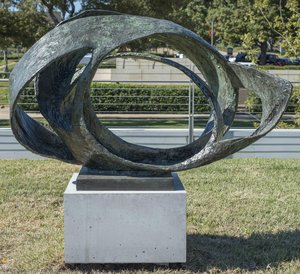
A Symphony in Stone: The Ethereal Presence of Ascending Form (Gloria)
In the quiet, contemplative realm of mid-century modernism, few works command the space with as much grace and rhythmic vitality as Barbara Hepworth’s Ascending Form (Gloria). Created in 1958, this masterpiece serves as a profound testament to the artist's ability to breathe life into static medium. The sculpture presents a captivating silhouette that seems to defy the very weight of its material, reaching upward with an organic elegance that suggests both growth and spiritual elevation. As one gazes upon the work, the eye is drawn through a series of fluid, interconnected shapes that evoke the natural rhythms of the landscape—a hallmark of Hepworth’s deep connection to the rugged beauty of the Cornish coast.
The sculpture's composition is a masterclass in the balance between mass and void. While the central figure possesses a commanding physical presence, it is the intentional use of negative space that truly allows the piece to breathe. This interplay of solid stone and empty air creates a dynamic tension, inviting the viewer to look through and around the form, discovering new perspectives with every movement. The smooth, polished surfaces catch the light in subtle gradations, highlighting the meticulous craftsmanship required to transform raw material into such a delicate, soaring expression of human and natural harmony.
The Legacy of Modernist Abstraction
To understand Ascending Form (Gloria), one must look toward the revolutionary spirit of the British avant-garde. As a pioneer of abstract sculpture, Hepworth was instrumental in moving art away from literal representation toward a more visceral, emotional language. This piece emerged during a period when she was refining her ability to blend surrealist influences with pure abstraction. The work does not merely depict a figure; it embodies an idea of ascension and the interconnectedness of all living things. It stands as a bridge between the terrestrial and the celestial, making it an intellectually stimulating addition to any serious collection.
For the discerning collector or interior designer, this work offers more than just aesthetic beauty; it provides a focal point of profound serenity. The sculpture’s ability to anchor a room while simultaneously providing a sense of lightness makes it an ideal centerpiece for sophisticated architectural spaces. Whether placed in a sun-drenched gallery or a minimalist contemporary study, the Ascending Form (Gloria) radiates a timeless prestige. Owning a high-quality reproduction of this work allows one to invite the transformative power of Hepworth’s vision into their personal environment, fostering an atmosphere of creativity, peace, and enduring modern elegance.



 Handgemalte Reproduktion kaufen
 Versenden als Grußkarte
 Teilen
 Details anzeigen
 Leitfaden

 Herunterladen
 Ähnliche Objekte
 Diashow
 Besucherstatistiken


 Mehr anzeigen






































 Die Glasoption ist nur für Größen unter 110 cm verfügbar.