


Giclée- oder Leinwanddruck in Museumsqualität mit schneller Produktion und flexiblen Veredelungsoptionen. ( Handgemalte Reproduktion bestellen Zum digitalen Bild wechseln)





























Wählen Sie aus unseren vordefinierten Formaten, die den ursprünglichen Proportionen des Kunstwerks entsprechen.

Geben Sie die benötigte Breite und Höhe an, damit der Druck perfekt in Ihren Rahmen oder an Ihre Wand passt. Ein Druck kann nur beschnitten, aber niemals größer als das Originalbild angefertigt werden; daher verliert ein Format mit anderen Proportionen einen Teil des Bildes. Wir senden Ihnen ein digitales Mockup zur Freigabe, bevor wir den Druck ausführen. Das auf dieser Seite gezeigte Bild zeigt nicht den tatsächlichen Beschnitt – dies ist nur im Mockup ersichtlich.
Weltweiter Versand () innerhalb von 2 Wochen statt der üblichen 4/5 Wochen. (10 November)
Theologie
Format der Reproduktion
In the quiet grandeur of the Adam Library at Kenwood House, there exists a canvas that does more than merely occupy space; it commands contemplation. Antonio Zucchi’s “Theology,” completed in 1769, is an exquisite exemplar of Neoclassical painting, serving as a profound testament to meticulous observation and a deeply resonant artistic vision. The artwork presents a serene female figure seated amidst a rugged, rocky landscape, bathed in a diffused, ethereal light that seems to emanate from within the scene itself. As her gaze drifts upward toward a colossal, stationary wheel, the viewer is drawn into a carefully constructed narrative steeped in religious allegory and the intellectual fervor of the Enlightenment.
Zucchi’s mastery of technique breathes life into this allegorical moment through the sophisticated use of chiaroscuro. By orchestrating a dramatic interplay between light and shadow, he sculpts volume and creates a palpable sense of atmosphere that transcends the flat surface of the canvas. His brushwork exemplifies the hallmarks of the Neoclassical style, where precise lines delineate forms with unwavering accuracy, capturing every subtle nuance of drapery folds and anatomical detail. The subdued color palette, dominated by earthy tones and punctuated by the striking blue and red of the figure's garments, enhances the historical and mythological gravity of the piece, making it a timeless centerpiece for any sophisticated collection.
Beyond its aesthetic brilliance, “Theology” is a profound meditation on the nature of existence. The central motif—the great wheel—is laden with symbolic significance, echoing Platonic cosmology and representing the cyclical nature of time, fate, and the eternal dance of life and death. This wheel, though massive and dominating the composition, remains still, its lack of motion juxtaposed against the wilder elements of the landscape to underscore a powerful theological truth: that amidst the trials and tribulations of the earthly realm, a divine, immutable order prevails. It is a comforting reassurance rendered in paint, inviting the observer to look past the temporal and toward the eternal.
For the discerning collector or interior designer, this painting offers more than mere decoration; it provides an emotional anchor. The artwork evokes a feeling of contemplative serenity, making it an ideal selection for spaces designed for reflection, such as private libraries, study halls, or elegant salons. A high-quality reproduction of this masterpiece allows one to bring the intellectual weight and tranquil beauty of the 18th century into a modern setting, offering a window into an era where art, reason, and spirituality were harmoniously entwined.
"Theologie" stammt aus der Epoche der – Frühe Neuzeit.
"Theologie" von Antonio Zucchi verwendet eine Neutrale Töne-Palette, wobei Reinweiß (#fefefd) die dominierende Farbe ist.
"Theologie" gehört der Strömung des Neoklassizismus an, und sein Schöpfer war in der Ära der – Frühe Neuzeit tätig.


1726 - 1795 , England

Explore the profound secrets of classical oil painting. From the delicate mastery of glazing to the dramatic depth of chiaroscuro, discover the timeless techniques used by Old Masters to create enduring, museum-quality masterpieces that capture light and emotion.

Explore the profound elegance of Neoclassical art. Discover the principles of order, symmetry, and virtue through the works of masters like David and Mengs. Immerse yourself in a journey of classical grace and timeless aesthetic perfection.

Explore the refined world of Neoclassical portraiture. Discover the mastery of line, light, and order through an expert exploration of academic art history, from Jacques-Louis David to Jean-Antoine Houdon. Immerse yourself in the timeless elegance of classical realism.

Discover the profound beauty of Academic Classicism. Explore the principles of order, anatomical precision, and the enduring legacy of Neoclassical masters through this expert guide to timeless elegance and technical perfection in fine art.
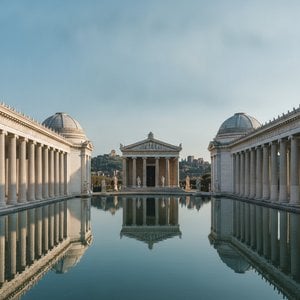
Discover the profound elegance of Neoclassicism. Explore how the pursuit of order, symmetry, and Greco-Roman ideals created a timeless aesthetic for collectors seeking grandeur and intellectual depth in fine art and architecture.
 Vorschau anzeigen
 Versenden
 Teilen
 Details anzeigen
 Leitfaden

 Herunterladen
 Ähnliche Objekte
 Röntgenaufnahme
 Diashow
 Fragen & Antworten
 Statistiken


 Weiterlesen









 Die Glasoption ist nur für Größen unter 110 cm verfügbar.


