


Giclée- oder Leinwanddruck in Museumsqualität mit schneller Produktion und flexiblen Veredelungsoptionen. ( Handgemalte Reproduktion bestellen Zum digitalen Bild wechseln)





























Wählen Sie aus unseren vordefinierten Formaten, die den ursprünglichen Proportionen des Kunstwerks entsprechen.

Geben Sie die benötigte Breite und Höhe an, damit der Druck perfekt in Ihren Rahmen oder an Ihre Wand passt. Ein Druck kann nur beschnitten, aber niemals größer als das Originalbild angefertigt werden; daher verliert ein Format mit anderen Proportionen einen Teil des Bildes. Wir senden Ihnen ein digitales Mockup zur Freigabe, bevor wir den Druck ausführen. Das auf dieser Seite gezeigte Bild zeigt nicht den tatsächlichen Beschnitt – dies ist nur im Mockup ersichtlich.
Weltweiter Versand () innerhalb von 2 Wochen statt der üblichen 4/5 Wochen. (8 November)
Preparing for Puja
Format der Reproduktion
In the quiet, dewy hours of an Indian morning, António Xavier Trindade captures a scene that transcends mere daily routine, elevating a simple act of preparation into a profound moment of spiritual and cultural grace. Preparing for Puja presents us with a Maratha lady, her presence commanding yet serene, as she attends to her religious duties at a village well. Dressed in a vibrant, traditional red sari that serves as the painting's chromatic heartbeat, she holds a polished copper vessel, its metallic sheen catching the soft, flickering light of the dawn. The composition is masterfully structured in a triangular form, a nod to Trindade’s academic training, which guides the viewer’s eye from her graceful posture directly to the shimmering pot—a potent symbol of both impending ritual and the enduring fertility of the land.
Beyond the surface beauty, there is an unexpected psychological depth within this portrait. While many artists of the late 19th and early 20th centuries might have depicted Indian women through a lens of submissive modesty, Trindade offers something far more progressive. The subject meets the viewer’s gaze with an unabashed, questioning look, asserting her individual character and challenging any sense of intrusion. This subtle defiance reflects the artist's own convictions regarding equality; in his work, there is no hierarchy between the painter and the sitter, only a shared humanity. For the collector, this piece offers more than just a beautiful image; it provides a window into a sophisticated dialogue between tradition and modern self-awareness.
Trindade’s technical prowess is on full display through his delicate interplay of light and shadow. Influenced by the burgeoning Impressionist movement, he utilizes the cool, blue-toned shadows of the early morning to create a striking contrast against the warmth of the lady's red attire and the lush green foliage in the background. This use of color theory—balancing vibrant primaries against neutral, earthy walls—demonstrates a contemporary understanding of how light affects perception. The way the light dances upon the copper vessel and the folds of the sari creates a sense of movement and life, making the scene feel as though it is breathing.
For interior designers and connoisseurs of fine art, Preparing for Puja serves as a magnificent focal point that brings both warmth and intellectual intrigue to a space. The painting’s ability to harmonize bold, saturated hues with soft, atmospheric textures makes it an ideal acquisition for those looking to infuse a room with cultural richness and historical weight. Whether placed in a sunlit gallery or a sophisticated study, this reproduction invites the observer to linger, to contemplate the intersection of the sacred and the mundane, and to marvel at the enduring legacy of one of India's most luminous painters.
Die für "Preparing for Puja" von António Xavier Trindade aufgezeichnete Luminanz beträgt Dark.
Die Maße von "Preparing for Puja" von António Xavier Trindade betragen 119 x 75 cm. Reproduktionen können in anderen Größen bestellt werden, wobei die Proportionen beibehalten werden.
Ein Amber to Saffron Farbton durchzieht "Preparing for Puja" von António Xavier Trindade.


1870 - 1935 , Indien

Embark on a visual journey through the serene mastery of lake scene landscapes. Explore the profound beauty of Impressionist, Romantic, and Luminist oil paintings, curated for the sophisticated collector seeking timeless tranquility and artistic excellence.
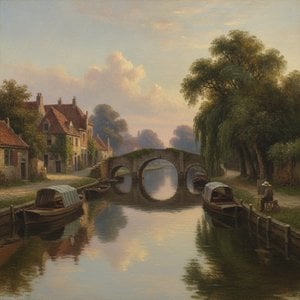
Embark on a visual journey through the tranquil beauty of canal scenes in fine art. Discover how master painters capture light, reflection, and serenity through impressionistic landscapes and timeless maritime masterpieces.

Embark on a visual journey through Claude Monet's most iconic water lily masterpieces. Discover the profound beauty of Impressionism, explore the evolution of Giverny's light, and learn how to bring these serene, museum-quality landscapes into your private collection.
 Vorschau anzeigen
 Versenden
 Teilen
 Details anzeigen
 Leitfaden

 Herunterladen
 Ähnliche Objekte
 Röntgenaufnahme
 Diashow
 Fragen & Antworten
 Statistiken


 Weiterlesen









 Die Glasoption ist nur für Größen unter 110 cm verfügbar.


