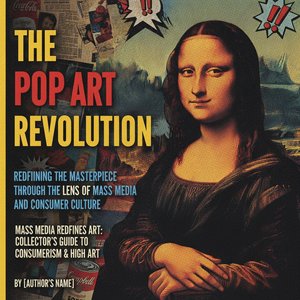
Beschreibung des Sammlerstücks
A Fragmented Reflection on Loss: Decoding Andy Warhol’s ‘Flash—November 22, 1963’
Andy Warhol’s ‘Flash—November 22, 1963’ isn't merely a painting; it’s an immediate reaction etched onto eleven screenprints—a visceral memorial to a nation irrevocably altered. Created in 1968, five years after the assassination of President John F. Kennedy, this series transcends the singular event itself, delving into *how* we consumed that tragedy – through the relentless churn of mass media. Warhol doesn’t offer grief; he presents its packaging, mirroring the way horror unfolded and disseminated to a stunned public. The work stands as a chilling commentary on desensitization, blurring the lines between reality and representation, and highlighting the burgeoning power of image-making in shaping collective memory. It's a piece that demands contemplation, prompting viewers to confront uncomfortable truths about violence, loss, and the manipulative influence of visual culture.
## The Echoes of a News Bulletin
The title itself, “Flash—November 22, 1963,” evokes the urgent language of news bulletins—the staccato bursts of information that interrupted everyday life. Warhol deliberately sourced his imagery from campaign posters, newspaper photographs, and advertisements – precisely those materials flooding homes across America in those days of mourning. He wasn’t interested in crafting a heroic portrait or a solemn elegy; instead, he replicated the visual noise surrounding the assassination, juxtaposing Kennedy's image alongside that of Lee Harvey Oswald, the Presidential Seal, even the gun used in the shooting. This deliberate juxtaposition is profoundly unsettling. The repetition inherent in the screenprinting process amplifies this effect, mimicking the relentless replay of images on television screens and newspapers. Each print feels less like an individual artwork and more like a frame from an endless loop—a haunting echo of that fateful day.
## Pop Art’s Confrontation with Tragedy
Warhol’s choice of subject matter was particularly provocative for the Pop Art movement, which had largely focused on consumer culture and celebrity iconography. While his earlier works celebrated vibrancy through objects like Campbell’s Soup cans and Coca-Cola bottles, ‘Flash—November 22, 1963’ plunged into a darker territory. It challenged the notion that art should be purely aesthetic or celebratory, forcing viewers to confront uncomfortable truths about violence, loss, and the manipulative power of media. The series represents a stark departure from the glossy optimism often associated with Pop Art, revealing its potential for social critique. Warhol himself confessed his initial detachment from the event, stating he was more disturbed by *how* television dictated public emotion than by Kennedy’s death itself – a sentiment that permeates every print in the series.
## A Legacy of Discomfort and Reflection
‘Flash—November 22, 1963’ remains profoundly relevant today. In an age saturated with information and increasingly reliant on visual media, Warhol’s work serves as a prescient warning about the dangers of passive consumption and the erosion of genuine emotional connection. The series doesn’t offer answers or closure; it presents a fragmented, unsettling portrait of a nation grappling with trauma. It is a powerful reminder that images are not neutral representations of reality but rather constructed narratives that shape our perceptions and influence our understanding of the world. Owning a reproduction of this work isn't simply acquiring an iconic piece of art history; it’s inviting a dialogue about memory, media, and the enduring impact of tragedy.
## Photo Description: The image is a colorful advertisement for Italian Carbine rifles. The ad features a picture of the gun with a price tag of $127. The rifle is displayed in various positions throughout the ad, including one on top and another on the bottom right side. There are also two smaller guns visible within the main image. In addition to the main advertisement, there is a small illustration of a person holding a gun located towards the left side of the image. The overall composition of the ad is visually appealing with its vibrant colors and attention-grabbing design.
## Size: Unknown
## Date: 1968
### Artist Information:
Andy Warhol ( ; born Andrew Warhola Jr.; August 6, 1928 – February 22, 1987) was an American visual artist, film director and producer. A leading figure in the Pop Art movement, Warhol is generally considered among the most important American artists of the second half of the 20th century. His works explore the relationship between artistic expression, advertising, and celebrity culture that flourished by the 1960s, and span a variety of media, including painting, sculpture, photography, and filmmaking. Some of his best-known works include the silkscreen paintings Campbell’s Soup Cans (1962) and Marilyn Diptych (1962), the experimental film Chelsea Girls (1966), the multimedia events known as the Exploding Plastic Inevitable (1966–67), and the erotic film Blue Movie (1969) that started the “Golden Age of Porn”.
Biography: Warhol’s early life was marked by both hardship and burgeoning creativity. A childhood illness, Sydenham's chorea — often called St. Vitus’ Dance — confined him indoors for extended periods, fostering an intense inner world where artistic expression became a vital outlet. This period wasn’t one of isolation, however; his mother nurtured his talent with art supplies and a steady stream of popular imagery—comic books and movie magazines—that would later become foundational to his iconic style. He excelled at the Carnegie Institute of Technology, graduating in 1949 with a degree in Pictorial Design, before embarking on a journey to New York City, driven by an ambition to establish himself as a commercial illustrator. This initial foray i