Erwerben Sie ein hochauflösendes, optimiertes digitales Bild, das der Online-Vorschau weit überlegen ist.
Jede Datei wird von unseren hauseigenen Spezialisten mit modernsten Werkzeugen und fachmännischer manueller Retusche sorgfältig vorbereitet. Wir stellen sicher, dass jedes Bild eine außergewöhnliche Klarheit, präzise Farbgenauigkeit und feinste Details aufweist.
Die endgültige Datei wird innerhalb von 72 Stunden per E-Mail zugestellt und ist für den sofortigen Einsatz in professionellen, redaktionellen und Druckumgebungen optimiert. Es handelt sich um dieselbe Qualität, der führende Designstudios, Verlage und Galerien vertrauen.
Laden Sie eine hochauflösende Datei für die persönliche Präsentation, den Druck und kreative Projekte herunter. ( Zum Druck wechseln
Handgemalte Reproduktion kaufen)
Wenn Sie sich für WahooArt.com entscheiden, erhalten Sie nicht nur ein Bild – Sie erhalten ein professionell aufbereitetes digitales Kunstwerk, das mit höchster Präzision erstellt und durch eine Zufriedenheitsgarantie abgesichert wird. Hier ist alles, was automatisch mit Ihrer Bestellung geliefert wird:
Ihre hochauflösende digitale Bilddatei wird Ihnen innerhalb von 72 Stunden nach der Bestellung per E-Mail zugestellt – bereit zur sofortigen Verwendung.
Ihre Kunstwerke werden professionell mithilfe fortschrittlicher KI-Tools und manueller Bearbeitung optimiert, um maximale Detailtreue, Klarheit und Farbgenauigkeit zu gewährleisten.
Datei versehentlich gelöscht oder verloren? Keine Sorge – wir senden sie Ihnen jederzeit kostenlos erneut zu.
Genießen Sie Ihr Kunstwerk sofort ohne Zollgebühren, Einfuhrabgaben oder Versandkosten – digitale Downloads sind immer steuerfrei.
Wir garantieren, dass Ihr digitales Bild mithilfe professioneller Werkzeuge und Farbmanagement die Originalfarben so präzise wie möglich wiedergibt.
Sollten Sie mit Ihrem digitalen Bild nicht zufrieden sein, werden wir es überarbeiten oder 100% innerhalb von 100 Tagen erstatten – ohne Wenn und Aber.
Nicht zufrieden? Erhalten Sie innerhalb von 100 Tagen nach Erhalt Ihrer digitalen Datei eine vollständige Rückerstattung – ohne Wenn und Aber.
3 Bilder kaufen, 10% sparen – 5 Bilder kaufen, 15% sparen – Ab 10 Bildern 20% sparen. Ideal für kreative Projekte, Galerien und Agenturen.
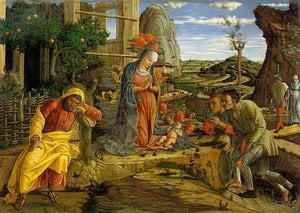
Andrea Mantegna's Calvaria, a profoundly moving depiction of the crucifixion, isn't merely a religious image; it is a testament to a revolutionary artistic spirit. Born in 1431 near Padua, Mantegna forged his own path through the early Renaissance, rejecting the prevailing trends and instead immersing himself in the tangible remnants of Rome’s glorious past. This dedication to archaeological accuracy – fueled by his formative years under Francesco Squarcione, a man who treated his workshop as an academy for Roman studies – resulted in a work that feels less like a painting and more like a meticulously reconstructed fragment of antiquity brought vividly to life. The sheer physicality of the figures, their sculpted forms echoing the statues Mantegna would have studied, immediately establishes a powerful connection with classical art, yet this isn’t a simple imitation; it's an intensely personal interpretation.
Calvaria is dominated by its unflinching portrayal of Christ’s crucifixion. The scene unfolds with a stark realism, focusing on the central figure suspended from the cross – Jesus himself – surrounded by a carefully rendered group of onlookers. Mantegna's mastery of perspective is immediately apparent; he employs a dramatic foreshortening that draws the viewer into the heart of the event, creating an almost overwhelming sense of immediacy. The inclusion of at least thirteen figures, including disciples and mourners, adds to the scene’s emotional weight and underscores the scale of this pivotal moment in Christian history. The artist's deliberate arrangement isn't simply a depiction of a biblical event; it’s a carefully constructed narrative designed to evoke profound contemplation.
Beyond its religious subject matter, Calvaria is rich with symbolic meaning deeply rooted in the artistic and intellectual currents of Mantegna's time. The mountainous landscape behind the scene isn’t a naturalistic backdrop but a deliberate reference to the Roman world – specifically, the Appian Way, a major thoroughfare that served as a stage for countless processions and public spectacles. This association elevates the crucifixion to a grand, almost theatrical event, reminiscent of Roman triumphal processions. The figures themselves are rendered with a classical dignity, reflecting Mantegna’s belief in the enduring relevance of ancient virtues and ideals. The use of muted colors – predominantly earth tones – further reinforces this connection to antiquity, creating a sense of timelessness and solemnity.
Mantegna's technique is characterized by its meticulous attention to detail and his ability to convey both physical realism and profound emotional intensity. The artist’s use of *terrazzo* – a technique involving the layering of colored plaster – creates a remarkable sense of depth and texture, further enhancing the sculptural quality of the figures. The faces of the mourners are particularly expressive, conveying a range of emotions from grief to concern. Calvaria remains a powerful testament to Mantegna’s artistic genius and his unwavering commitment to reviving the spirit of antiquity. Its enduring impact lies not only in its technical brilliance but also in its ability to evoke a deeply felt sense of human tragedy and spiritual reflection.
1431 - 1506 , Italien