A Glimpse into Melancholy Beauty – Exploring Amedeo Modigliani’s “Untitled”
Amedeo Clemente Modigliani, a name that resonates with an almost unbearable elegance and profound sorrow, remains one of the most enduring figures in early 20th-century art. His oeuvre—primarily portraits and nudes—captures a singular vision of humanity: fragile, yearning, perpetually poised on the precipice of emotion. “Untitled” (6121), housed within WahooArt’s impressive collection, exemplifies this characteristic style perfectly.
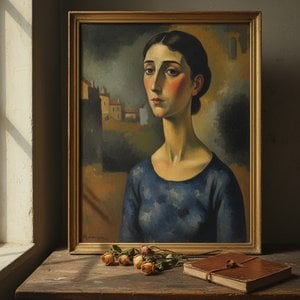
The painting depicts a woman bathed in muted blues and yellows—a palette that speaks volumes about mood and atmosphere. Her gaze is unwavering, directed outwards with an intensity that invites contemplation. The simplicity of the composition – a solitary figure against a serene sky – amplifies the emotional resonance of the piece.
Stylistic Innovation: Surreal Elongation and Expressionist Depth
Modigliani’s artistic approach defied convention, establishing him as a pivotal voice within the École de Paris movement. He eschewed academic realism in favor of a distinctive technique characterized by “elongated forms,” a stylistic hallmark that instantly identifies his work. This deliberate distortion isn't merely aesthetic; it serves to convey psychological depth—the artist sought to capture not just physical appearance but also inner turmoil and unspoken longing.
The elongated neck, a recurring motif in Modigliani’s portraits, symbolizes vulnerability and sensitivity. It’s as if he wished to freeze a moment of profound introspection, encapsulating the elusive nature of human emotion. The subtle shading and meticulous attention to detail contribute to an overall impression of quiet drama.
Historical Context: Parisian Bohemia and Artistic Rebellion
Created in 1916 during the tumultuous years of World War I, “Untitled” reflects the anxieties and uncertainties of its time. Modigliani’s studio resided within Paris' bohemian district—a crucible of artistic experimentation and intellectual ferment—where artists challenged established norms and pursued new expressive languages.
The painting’s muted colors align with the prevailing aesthetic sensibilities of the period, mirroring a desire for understated beauty amidst the horrors of war. However, Modigliani’s stylistic choices transcend mere historical reflection; they represent a courageous assertion of artistic individuality—a refusal to compromise vision for acceptance.
Symbolism and Emotional Resonance: A Portrait of Quiet Sorrow
"Untitled" transcends its visual elements to communicate a palpable sense of melancholy. The woman's gaze, seemingly lost in distant contemplation, embodies the universal human experience of yearning and unspoken sadness. It’s a portrait not merely of appearance but of spirit—a testament to Modigliani’s ability to distill complex emotions into a single, unforgettable image.
The painting invites viewers to consider themes of isolation, vulnerability, and the contemplation of existence itself. Like many of Modigliani's works, “Untitled” lingers in the memory long after viewing, prompting reflection on the beauty inherent in sorrow and the enduring power of artistic expression.



 Vorschau anzeigen
 Handgemalte Reproduktion bestellen
 Versenden
 Teilen
 Details anzeigen

 Herunterladen
 Ähnliche Objekte
 Röntgenaufnahme
 Diashow
 Statistiken

 Weiterlesen






































 Die Glasoption ist nur für Größen unter 110 cm verfügbar.