Vorschau anzeigen In AR ansehen Handgemalte Reproduktion bestellen Zum digitalen Bild wechseln Versenden
Details anzeigen Leitfaden Zu Favoriten hinzufügen Herunterladen Ähnliche Objekte Röntgenaufnahme Diashow Statistiken

Zodiac

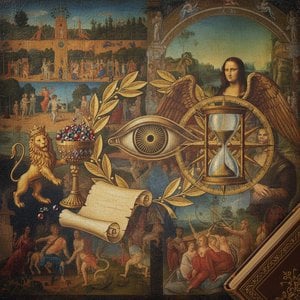
Zodiac - Alphonse Maria Mucha's captivating Art Nouveau painting depicts a woman crowned with stars amidst intricate clockwork and avian symbols, embodying the elegance and dynamism of the era.

Alphonse Mucha (1860-1939): Meister des Jugendstils! Entdecken Sie seine ikonischen Plakate, wunderschönen Frauen & das monumentale 'Slavische Epos'. Eine tschechische Kunstlegende.

Giclée / Kunstdruck

Giclée- oder Leinwanddruck in Museumsqualität mit schneller Produktion und flexiblen Veredelungsoptionen. ( Handgemalte Reproduktion bestellen Zum digitalen Bild wechseln)

Corner sample of the P118B picture frame: formgepresstes Polystyrol, 5 cm wide and 3 cm thick
P118B €10
Corner sample of the P118H picture frame: formgepresstes Polystyrol, 5 cm wide and 3 cm thick
P118H €10
Corner sample of the P118W picture frame: formgepresstes Polystyrol, 5 cm wide and 3 cm thick
P118W €10
Corner sample of the P438Z picture frame: formgepresstes Polystyrol, 5.5 cm wide and 3.5 cm thick
P438Z €10
Corner sample of the P508JH picture frame: formgepresstes Polystyrol, 7 cm wide and 3.5 cm thick
P508JH €12
Corner sample of the P508YH picture frame: formgepresstes Polystyrol, 7 cm wide and 3.5 cm thick
P508YH €12
Corner sample of the P805H picture frame: formgepresstes Polystyrol, 5 cm wide and 3.5 cm thick
P805H €10
Corner sample of the P805Z picture frame: formgepresstes Polystyrol, 5 cm wide and 3.5 cm thick
P805Z €10
Corner sample of the P919BZ picture frame: formgepresstes Polystyrol, 7 cm wide and 3.5 cm thick
P919BZ €10
Corner sample of the P919G picture frame: formgepresstes Polystyrol, 7 cm wide and 3.5 cm thick
P919G €10
Corner sample of the P919XJ picture frame: formgepresstes Polystyrol, 7 cm wide and 3.5 cm thick
P919XJ €10
Corner sample of the P959ZH picture frame: formgepresstes Polystyrol, 5 cm wide and 3 cm thick
P959ZH €10
Corner sample of the P968JZ picture frame: formgepresstes Polystyrol, 6 cm wide and 4 cm thick
P968JZ €12
Corner sample of the W106C picture frame: Massivholz, 5 cm wide and 3 cm thick
W106C €8
Corner sample of the W218G picture frame: Massivholz, 5 cm wide and 3 cm thick
W218G €10
Corner sample of the W218JH picture frame: Massivholz, 5 cm wide and 3 cm thick
W218JH €8
Corner sample of the W218Y picture frame: Massivholz, 5 cm wide and 3 cm thick
W218Y €10
Corner sample of the W307PJ picture frame: Massivholz, 6 cm wide and 3 cm thick
W307PJ €10
Corner sample of the W316G picture frame: Massivholz, 6 cm wide and 3 cm thick
W316G €10
Corner sample of the W316PJ picture frame: Massivholz, 6 cm wide and 3 cm thick
W316PJ €8
Corner sample of the W316Y picture frame: Massivholz, 6 cm wide and 3 cm thick
W316Y €10
Corner sample of the W398PJ picture frame: Massivholz, 5 cm wide and 3 cm thick
W398PJ €8
Corner sample of the W4111J picture frame: Massivholz, 6.5 cm wide and 3.5 cm thick
W4111J €10
Corner sample of the W500HY picture frame: Massivholz, 7 cm wide and 5 cm thick
W500HY €15
Corner sample of the W500JH picture frame: Massivholz, 7 cm wide and 5 cm thick
W500JH €15
Corner sample of the W692G picture frame: Massivholz, 8 cm wide and 4 cm thick
W692G €12
Corner sample of the W849H picture frame: Massivholz, 5 cm wide and 3 cm thick
W849H €8
Corner sample of the W940BG picture frame: Massivholz, 7.5 cm wide and 4.5 cm thick
W940BG €15
Corner sample of the W953PJ picture frame: Massivholz, 6 cm wide and 3.5 cm thick
W953PJ €8

Standardformat
individuell anpassbar
CM
INCH

Wählen Sie aus unseren vordefinierten Formaten, die den ursprünglichen Proportionen des Kunstwerks entsprechen.

Breite
Höhe

Geben Sie die benötigte Breite und Höhe an, damit der Druck perfekt in Ihren Rahmen oder an Ihre Wand passt. Ein Druck kann nur beschnitten, aber niemals größer als das Originalbild angefertigt werden; daher verliert ein Format mit anderen Proportionen einen Teil des Bildes. Wir senden Ihnen ein digitales Mockup zur Freigabe, bevor wir den Druck ausführen. Das auf dieser Seite gezeigte Bild zeigt nicht den tatsächlichen Beschnitt – dies ist nur im Mockup ersichtlich.

Weltweiter Versand () innerhalb von 2 Wochen statt der üblichen 4/5 Wochen. (26 Oktober)

Kostenloser weltweiter Expressversand
Hochwertige Leinenleinwand
Umfassender Versicherungsschutz beim Versand
Zollgebühren-Rückerstattungsgarantie
Garantie für exakte Farbtreue
100 Tage Rückgaberecht (nur bei Mängeln)
100% Geld-zurück-Garantie
Mengenrabatt verfügbar

Gesamtpreis

€ 60

Zodiac

Giclée / Kunstdruck

Format der Reproduktion

-

Endpreis

€ 60

Eckdaten

  • Location: Musée Mucha, Praha
  • Notable elements or techniques: Floral ornamentation; Clock motifs
  • Artistic style: Organic lines; Flowing forms
  • Subject or theme: Mythology; Femininity
  • Title: Zodiac

Kunst-Quiz

Jede Frage hat nur eine richtige Antwort.

Frage 1:
What artistic movement is Alphonse Mucha's Zodiac painting primarily associated with?
Frage 2:
The Zodiac depicts a woman adorned with what celestial element?
Frage 3:
Which artistic style influenced Mucha's approach to painting, particularly evident in The Slavonic Uprising?
Frage 4:
What prominent decorative element is frequently incorporated into Art Nouveau artworks like Zodiac?
Frage 5:
The painting utilizes a technique known for its ability to create a sense of movement and organic forms – what is it called?

Alphonse Mucha: The Enchanting Architect of Art Nouveau

Alphonse Maria Mucha (1860 – 1939), born in Brno, Czech Republic, stands as a monumental figure within the Art Nouveau movement—a stylistic revolution that swept across Europe between 1890 and 1910. More than just an artist; Mucha was a visionary craftsman who meticulously constructed elaborate decorative panels and posters, transforming surfaces into canvases of flowing lines and luminous color palettes.

His formative years were marked by academic training at the Academy of Fine Arts in Prague, where he initially embraced traditional painting techniques. However, disillusioned with the rigidity of artistic conventions, Mucha swiftly abandoned these pursuits for a path of independent experimentation—a decision that would ultimately propel him to international acclaim.

Paris beckoned in 1887, offering Mucha the fertile ground for cultivating his distinctive Art Nouveau aesthetic. Influenced by Impressionism and Symbolism, he honed his skills under masters like Gustave Moreau and Pierre-Auguste Renoir, absorbing their innovative approaches to color and composition.

Mucha’s signature style is instantly recognizable: undulating curves dominate every element of his artwork—from the graceful draperies of female figures to the spiraling stems of floral arrangements. These lines aren't merely decorative; they embody a profound sense of movement, mirroring the dynamism inherent in nature and conveying an irresistible allure.

  • Technique: Mucha excelled at etching and lithography—processes that allowed him to reproduce his designs with remarkable precision and vibrancy. He skillfully utilized halftone printing to achieve subtle gradations of color, creating textures that captivated viewers’ senses.
  • Color Palette: Mucha favored pastel hues—particularly shades of pink, lilac, and peach—which he applied with meticulous care. These colors emanated a dreamy luminescence, enhancing the ethereal quality of his compositions.
  • Symbolism: Recurring motifs in Mucha’s oeuvre carried profound symbolic significance. Flowers represented fertility and rebirth; birds symbolized aspiration and freedom; and stars embodied divine grace—elements meticulously interwoven into his artworks to communicate complex ideas.

Consider “The Slavonic Uprising,” Mucha's magnum opus, a monumental decorative panel commissioned for the Slavonic Exhibition in Prague. It brilliantly blends Czech nationalistic iconography with Art Nouveau’s stylistic elegance. The depiction of Slavic women—clad in flowing robes and adorned with floral garlands—represents resilience and beauty amidst turbulent times.

Mucha's influence extends far beyond the realm of decorative arts; his posters revolutionized advertising, captivating audiences with their mesmerizing visuals and poetic narratives. His work continues to inspire designers and artists today, demonstrating the enduring power of Art Nouveau’s visionary spirit—a testament to Mucha’s unparalleled mastery as “the enchanting architect of Art Nouveau.”

Fragen & Antworten

In welcher Technik wurde "Zodiac" von Alphonse Maria Mucha ausgeführt?

Das Medium von "Zodiac" von Alphonse Maria Mucha ist Acrylic On Canvas. Die Reproduktionen zielen darauf ab, die Optik dieser Technik wiederzugeben.

Wie wirkt die Helligkeit von "Zodiac" von Alphonse Maria Mucha?

Was die wahrgenommene Helligkeit betrifft, so ist "Zodiac" von Alphonse Maria Mucha brilliant.

Wie lässt sich die Stimmung von "Zodiac" von Alphonse Maria Mucha beschreiben?

Die allgemeine Stimmung von "Zodiac" von Alphonse Maria Mucha ist Elegant. Diese Stimmung beschreibt die Atmosphäre des Werkes.


Künstlerbiografie

Frühes Leben und Ausbildung

  • Geboren: 15. Juli 1860 in Ivanačice, Mähren (heute Teil der Tschechischen Republik)
  • Zeigte schon in jungen Jahren künstlerisches Talent.
  • Studierte an der Akademie der Schönen Künste in Prag, war aber von traditionellen Ansätzen enttäuscht.
  • Zog 1887 nach Paris, um seinen eigenen Stil zu verfolgen.

Künstlerischer Stil und bemerkenswerte Werke

  • Bekannt für seinen unverwechselbaren Jugendstil, der sich durch fließende Linien, organische Formen und eine Bewegungsempfindung auszeichnet.
  • Beeinflusst von Künstlern wie Pierre-Auguste Renoir und Gustave Moreau.
  • Bemerkenswerte Werke:
    • Der slawische Aufstand – Zeigt die Verbindung traditioneller tschechischer Motive mit modernen Jugendstilelementen.
    • Salon des Cent
    • Gemälde, inspiriert von Werken wie Die Töchter des Tespio von Gustave Moreau und La Ribambelle des Gobelins von Piero Dorazio.
    • Illustrationen basierend auf Junge Landwirte ernten Leinen von Sir Hubert von Herkomer.
  • Stellte häufig idealisierte Frauen in fließenden Gewändern inmitten üppiger Blumen dar.

Karrierehöhepunkte und wichtige Aufträge

  • Zusammenarbeit mit Sarah Bernhardt: Erschuf Plakate und Designs für die Schauspielerin Sarah Bernhardt, beginnend mit dem Plakat für Gismonda (1894), das seine Karriere startete.
  • Weltausstellung in Paris (1900): Sein Jugendstil erlangte bei dieser Ausstellung internationale Anerkennung. Er dekorierte den Pavillon von Bosnien und Herzegowina und arbeitete an der Gestaltung des österreichischen Pavillons mit.
  • Förderung durch Charles Richard Crane: Erhielt Unterstützung von Charles Richard Crane, die es ihm ermöglichte, die monumentale Serie Der slawische Epos (1912-30) zu schaffen.
  • Unabhängiges Tschechoslowakei: Entwarf Briefmarken, Banknoten und Regierungsdokumente für das neu unabhängige Tschechoslowakei.

Einflüsse und Vermächtnis

  • Beeinflusst von tschechischen künstlerischen Traditionen und modernen europäischen Kunstbewegungen.
  • Sein einzigartiger Stil ebnete den Weg für zukünftige Generationen von Künstlern im Jugendstil und der Sezession.
  • Inspirierte andere Künstler wie Eva Prokopcová.
  • Sein Vermächtnis erstreckt sich über seine Kunstwerke hinaus und beeinflusst Design und Ästhetik.

Späteres Leben und Tod

  • Vermählte sich 1906 mit Maruska (Marie/Maria) Chytilová.
  • Besuchte von 1906 bis 1910 die Vereinigten Staaten, wo ihre Tochter Jaroslava geboren wurde.
  • Starb am 14. Juli 1939 in Prag, Tschechoslowakei.
Alphonse Maria Mucha

Alphonse Maria Mucha

1860 - 1939 , Tschechien

Kurzinfos

  • Beeinflusste Künstler:
    • Pierre-Auguste Renoir
    • Gustave Moreau
  • Bemerkenswerte Werke:
    • Slavonic Uprising
    • Salon des Cent
    • The Slav Epic
  • Geburtsdatum: 15. Juli 1860
  • Geburtsort: Brno, Tschechien
  • Künstlerische Richtung: Art Nouveau
  • Nationalität: Tschechisch
  • Todatum: 14. Juli 1939
  • Vollständiger Name: Alphonse Maria Mucha
  • Von Künstlern Beeinflusst: ['Eva Prokopcová']
Entdecken Sie Kunstwerke, die nach Themen, Stilen und Merkmalen sortiert sind.