
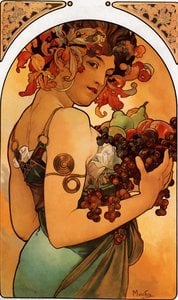
Lefevre-Utile (1903) von Alphonse Maria Mucha, handgemaltes Ölgemälde-Replikat eines Meisterkünstlers
Vorschau anzeigen In AR ansehen Zum Druck wechseln Zum digitalen Bild wechseln Versenden
Details anzeigen Leitfaden Zu Favoriten hinzufügen Herunterladen Ähnliche Objekte Röntgenaufnahme Diashow Fragen & Antworten Statistiken

Lefevre-Utile Handgemalte Ölmalerei-Reproduktion

Abmessungen
53.0 x 72.0 cm

Mucha's Seasons series exemplify Art Nouveau’s elegance with idealized women entwined in floral settings and adorned with jewels, reflecting Japanese influence and capturing the essence of each season—Winter’s frost, Spring’s innocence, Summer’s sensuality, Autumn’s fruitfulness.

Alphonse Mucha (1860-1939): Meister des Jugendstils! Entdecken Sie seine ikonischen Plakate, wunderschönen Frauen & das monumentale 'Slavische Epos'. Eine tschechische Kunstlegende.

Handgefertigte Ölreproduktion

Handgemaltes Ölgemälde auf Leinwand in Ihrer Wunschgröße und mit Rahmen, auf Bestellung von unseren Künstlern angefertigt. ( Zum Druck wechseln Zum digitalen Bild wechseln)

Corner sample of the P118B picture frame: formgepresstes Polystyrol, 5 cm wide and 3 cm thick
P118B €10
Corner sample of the P118H picture frame: formgepresstes Polystyrol, 5 cm wide and 3 cm thick
P118H €10
Corner sample of the P118W picture frame: formgepresstes Polystyrol, 5 cm wide and 3 cm thick
P118W €10
Corner sample of the P438Z picture frame: formgepresstes Polystyrol, 5.5 cm wide and 3.5 cm thick
P438Z €10
Corner sample of the P508JH picture frame: formgepresstes Polystyrol, 7 cm wide and 3.5 cm thick
P508JH €12
Corner sample of the P508YH picture frame: formgepresstes Polystyrol, 7 cm wide and 3.5 cm thick
P508YH €12
Corner sample of the P805H picture frame: formgepresstes Polystyrol, 5 cm wide and 3.5 cm thick
P805H €10
Corner sample of the P805Z picture frame: formgepresstes Polystyrol, 5 cm wide and 3.5 cm thick
P805Z €10
Corner sample of the P919BZ picture frame: formgepresstes Polystyrol, 7 cm wide and 3.5 cm thick
P919BZ €10
Corner sample of the P919G picture frame: formgepresstes Polystyrol, 7 cm wide and 3.5 cm thick
P919G €10
Corner sample of the P919XJ picture frame: formgepresstes Polystyrol, 7 cm wide and 3.5 cm thick
P919XJ €10
Corner sample of the P959ZH picture frame: formgepresstes Polystyrol, 5 cm wide and 3 cm thick
P959ZH €10
Corner sample of the P968JZ picture frame: formgepresstes Polystyrol, 6 cm wide and 4 cm thick
P968JZ €12
Corner sample of the W106C picture frame: Massivholz, 5 cm wide and 3 cm thick
W106C €8
Corner sample of the W218G picture frame: Massivholz, 5 cm wide and 3 cm thick
W218G €10
Corner sample of the W218JH picture frame: Massivholz, 5 cm wide and 3 cm thick
W218JH €8
Corner sample of the W218Y picture frame: Massivholz, 5 cm wide and 3 cm thick
W218Y €10
Corner sample of the W307PJ picture frame: Massivholz, 6 cm wide and 3 cm thick
W307PJ €10
Corner sample of the W316G picture frame: Massivholz, 6 cm wide and 3 cm thick
W316G €10
Corner sample of the W316PJ picture frame: Massivholz, 6 cm wide and 3 cm thick
W316PJ €8
Corner sample of the W316Y picture frame: Massivholz, 6 cm wide and 3 cm thick
W316Y €10
Corner sample of the W398PJ picture frame: Massivholz, 5 cm wide and 3 cm thick
W398PJ €8
Corner sample of the W4111J picture frame: Massivholz, 6.5 cm wide and 3.5 cm thick
W4111J €10
Corner sample of the W500HY picture frame: Massivholz, 7 cm wide and 5 cm thick
W500HY €15
Corner sample of the W500JH picture frame: Massivholz, 7 cm wide and 5 cm thick
W500JH €15
Corner sample of the W692G picture frame: Massivholz, 8 cm wide and 4 cm thick
W692G €12
Corner sample of the W849H picture frame: Massivholz, 5 cm wide and 3 cm thick
W849H €8
Corner sample of the W940BG picture frame: Massivholz, 7.5 cm wide and 4.5 cm thick
W940BG €15
Corner sample of the W953PJ picture frame: Massivholz, 6 cm wide and 3.5 cm thick
W953PJ €8

Standardformat
individuell anpassbar
CM
INCH

Wählen Sie aus unseren vordefinierten Formaten, die den ursprünglichen Proportionen des Kunstwerks entsprechen.

Breite
Höhe

Geben Sie die Breite und die Höhe an, die Sie für Ihren Rahmen oder Ihre Wand benötigen. Da dieses Werk handgemalt ist, kann der Künstler bei einer anderen Form etwas mehr um das Bild herum malen oder etwas abschneiden – Sie entscheiden. Wir senden Ihnen ein digitales Mockup zur Freigabe, bevor mit dem Malen begonnen wird. Das auf dieser Seite gezeigte Bild stellt nicht das tatsächliche Ergebnis dar – dies tut nur das Mockup.

Beispiele für Anpassungsmöglichkeiten: Gesicht durch Kundenfoto ersetzen; Haustier hinzufügen (z. B. Katze durch Hund ersetzen); eine versteckte Nachricht im Hintergrund einfügen; Hintergrundlandschaft oder -elemente ändern.
Nach der Bestellung wird das WahooArt.com-Team dem Kunden Anweisungen per E-Mail zusenden und eine Mockup-Vorschau bereitstellen.

Weltweiter Versand () in nur 3 bis 4 Wochen statt der üblichen 5 Wochen. (4 November). Keine Kompromisse bei der Qualität.

Kostenloser weltweiter Expressversand
Hochwertige Leinenleinwand
Umfassender Versicherungsschutz beim Versand
Zollgebühren-Rückerstattungsgarantie
Garantie für exakte Farbtreue
100 Tage Rückgaberecht (nur bei Mängeln)
100% Geld-zurück-Garantie
Mengenrabatt verfügbar

Gesamtpreis

€ 242

Lefevre-Utile

Art der Reproduktion

Format der Reproduktion

-

Endpreis

€ 242

Eckdaten

  • Influences: Gustave Moreau
  • Movement: Art Nouveau
  • Title: Lefevre-Utile
  • Notable elements or techniques: Floral motifs, stylized woman
  • Location: Victoria & Albert Museum
  • Artistic style: Organic forms, flowing lines

Kunst-Quiz

Jede Frage hat nur eine richtige Antwort.

Frage 1:
What artistic movement is Lefevre-Utile by Alphonse Maria Mucha primarily associated with?
Frage 2:
Describe the dominant color palette used in Lefevre-Utile.
Frage 3:
What is a key characteristic of Mucha's style evident in the composition of Lefevre-Utile?
Frage 4:
The painting incorporates elements of nature. Which natural motif is prominently featured in Lefevre-Utile?
Frage 5:
What role did Alphonse Maria Mucha play in popularizing Art Nouveau through his artistic output?

A Symphony of Art Nouveau: The Ethereal Grace of Lefèvre-Utile

In the golden twilight of the Belle Époque, few artists captured the rhythmic pulse of life as masterfully as Alphonse Mucha. His 1903 masterpiece, Lefèvre-Utile, is not merely a decorative panel but a breathtaking window into a world where the boundaries between humanity and nature dissolve into a singular, flowing grace. At first glance, the viewer is greeted by an idealized woman, her presence commanding yet gentle, seated upon a simple wooden bench. Her vibrant red hair cascades like liquid flame, harmonizing with the warm, sun-drenched palette of oranges and deep reds that bathe the entire composition. This warmth does more than please the eye; it evokes the very essence of a summer afternoon, inviting the observer to linger within its luminous embrace.

The subject of the piece serves as a vessel for Mucha’s profound fascination with organic beauty. Draped in flowing robes that seem to move with an unseen breeze, the woman is surrounded by a lush tapestry of botanical life and avian movement. Delicate blossoms frame her silhouette, their soft petals mirroring the delicate tones of her skin, while birds flit through the background, adding a sense of vitality and unbridled freedom to the scene. This deliberate juxtaposition of the human form with the elemental forces of nature is the heartbeat of the Art Nouveau movement, reflecting a period that sought to find spiritual renewal through the imitation of life's natural, sinuous curves.
The Mastery of Line and Lithographic Brilliance

To appreciate Lefèvre-Utile is to admire the technical virtuosity of color lithography, a medium Mucha elevated to the heights of fine art. Through this meticulous process, the artist was able to achieve a velvety texture and subtle gradations of color that are nothing short of hypnotic. Each line is etched with precision, creating a delicate dance of light and shadow that gives the figure a three-dimensional presence despite the stylized, decorative nature of the work. The way the light catches the intricate details of her necklace and the soft folds of her skirt demonstrates a level of craftsmanship that remains unparalleled in graphic arts.

For the discerning collector or interior designer, this piece offers an unparalleled opportunity to introduce a sense of historical prestige and aesthetic harmony into a space. The composition’s balance between movement and stillness makes it a versatile centerpiece; it possesses enough visual weight to anchor a grand salon, yet its organic themes allow it to integrate seamlessly into more contemporary, minimalist settings. A high-quality reproduction of this work does not just decorate a wall—it transforms an environment, infusing it with the romanticism, elegance, and sophisticated charm of a bygone era.

Ultimately, Mucha’s work transcends simple ornamentation to become an emotional experience. It is a visual poem about the beauty of existence, a celebration of the delicate balance between strength and fragility. Whether one is drawn to the intricate botanical details, the striking warmth of the color palette, or the profound sense of peace radiating from the central figure, Lefèvre-Utile remains an enduring testament to the power of Art Nouveau to enchant the soul and elevate the everyday.

Fragen & Antworten

Inwiefern spiegelt der Stil von "Lefevre-Utile" die Epoche seines Schöpfers wider?

In "Lefevre-Utile" von Alphonse Maria Mucha trifft die Art Nouveau-Strömung auf die Ära der – 19. Jahrhundert.

In welcher Phase der Karriere von Alphonse Maria Mucha lässt sich „Lefevre-Utile“ angesichts seines Entstehungsdatums einordnen?

Angesichts seiner Datierung auf 1903 fällt "Lefevre-Utile" in die Mature Period von Alphonse Maria Mucha.

Wie lässt sich "Lefevre-Utile" in das Gesamtwerk von Alphonse Maria Mucha einordnen?

"Lefevre-Utile" teilt mit anderen Werken von Alphonse Maria Mucha den Stil der Art Nouveau sowie die wiederkehrenden Themen: art nouveau style, natural forms, belle époque era, decorative art, symbolism legacy.


Künstlerbiografie

Frühes Leben und Ausbildung

  • Geboren: 15. Juli 1860 in Ivanačice, Mähren (heute Teil der Tschechischen Republik)
  • Zeigte schon in jungen Jahren künstlerisches Talent.
  • Studierte an der Akademie der Schönen Künste in Prag, war aber von traditionellen Ansätzen enttäuscht.
  • Zog 1887 nach Paris, um seinen eigenen Stil zu verfolgen.

Künstlerischer Stil und bemerkenswerte Werke

  • Bekannt für seinen unverwechselbaren Jugendstil, der sich durch fließende Linien, organische Formen und eine Bewegungsempfindung auszeichnet.
  • Beeinflusst von Künstlern wie Pierre-Auguste Renoir und Gustave Moreau.
  • Bemerkenswerte Werke:
    • Der slawische Aufstand – Zeigt die Verbindung traditioneller tschechischer Motive mit modernen Jugendstilelementen.
    • Salon des Cent
    • Gemälde, inspiriert von Werken wie Die Töchter des Tespio von Gustave Moreau und La Ribambelle des Gobelins von Piero Dorazio.
    • Illustrationen basierend auf Junge Landwirte ernten Leinen von Sir Hubert von Herkomer.
  • Stellte häufig idealisierte Frauen in fließenden Gewändern inmitten üppiger Blumen dar.

Karrierehöhepunkte und wichtige Aufträge

  • Zusammenarbeit mit Sarah Bernhardt: Erschuf Plakate und Designs für die Schauspielerin Sarah Bernhardt, beginnend mit dem Plakat für Gismonda (1894), das seine Karriere startete.
  • Weltausstellung in Paris (1900): Sein Jugendstil erlangte bei dieser Ausstellung internationale Anerkennung. Er dekorierte den Pavillon von Bosnien und Herzegowina und arbeitete an der Gestaltung des österreichischen Pavillons mit.
  • Förderung durch Charles Richard Crane: Erhielt Unterstützung von Charles Richard Crane, die es ihm ermöglichte, die monumentale Serie Der slawische Epos (1912-30) zu schaffen.
  • Unabhängiges Tschechoslowakei: Entwarf Briefmarken, Banknoten und Regierungsdokumente für das neu unabhängige Tschechoslowakei.

Einflüsse und Vermächtnis

  • Beeinflusst von tschechischen künstlerischen Traditionen und modernen europäischen Kunstbewegungen.
  • Sein einzigartiger Stil ebnete den Weg für zukünftige Generationen von Künstlern im Jugendstil und der Sezession.
  • Inspirierte andere Künstler wie Eva Prokopcová.
  • Sein Vermächtnis erstreckt sich über seine Kunstwerke hinaus und beeinflusst Design und Ästhetik.

Späteres Leben und Tod

  • Vermählte sich 1906 mit Maruska (Marie/Maria) Chytilová.
  • Besuchte von 1906 bis 1910 die Vereinigten Staaten, wo ihre Tochter Jaroslava geboren wurde.
  • Starb am 14. Juli 1939 in Prag, Tschechoslowakei.
Alphonse Maria Mucha

Alphonse Maria Mucha

1860 - 1939 , Tschechien

Kurzinfos

  • Beeinflusste Künstler:
    • Pierre-Auguste Renoir
    • Gustave Moreau
  • Bemerkenswerte Werke:
    • Slavonic Uprising
    • Salon des Cent
    • The Slav Epic
  • Geburtsdatum: 15. Juli 1860
  • Geburtsort: Brno, Tschechien
  • Künstlerische Richtung: Art Nouveau
  • Nationalität: Tschechisch
  • Todatum: 14. Juli 1939
  • Vollständiger Name: Alphonse Maria Mucha
  • Von Künstlern Beeinflusst: ['Eva Prokopcová']
Entdecken Sie Kunstwerke, die nach Themen, Stilen und Merkmalen sortiert sind.


































