

Die auf dieser Seite dargestellten Kunstwerke sind urheberrechtlich geschützt, was bedeutet, dass wir keine identische Reproduktion rechtmäßig erstellen oder verkaufen dürfen. Dieser Schutz wird durch internationale Abkommen wie die Berner Übereinkunft und durch nationale Gesetze, einschließlich derer, die von den US-Urheberrecht – Titel 17.
Diese Methode entspricht vollumfänglich den Urheberrechtsbestimmungen, da sie keine Kopie oder Vervielfältigung des geschützten Kunstwerks darstellt. Stattdessen handelt es sich um eine kreative Neuinterpretation – ein neues Gemälde, das vom Original inspiriert, aber nicht identisch mit ihm ist.
Giclée- oder Leinwanddruck in Museumsqualität mit schneller Produktion und flexiblen Veredelungsoptionen. ( Handgemalte Reproduktion bestellen Zum digitalen Bild wechseln)
Wählen Sie aus unseren vordefinierten Formaten, die den ursprünglichen Proportionen des Kunstwerks entsprechen.

Geben Sie die benötigte Breite und Höhe an, damit der Druck perfekt in Ihren Rahmen oder an Ihre Wand passt. Ein Druck kann nur beschnitten, aber niemals größer als das Originalbild angefertigt werden; daher verliert ein Format mit anderen Proportionen einen Teil des Bildes. Wir senden Ihnen ein digitales Mockup zur Freigabe, bevor wir den Druck ausführen. Das auf dieser Seite gezeigte Bild zeigt nicht den tatsächlichen Beschnitt – dies ist nur im Mockup ersichtlich.
Weltweiter Versand () innerhalb von 2 Wochen statt der üblichen 4/5 Wochen. (10 November)
Carpoolers 23
Format der Reproduktion
In the evocative photograph Carpoolers 23, Alejandro Cartagena invites the viewer into a moment of profound, suspended animation. Captured from an elevated perspective, the image presents a striking tableau of modern transit and human vulnerability. A man, dressed in the utilitarian garb of a laborer—jeans, a button-up shirt, and a hat—lies on his back within the bed of a vibrant red pickup truck. As the vehicle traverses the highway, he rests his head upon a humble piece of cardboard, surrounded by a chaotic yet strangely rhythmic arrangement of yellow hard hats, water bottles, and stray tree branches. The composition functions like a cinematic still, freezing a transient moment of rest amidst the relentless momentum of travel.
The power of this work lies in its ability to transform the mundane into the monumental. Cartagena, an artist whose background in architecture informs his precise framing of space, treats the truck bed not merely as a vehicle component, but as a stage for a quiet, solitary drama. The high-angle shot creates a sense of detachment, allowing us to observe the subject with a voyeuristic tenderness. There is a palpable tension between the movement implied by the highway setting and the absolute stillness of the man’s repose. This juxtaposition evokes a deep sense of liminality—the state of being in-between destinations, between labor and rest, and between the public road and the private sanctuary of the truck bed.
Beyond its surface-level narrative, Carpoolers 23 serves as a poignant meditation on identity and the realities of the working class. The scattered objects—the bright yellow hard hats and the discarded bottles—act as artifacts of labor, hinting at a life defined by physical toil and the necessity of endurance. These items are not merely clutter; they are symbols of the tools and remnants of a journey, both literal and metaphorical. The red truck, a bold splash of color against the asphalt, becomes a vessel for human resilience, carrying its passenger through a landscape that is often indifferent to his presence.
For the collector or interior designer, this piece offers a sophisticated layer of storytelling. It does not merely decorate a wall; it commands attention through its emotional depth and complex textures. The interplay of colors—the saturated red of the vehicle against the industrial yellow of the hats—creates a visual rhythm that is both stimulating and harmoniously balanced. This photograph resonates with those who appreciate art that explores the intersection of urban landscapes and the intangible emotions of the human spirit, making it an exquisite choice for spaces that value contemporary narrative photography.
Technically, Cartagena’s work excels in its ability to find beauty within the grit of everyday life. His mastery of light and composition allows him to elevate a scene of roadside rest into a high-art exploration of social reality. The photograph captures the textures of the cardboard, the plastic of the bottles, and the rugged fabric of the man's clothing with such clarity that the viewer can almost feel the heat of the highway sun. It is this tactile quality, combined with his profound empathy for his subjects, that establishes Cartagena as a leading voice in contemporary Mexican photography.
Owning a reproduction of Carpoolers 23 is an opportunity to bring a piece of profound social commentary into one's personal environment. It serves as a constant reminder of the quiet strength found in the margins of our fast-paced world, offering a window into a moment of peace captured amidst the motion of life. Whether placed in a minimalist gallery setting or a richly textured living space, the image provides an enduring focal point that invites contemplation, conversation, and deep emotional connection.
Die Farbsättigung von „Carpoolers 23“ ist Balanced. Die Intensität beschreibt, wie kräftig die Farben wirken.
"Carpoolers 23", entstanden im Jahr 2012, stammt aus der Mature Period von Alejandro Cartagena.
Die empfohlene Verwendung für "Carpoolers 23" von Alejandro Cartagena ist Conversation. Es kann jedoch auch für andere Zwecke genutzt werden.


1977 - , Dominikanische Republik
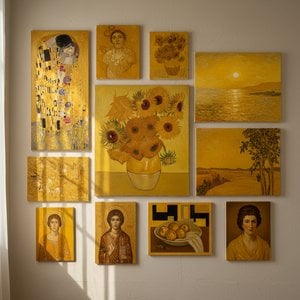
Entdecken Sie die Top 10 berühmter Gemälde, dominiert von warmen Gelbochtönen! Von Van Gogh bis Monet – erfahren Sie die Geschichten hinter den Meisterwerken und lassen Sie sich für Ihre Wohnraumgestaltung inspirieren. Hochwertige Kunstdrucke auf

Entdecken Sie die 25 Meisterwerke von Mark Rothko und die Magie des Color Field Painting. Alle Klassiker auf WahooArt.com erleben.

Explore the rich symbolism & emotional power of yellow in art history! From Van Gogh to Kandinsky, discover how artists used this vibrant hue. Expert analysis & high-quality reproductions at WahooArt.

Explore the rich symbolism of the red dress in art history! From ancient power displays to iconic portraits like Cézanne’s 'Madame Cezanne', discover the cultural and artistic significance behind this captivating color. Expert analysis & insights.

Entdecken Sie die 10 berühmtesten Gemälde, dominiert von der leuchtenden Farbe Chromgelb! Von Van Gogh bis Monet – erfahren Sie Geschichten hinter Meisterwerken & finden Sie Ihre perfekte Kunst-Reproduktion auf WahooArt.com.
 Versenden
 Teilen
 Details anzeigen
 Leitfaden

 Herunterladen
 Ähnliche Objekte
 Diashow
 Fragen & Antworten
 Statistiken


 Weiterlesen






































 Die Glasoption ist nur für Größen unter 110 cm verfügbar.


