Kostenlose Kunstberatung

x
Druck bestellen Druck bestellenGemälde kaufen Gemälde kaufen VersendenVersenden
Details anzeigenDetails anzeigen Zu Favoriten hinzufügen Zu Favoriten hinzufügen HerunterladenHerunterladen Ähnliche ObjekteÄhnliche Objekte RöntgenaufnahmeRöntgenaufnahme Diashow anzeigenDiashow anzeigen

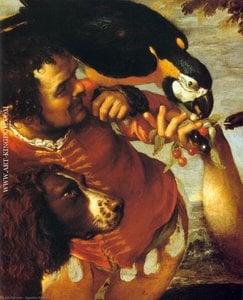
The Three Graces

Discover Agostino Carracci’s ‘The Three Graces,’ a captivating black & white engraving showcasing classical nudes & Renaissance artistry. Explore this masterpiece!

Agostino Carracci (1557-1602) war italienischer Barockmaler & Grafiker, Mitbegründer der Accademia degli Incamminati. Bekannt für Fresken, Porträts und die Herausforderung des Manierismus durch Naturalismus. Bruder von Annibale Carracci.

Erwerben Sie ein hochauflösendes, optimiertes digitales Bild, das der Online-Vorschau weit überlegen ist.

Jede Datei wird von unseren hauseigenen Spezialisten mit modernsten Werkzeugen und fachmännischer manueller Retusche sorgfältig vorbereitet. Wir stellen sicher, dass jedes Bild eine außergewöhnliche Klarheit, präzise Farbgenauigkeit und feinste Details aufweist.

Die endgültige Datei wird innerhalb von 72 Stunden per E-Mail zugestellt und ist für den sofortigen Einsatz in professionellen, redaktionellen und Druckumgebungen optimiert. Es handelt sich um dieselbe Qualität, der führende Designstudios, Verlage und Galerien vertrauen.

Digitales Kunstwerk

Laden Sie eine hochauflösende Datei für die persönliche Präsentation, den Druck und kreative Projekte herunter.

Endpreis

$9.99

In jeder Bestellung digitaler Bilder enthalten

Professionelle digitale Bereitstellung, garantiert

Wenn Sie sich für WahooArt.com entscheiden, erhalten Sie nicht nur ein Bild – Sie erhalten ein professionell aufbereitetes digitales Kunstwerk, das mit höchster Präzision erstellt und durch eine Zufriedenheitsgarantie abgesichert wird. Hier ist alles, was automatisch mit Ihrer Bestellung geliefert wird:

shipping_icon
Schnelle E-Mail-Zustellung

Ihre hochauflösende digitale Bilddatei wird Ihnen innerhalb von 72 Stunden nach der Bestellung per E-Mail zugestellt – bereit zur sofortigen Verwendung.

canvas_icon
KI-optimierte digitale Datei

Ihre Kunstwerke werden professionell mithilfe fortschrittlicher KI-Tools und manueller Bearbeitung optimiert, um maximale Detailtreue, Klarheit und Farbgenauigkeit zu gewährleisten.

insurance_icon
Kostenloser lebenslanger erneuter Versand

Datei versehentlich gelöscht oder verloren? Keine Sorge – wir senden sie Ihnen jederzeit kostenlos erneut zu.

tax_icon
Keine Einfuhrgebühren – jemals

Genießen Sie Ihr Kunstwerk sofort ohne Zollgebühren, Einfuhrabgaben oder Versandkosten – digitale Downloads sind immer steuerfrei.

color_icon
Garantierte Farbtreue

Wir garantieren, dass Ihr digitales Bild die Originalfarben mithilfe professioneller Werkzeuge und Farbmanagement so präzise wie möglich wiedergibt.

return_icon
60-Tage-Zufriedenheitsgarantie

Sollten Sie mit Ihrem digitalen Bild nicht zufrieden sein, werden wir es überarbeiten oder Ihnen innerhalb von 60 Tagen 100% erstatten – ohne Wenn und Aber.

guarantee_icon
100% Geld-zurück-Garantie

Nicht zufrieden? Erhalten Sie innerhalb von 60 Tagen nach Erhalt Ihrer digitalen Datei eine vollständige Rückerstattung – ohne Angabe von Gründen.

discount_icon
Rabatte bei Großbestellungen

3 Bilder kaufen, 10% sparen – 5 Bilder kaufen, 15% sparen – Ab 10 Bildern 20% sparen. Ideal für kreative Projekte, Galerien und Agenturen.

Eckdaten auf einen Blick

  • Medium: Engraving
  • Artistic style: Renaissance engraving
  • Artist: Agostino Carracci
  • Notable elements or techniques: Detailed hatching and cross-hatching
  • Influences: Greek mythology
  • Title: The Three Graces

Kunst-Quiz

Jede Frage hat nur eine richtige Antwort.

Frage 1:
What artistic movement is Agostino Carracci’s ‘The Three Graces’ primarily associated with?
Frage 2:
Which sculptor created a version of 'The Three Graces' that is currently housed in the Victoria and Albert Museum?
Frage 3:
What mythological figures are depicted in ‘The Three Graces’?
Frage 4:
Carracci's Academy degli Incamminati played a crucial role in shaping the artistic landscape of which Italian city?
Frage 5:
The engraving technique employed by Carracci to reproduce masterpieces exemplifies what characteristic of Baroque art?

Details zum Sammlerstück

Agostino Carracci’s “The Three Graces”: A Symphony of Classical Ideals

Agostino Carracci's "The Three Graces," completed around 1590–95, stands as a cornerstone of Bolognese Baroque art and embodies the artistic fervor that characterized its era. More than just a depiction of mythological figures—Euphrosyne, Aglaea, and Thalia—representing joy, splendor, and youth respectively—the sculpture is an exquisitely crafted testament to humanist ideals and Carracci’s masterful command of sculptural technique. Its enduring appeal lies not only in its aesthetic beauty but also in the profound symbolic resonance it conveys.

A Bold Departure from Mannerism

Carracci's artistic vision decisively rejected the stylized distortions and theatrical poses prevalent in Mannerist art, opting instead for a harmonious balance achieved through careful observation of classical forms. This conscious decision to embrace naturalism—a trend championed by artists like Michelangelo Buonarroti—was driven by a desire to recapture the grandeur and clarity of antiquity, mirroring the intellectual currents shaping Renaissance Europe. Unlike his contemporaries who often prioritized dramatic expression over anatomical accuracy, Carracci meticulously rendered the figures’ musculature and drapery with remarkable realism, demonstrating an unwavering commitment to artistic excellence.

Sculptural Technique: Mastering Marble

Carracci's skill as a sculptor was unparalleled during his time. He skillfully employed marble—a material prized for its purity and ability to capture subtle tonal variations—to create a sculpture of breathtaking elegance. The artist’s assistants painstakingly blocked out the marble, leaving Carracci to refine the stone with painstaking precision. This process involved removing excess material through chiseling and grinding, revealing the underlying form while simultaneously enhancing the surface texture. The resulting smoothness and luminosity achieved by Carracci are hallmarks of Bolognese Baroque sculpture—a style characterized by its refined aesthetic sensibilities and technical virtuosity.

Symbolism: Embodiments of Virtue and Beauty

The Three Graces transcend mere visual representation; they embody profound philosophical concepts rooted in Greek mythology. Euphrosyne, Aglaea, and Thalia represent not simply physical attributes but virtues—joy, splendor, and youth—considered essential for cultivating a harmonious soul. Their graceful poses and serene expressions convey an idealized vision of human perfection, reflecting the humanist preoccupation with moral contemplation and intellectual enlightenment. The sculpture’s pyramidal composition reinforces this sense of balance and harmony, symbolizing stability and spiritual ascendancy—themes central to Renaissance artistic thought.

Emotional Impact: A Moment Frozen in Time

“The Three Graces” captivates viewers with its palpable stillness—a deliberate antithesis to the turbulent emotions expressed in other Baroque artworks. Carracci’s masterful manipulation of light and shadow imbues the sculpture with a luminous quality, casting soft contours that accentuate the figures' delicate musculature and drapery. This subtle illumination evokes a feeling of ethereal beauty, transporting the viewer into a realm of contemplative serenity. The sculpture serves as an enduring reminder of the pursuit of ideal form and harmony—a timeless testament to Carracci’s artistic genius and the enduring power of classical art.

Biografie des Künstlers

Agostino Carracci: Bridging Mannerism and Naturalism in Bolognese Baroque

Agostino Carracci (August 16, 1557 – March 22, 1602) stands as a pivotal figure in the burgeoning Baroque movement within Bologna, Italy. Often overshadowed by his more celebrated brother, Annibale, Agostino’s artistic vision—characterized by a deliberate rejection of Mannerist formalism and an embrace of classical ideals—established him as a crucial innovator who profoundly impacted the stylistic trajectory of Bolognese painting. He wasn't merely a craftsman; he was a pedagogue, shaping the future generation of artists through the Academy degli Incamminati, alongside Annibale and Ludovico Carracci.

Early Life and Training

Born in Bologna to Giovanni Battista Carracci and Lucrezia Panciatichi, Agostino’s artistic talent emerged early under the tutelage of Domenico Tiberiadi, a respected architect and sculptor who instilled in him a foundational understanding of disegno—the humanist concept of drawing—essential for mastering classical proportions and perspective. This rigorous training contrasted sharply with the prevailing Mannerist style, which favored stylized forms and exaggerated poses, prioritizing intellectual contemplation over realistic representation. Unlike many of his contemporaries, Agostino sought inspiration from antiquity, specifically Roman sculpture and architecture, believing these served as models for achieving artistic excellence. He diligently studied the works of Michelangelo and Raphael, absorbing their mastery of anatomy and composition—skills that would inform his own groundbreaking achievements.

Engraving and Reproduction

Carracci’s career began not with monumental fresco commissions but with engraving—a technique he skillfully employed to reproduce masterpieces by artists like Federico Barocci, Tintoretto, Antonio Campi, Veronese, and Correggio. This practice wasn't viewed as mere copying; it was considered a crucial step in disseminating artistic knowledge and elevating the visual arts. His engravings demonstrated an acute sensitivity to tonal variations and chiaroscuro—the dramatic interplay of light and shadow—a hallmark of Caravaggio’s style but tempered with Carracci’s humanist aesthetic. He meticulously researched printing methods, experimenting with new techniques to achieve unprecedented levels of detail and realism in his reproductions. Furthermore, he produced original prints, including two etchings that showcased his mastery of printmaking techniques.

The Academy degli Incamminati and Bolognese Artistic Innovation

The establishment of the Accademia degli Incamminati in 1584 marked a watershed moment for Bolognese art. Agostino Carracci, alongside Annibale and Ludovico, spearheaded this initiative—a deliberate reaction against Mannerist conventions—aiming to cultivate a new generation of painters grounded in classical principles and focused on naturalistic observation. The academy’s curriculum emphasized disegno, anatomy, perspective, and color theory, fostering a stylistic shift away from the stylized distortions characteristic of Mannerism toward a more truthful depiction of human form and environment. This commitment to naturalism would become a defining feature of Bolognese Baroque painting. Carracci championed the revival of classical ideals—particularly those embodied in Roman sculpture—believing they represented the pinnacle of artistic achievement. He insisted that students prioritize accurate anatomical representation and meticulous observation of nature, rejecting Mannerist abstraction as an impediment to conveying beauty and emotion.

Notable Commissions and Masterpieces

Carracci’s prolific output spanned diverse projects, including monumental fresco cycles in Palazzo Fava (histories of Jason and Medea) and Palazzo Magnani (histories of Romulus), where he skillfully blended classical ideals with dramatic narrative. His altarpiece of the Madonna with Child and Saints, housed in Bologna's Pinacoteca di Bologna, stands as arguably his most celebrated achievement—a testament to his ability to convey spiritual emotion through meticulous observation and masterful technique. Similarly, his depiction of Saint Jerome at Parma’s National Gallery exemplifies Carracci’s dedication to capturing human psychology and conveying profound religious experience. He also contributed to the decoration of Palazzo Farnese in Rome, collaborating with Annibale on a monumental portraiture project that solidified their reputation as artistic innovators. Among his most iconic works are “Jupiter” and “The Holy Family with Sts Anthony Abbot, Catherine and the Infant St John,” which exemplify Carracci’s masterful command of composition and color—a legacy that continues to inspire artists today.

Legacy and Influence

Agostino Carracci's influence extended beyond his immediate contemporaries. His insistence on naturalism served as a counterbalance to Caravaggio’s expressive darkness, establishing Bolognese Baroque as a distinct stylistic tradition. Furthermore, the Academy degli Incamminati he founded nurtured countless artists who would shape the artistic landscape of Europe throughout the 17th century. Notably, Matisse's "Le bonheur de vivre" (Joy of Life) drew inspiration from Carracci’s engraving after Paolo Fiammingo—a poignant illustration of how an artist’s vision could transcend time and inspire subsequent generations of creatives. Agostino Carracci remains a cornerstone of Bolognese Baroque art history, remembered not only for his technical prowess but also for his unwavering belief in the transformative power of classical ideals.
Agostino Carracci

Agostino Carracci

1557 - 1602 , Italien

Kurzinfos

  • Artistic Movement Or Style: Barock
  • Artists Or Movements Influenced By This Artist: ['Matisse']
  • Artists Who Influenced This Artist:
    • Federico Barocci
    • Tintoretto
    • Ludovico Carracci
  • Date Of Birth: 1557
  • Date Of Death: 1602
  • Full Name: Agostino Carracci
  • Nationality: Italienisch
  • Notable Artworks:
    • Geschichte von Jason und Medea
    • Die Heilige Familie mit Sankt Antonius Abt.
    • Johannes XXIII.
  • Place Of Birth: Bologna, Italien