Kostenlose Kunstberatung

x
Gemälde kaufen Gemälde kaufenBild kaufen Bild kaufen VersendenVersenden
DetailsDetails Zu Favoriten hinzufügen Zu Favoriten hinzufügen HerunterladenHerunterladen Ähnliche ObjekteÄhnliche Objekte RöntgenaufnahmeRöntgenaufnahme Diashow anzeigenDiashow anzeigen

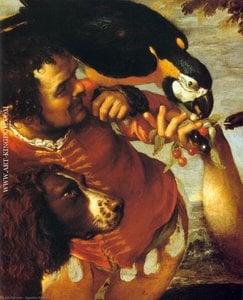
Jupiter

Explore Agostino Carracci’s 'Jupiter,' a stunning Baroque fresco depicting love & mythology. Admire its classical style, dramatic lighting & rich colors – a masterpiece of Parma's Hall of Loves.

Agostino Carracci (1557-1602) war italienischer Barockmaler & Grafiker, Mitbegründer der Accademia degli Incamminati. Bekannt für Fresken, Porträts und die Herausforderung des Manierismus durch Naturalismus. Bruder von Annibale Carracci.

Giclée / Kunstdruck

Giclée- oder Leinwanddruck in Museumsqualität mit schneller Produktion und flexiblen Veredelungsoptionen.

Standard
custom
CM
INCH

Wählen Sie aus unseren vordefinierten Größen, die den ursprünglichen Proportionen des Kunstwerks entsprechen.

Breite
Höhe

Sie können Ihre eigenen Maße eingeben, um ein bestimmtes Format oder einen speziellen Platz einzupassen. Wenn das von Ihnen gewählte Format nicht den Proportionen des Originalbildes entspricht, werden wir das Kunstwerk entweder beschneiden oder das Bild mit einem gespiegelten oder einfarbigen Rand erweitern. Ein digitaler Entwurf wird Ihnen zur Genehmigung zugesandt, bevor die Produktion beginnt.

Bitte beachten Sie, dass die Vorschau auf dem Bildschirm nicht den tatsächlichen Zuschnitt oder die Erweiterung widerspiegelt. Nur der Entwurf zeigt die endgültige Komposition präzise an.
Obwohl Sondermaße verfügbar sind, empfehlen wir die Auswahl eines Maßes aus der vordefinierten Liste, um die ursprünglichen Proportionen zu bewahren.

Weltweiter Versand () innerhalb von 2 Wochen statt der üblichen 4/5 Wochen. (2 Juli)

why_choose_icon
Kostenloser weltweiter Expressversand
why_choose_icon
Hochwertige Leinenleinwand
why_choose_icon
Umfassender Versicherungsschutz beim Versand
why_choose_icon
Zollsteuer-Rückerstattungsgarantie
why_choose_icon
Garantie für echte Farbtreue
why_choose_icon
60-Tage-Rückgaberecht (nur bei Mängeln)
why_choose_icon
100% Geld-zurück-Garantie
why_choose_icon
Mengenrabatt verfügbar

Gesamtpreis

-

reproduction

Jupiter

Giclée / Kunstdruck

Größe der Reproduktion

-

Endpreis aller Optionen

-

Beschreibung des Sammlerstücks

Vault, central square. The Hall of Loves of Jupiter, whose name identifies the subject represented in the varoius painted scenes, the love presented in different type (OMNIA VINCET AMOR-LOVE CONQUERS EVERYTHING), was painted and painted in stuccoes, respectively, by Agostino Carracci (Bolonia 1557-Parma 1602) and Giovanni Bosco. Speaking of this last person, Giovanni, there are some circumstances that are not clear: was often substitued by Luca Rieti, artist of stuccoes who realized in Parma some statues for the Teatro Farnese. Speaking of Carracci

Biografie des Künstlers

Agostino Carracci: Bridging Mannerism and Naturalism in Bolognese Baroque

Agostino Carracci (August 16, 1557 – March 22, 1602) stands as a pivotal figure in the burgeoning Baroque movement within Bologna, Italy. Often overshadowed by his more celebrated brother, Annibale, Agostino’s artistic vision—characterized by a deliberate rejection of Mannerist formalism and an embrace of classical ideals—established him as a crucial innovator who profoundly impacted the stylistic trajectory of Bolognese painting. He wasn't merely a craftsman; he was a pedagogue, shaping the future generation of artists through the Academy degli Incamminati, alongside Annibale and Ludovico Carracci.

Early Life and Training

Born in Bologna to Giovanni Battista Carracci and Lucrezia Panciatichi, Agostino’s artistic talent emerged early under the tutelage of Domenico Tiberiadi, a respected architect and sculptor who instilled in him a foundational understanding of disegno—the humanist concept of drawing—essential for mastering classical proportions and perspective. This rigorous training contrasted sharply with the prevailing Mannerist style, which favored stylized forms and exaggerated poses, prioritizing intellectual contemplation over realistic representation. Unlike many of his contemporaries, Agostino sought inspiration from antiquity, specifically Roman sculpture and architecture, believing these served as models for achieving artistic excellence. He diligently studied the works of Michelangelo and Raphael, absorbing their mastery of anatomy and composition—skills that would inform his own groundbreaking achievements.

Engraving and Reproduction

Carracci’s career began not with monumental fresco commissions but with engraving—a technique he skillfully employed to reproduce masterpieces by artists like Federico Barocci, Tintoretto, Antonio Campi, Veronese, and Correggio. This practice wasn't viewed as mere copying; it was considered a crucial step in disseminating artistic knowledge and elevating the visual arts. His engravings demonstrated an acute sensitivity to tonal variations and chiaroscuro—the dramatic interplay of light and shadow—a hallmark of Caravaggio’s style but tempered with Carracci’s humanist aesthetic. He meticulously researched printing methods, experimenting with new techniques to achieve unprecedented levels of detail and realism in his reproductions. Furthermore, he produced original prints, including two etchings that showcased his mastery of printmaking techniques.

The Academy degli Incamminati and Bolognese Artistic Innovation

The establishment of the Accademia degli Incamminati in 1584 marked a watershed moment for Bolognese art. Agostino Carracci, alongside Annibale and Ludovico, spearheaded this initiative—a deliberate reaction against Mannerist conventions—aiming to cultivate a new generation of painters grounded in classical principles and focused on naturalistic observation. The academy’s curriculum emphasized disegno, anatomy, perspective, and color theory, fostering a stylistic shift away from the stylized distortions characteristic of Mannerism toward a more truthful depiction of human form and environment. This commitment to naturalism would become a defining feature of Bolognese Baroque painting. Carracci championed the revival of classical ideals—particularly those embodied in Roman sculpture—believing they represented the pinnacle of artistic achievement. He insisted that students prioritize accurate anatomical representation and meticulous observation of nature, rejecting Mannerist abstraction as an impediment to conveying beauty and emotion.

Notable Commissions and Masterpieces

Carracci’s prolific output spanned diverse projects, including monumental fresco cycles in Palazzo Fava (histories of Jason and Medea) and Palazzo Magnani (histories of Romulus), where he skillfully blended classical ideals with dramatic narrative. His altarpiece of the Madonna with Child and Saints, housed in Bologna's Pinacoteca di Bologna, stands as arguably his most celebrated achievement—a testament to his ability to convey spiritual emotion through meticulous observation and masterful technique. Similarly, his depiction of Saint Jerome at Parma’s National Gallery exemplifies Carracci’s dedication to capturing human psychology and conveying profound religious experience. He also contributed to the decoration of Palazzo Farnese in Rome, collaborating with Annibale on a monumental portraiture project that solidified their reputation as artistic innovators. Among his most iconic works are “Jupiter” and “The Holy Family with Sts Anthony Abbot, Catherine and the Infant St John,” which exemplify Carracci’s masterful command of composition and color—a legacy that continues to inspire artists today.

Legacy and Influence

Agostino Carracci's influence extended beyond his immediate contemporaries. His insistence on naturalism served as a counterbalance to Caravaggio’s expressive darkness, establishing Bolognese Baroque as a distinct stylistic tradition. Furthermore, the Academy degli Incamminati he founded nurtured countless artists who would shape the artistic landscape of Europe throughout the 17th century. Notably, Matisse's "Le bonheur de vivre" (Joy of Life) drew inspiration from Carracci’s engraving after Paolo Fiammingo—a poignant illustration of how an artist’s vision could transcend time and inspire subsequent generations of creatives. Agostino Carracci remains a cornerstone of Bolognese Baroque art history, remembered not only for his technical prowess but also for his unwavering belief in the transformative power of classical ideals.
Agostino Carracci

Agostino Carracci

1557 - 1602 , Italien

Kurzinfos

  • Artistic Movement Or Style: Barock
  • Artists Or Movements Influenced By This Artist: ['Matisse']
  • Artists Who Influenced This Artist:
    • Federico Barocci
    • Tintoretto
    • Ludovico Carracci
  • Date Of Birth: 1557
  • Date Of Death: 1602
  • Full Name: Agostino Carracci
  • Nationality: Italienisch
  • Notable Artworks:
    • Geschichte von Jason und Medea
    • Die Heilige Familie mit Sankt Antonius Abt.
    • Johannes XXIII.
  • Place Of Birth: Bologna, Italien