A Sanctuary of Scientific Revolution: The Soul of Frombork
Nestled within the historic heart of Frombork, Poland, the Nicolaus Copernicus Museum stands as a powerful testament to one man’s enduring legacy and the seismic shift in understanding he instigated. More than simply a repository of artifacts, this museum is an immersive journey into the Renaissance world—a period brimming with intellectual ferment, artistic blossoming, and groundbreaking scientific inquiry. To walk through its halls is to trace the footsteps of Nicolaus Copernicus himself, to feel the weight of his revolutionary ideas, and to appreciate the profound impact they had on our perception of the cosmos. The museum’s location is intrinsically linked to its subject matter; Frombork, a town steeped in medieval history, provided Copernicus with both sanctuary and inspiration during much of his life.
The very stones of the museum seem to whisper tales of a time when established dogma was challenged by observation, reason, and an unwavering pursuit of truth. Visitors can explore the cathedral hill complex, including the former Bishop’s Palace—now the museum's main exhibition space—and ascend Copernicus’ Tower, where he conducted many of his pivotal astronomical observations. This tangible connection to the past elevates the experience beyond passive viewing; it invites a profound sense of place and participation in history. The architecture itself serves as a silent protagonist, with the Former Bishops’ Palace exemplifying Gothic grandeur blended with Baroque ornamentation, while Copernicus’ Tower stands as a testament to medieval engineering prowess.
Celestial Instruments and Renaissance Visions
At its core lies an impressive array of historical astronomical instruments—meticulously crafted lenses, quadrants, armillary spheres, and celestial globes—offering a fascinating glimpse into the tools and techniques employed by early astronomers. These are not merely relics of a bygone era; they are tangible representations of human ingenuity and the relentless quest to decipher the mysteries of the universe. Alongside these instruments, exhibits detail Copernicus' life, his education, and his career as a canon at Fromsebork Cathedral, revealing him as a deeply engaged scholar operating within a complex social and political landscape.
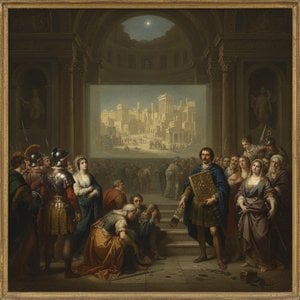
The museum’s collection is further enriched by the inclusion of Renaissance art, providing crucial context for understanding the era in which Copernicus lived and worked. Notable among these are reproductions of artworks from the period, most significantly the poignant paintings by Jan Matejko depicting Copernicus in his tower at Frombork. These pieces illuminate the artistic sensibilities of the time—characterized by idealism, meticulous detail, and an emphasis on human emotion—and demonstrate how Copernicus’ scientific breakthroughs resonated within the broader cultural milieu. The juxtaposition of astronomical instruments and Renaissance paintings underscores the museum's ambition to portray Copernicus as a figure whose influence extended far beyond the realm of science.
An Immersive Encounter with the Cosmos
What truly distinguishes the Nicolaus Copernicus Museum is its dedication to experiential learning, bridging the gap between historical record and modern wonder. A cornerstone of the museum’s offerings is its planetarium and observatory—facilities that actively celebrate Copernicus’ legacy through light and motion. Visitors can step into immersive projections depicting celestial phenomena, gaining firsthand experience with concepts that revolutionized our understanding of the universe. The observatory allows for guided stargazing sessions, fostering a deeper appreciation for astronomical observation and inspiring curiosity about the infinite expanse above.
Through interactive exhibits, educational programs for children, and engaging guided tours led by knowledgeable curators, the museum ensures that every visitor leaves with a richer understanding of the Copernican Revolution. It is a place where one can connect with one of humanity’s greatest thinkers and contemplate the ongoing quest to understand our place in the vast expanse of the cosmos—a quest that began centuries ago on Cathedral Hill. For the art lover, the collector, or the designer seeking inspiration from the intersection of science and beauty, this museum offers a rare glimpse into a moment when intellectual courage confronted entrenched dogma and paved the way for the modern world.