Man Ray, 1890 – 1976

De 100 mest berømte malerier af Man Ray

Maleriet, der gjorde Man Ray berømt, er La Galerie Surréaliste, rue Jacques Callot; det hænger på Oscar Niemeyers Museum i Curitiba. Pisces (1938) og Rayograph (The Kiss) (1922) følger efter i samlernes og museumsgæsternes hjerter. Af de 142 værker af Man Ray i vores katalog er disse 100 de mest beundrede, hver præsenteret med sit årstal, sit museum og det, der gør værket unikt.

Rangordnet efter vores popularitetsscore, som kombinerer søgninger, besøg og ordrer for hvert værk. Opdateret oktober 2026.

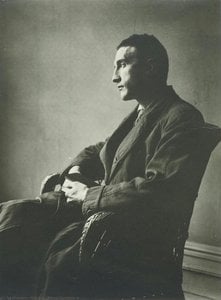
Portræt af Man Ray
Man Ray · 1890 – 1976
Født · død
1890 – 1976, Philadelphia
Bevægelse
Surrealisme
Værker i vores katalog
142
Mest kendte
La Galerie Surréaliste, rue Jacques Callot
Flest værker hos
Oscar Niemeyers Museum

Man Ray: de ti mesterværker

La Galerie Surréaliste, rue Jacques Callot af Man Ray
1

La Galerie Surréaliste, rue Jacques Callot

Acrylic On Canvas · Oscar Niemeyers Museum, Curitiba

La Galerie Surréaliste et l'Étoile Scellée : Un Voyage au Cœur de la Créativité Dadaiste La Galerie Surréaliste, située rue Jacques Callot à Paris, fut bien plus qu’une simple adresse artistique ; elle incarnait les aspirations radicales d’une génération marquée par les bouleversements du début du XXe siècle. Fondée en 1926 et dirigée avec passion par Marcel Duchamp et Sophie Babet, cette galerie devint un véritable laboratoire d'expérimentation esthétique et…

Pisces (1938) af Man Ray
2

Pisces

1938 · Oil

Introduction to Man Ray and Surrealism Man Ray, born Emmanuel Radnitzky in 1890, was an American visual artist who spent most of his career in France. He was a significant contributor to the Dada and Surrealist movements, although his ties to each were informal. Man Ray produced major works in a variety of media but considered himself a painter above all. Surrealism is an art movement that emerged in the…

Rayograph (The Kiss) (1922) af Man Ray
3

Rayograph (The Kiss)

1922 · Black and White Photography · MoMA - Museum of Modern Art, New York City

A Dance Between Light and Shadow: Exploring Man Ray’s “The Kiss” Man Ray's "The Kiss," created in 1922 during the heady days of Dada and Surrealism, transcends mere photographic representation; it embodies a radical reimagining of artistic process and perception. This striking photogram—a technique pioneered by Ray himself—captures an intimate moment frozen in time, transforming commonplace objects into symbols of desire and connection. Unlike traditional painting, where artists meticulously render…

Solarisation (1931) af Man Ray
4

Solarisation

1931 · Black and White Photography

In this 1931 black and white photograph, titled Solarisation, Man Ray presents us with a quiet, intimate moment of repose. The subject is a man lying down, his head resting upon his arm in a state of sleep or deep rest. There is a profound sense of stillness here, a pause in time captured through the lens of a man who sought to redefine how we perceive the physical form.

The Pavillion of Elegance af Man Ray
5

The Pavillion of Elegance

Black and White Photography · Oscar Niemeyers Museum, Curitiba

To gaze upon this image is to step directly into the shimmering, slightly unsettling dreamscape of 1925 Paris. It captures not merely a moment in time, but an entire cultural sensibility—the breathless anticipation surrounding modern fashion and the burgeoning power of the photographic gaze. The subject, a woman draped in what appears to be an ocean green Georgette crepe, moves with an almost choreographed grace down a sun-dappled thoroughfare or…

Tristan Tzara and Jean Cocteau af Man Ray
6

Tristan Tzara and Jean Cocteau

Black and White Photography · Oscar Niemeyers Museum, Curitiba

This evocative black and white photograph transports us directly into the vibrant, often bewildering intellectual ferment of the early 20th century. It captures a moment steeped in the spirit of Dadaism and the burgeoning currents of Surrealism—movements that dared to dismantle the very definition of reality. The composition itself feels less like a mere documentation and more like a carefully staged dream sequence, inviting the viewer to question what they…

Nusch eluard with mirror (1935) af Man Ray
7

Nusch eluard with mirror

1935 · Black and White Photography · Kobe Fashion Museum, Kyoto

In the hauntingly beautiful monochrome of "Nusch Eluard with Mirror," captured in 1935, we are invited into a private, ephemeral moment that transcends the boundaries of traditional portraiture. The photograph features Nusch Eluard, a woman who was not only a muse but a profound presence in the Surrealist circle, draped in a delicate veil that clings to her form like a soft shadow. As she holds a mirror before her…

Indestructible Object (or Object to Be Destroyed) (1923) af Man Ray
8

Indestructible Object (or Object to Be Destroyed)

1923 · Photography · MoMA - Museum of Modern Art, New York City

In the annals of modern art, few images possess the unsettling, magnetic pull of Man Ray’s 1923 masterpiece, Indestructible Object (often known as Object to Be Destroyed). To gaze upon this work is to step directly into the fractured psyche of the Surrealist movement, where the boundaries between the living and the mechanical begin to dissolve. The composition presents a disconcerting tableau: a stark, wooden structure that serves as a…

Veiled Erotica af Man Ray
9

Veiled Erotica

Black and White Photography · Oscar Niemeyers Museum, Curitiba

Born in Philadelphia to Russian Jewish immigrant parents, Emmanuel Radnitzky—known universally as Man Ray—was a restless spirit who defied easy categorization. His formative years coincided with the tumultuous period of Dadaism, born from disillusionment with World War I’s horrors and fueled by an uncompromising critique of bourgeois values. Marcel Duchamp's provocative embrace of “ready-made” objects – like *The Gift* – served as a catalyst for Dada artists to dismantle accepted…

(Untitled) af Man Ray
10

(Untitled)

Black and White Photography · Oscar Niemeyers Museum, Curitiba

In the quiet, evocative realm of Man Ray’s photography, we encounter a profound dialogue between the mundane and the metaphysical. This stark black and white composition, often associated with the enigmatic spirit of “The Gift,” transcends mere documentation to become a window into the avant-garde mind. At first glance, the viewer is presented with an abstract arrangement of draped fabric—perhaps a heavy wool—rendered in exquisite detail against a textured surface.…

Flere mesterværker af Man Ray, fra 11 til 100

The Enigma of Isidore Ducasse (1920) af Man Ray
#11

The Enigma of Isidore Ducasse

1920 · National Gallery of Australia

The Enigma of Isidore Ducasse is an assemblage created by the artist Man Ray. This work originated in 1920 and was later remade in 1972. The object consists…

Nusch with Mirror af Man Ray
#12

Nusch with Mirror

Oscar Niemeyers Museum

In the hauntingly beautiful photograph Nusch with Mirror, the boundaries between reality and illusion dissolve into a singular, breathtaking moment of modernist introspection. Captured by the legendary American…

Dada Portrait af Man Ray
#13

Dada Portrait

Oscar Niemeyers Museum

In the realm of early twentieth-century avant-garde, few names resonate with as much transformative power as Man Ray. His 1923 masterpiece, Dada Portrait, stands as a profound testament…

Natalie Paley Wearing a Sequined Gown by Lelong af Man Ray
#14

Natalie Paley Wearing a Sequined Gown by Lelong

Oscar Niemeyers Museum

Ultimately, “Natalie Paley Wearing a Sequined Gown by Lelong” stands as an enduring emblem of artistic experimentation—a captivating portrait that exemplifies Man Ray’s visionary genius and cements his…

Marcel Duchamp af Man Ray
#15

Marcel Duchamp

Oscar Niemeyers Museum

The photograph by Man Ray of Marcel Duchamp, captured in 1920-21, isn't merely a portrait; it’s a carefully constructed tableau of intellectualism and quiet contemplation. More than just…

Rayograph - 1925 (1925) af Man Ray
#17

Rayograph - 1925

1925 · Museum Boijmans Van Beuningen

Rayograph - 1925 is a Dadaist photogram photographic print created by the artist Man Ray in 1925. This work belongs to the Dadaist movement, a period characterized by…

Café Man Ray af Man Ray
#18

Café Man Ray

Oscar Niemeyers Museum

Café Man Ray: A Surrealist Reverie Revisited The American artist Man Ray (1890-1976) fundamentally reshaped the perception of photography, elevating it from mere documentation to an expressive art…

Dust Breeding (detail) af Man Ray
#19

Dust Breeding (detail)

Oscar Niemeyers Museum

In the hauntingly beautiful detail of Man Ray’s 1920 masterpiece, Dust Breeding, we are invited into a world where the boundaries between reality and dream dissolve into a…

Noire et Blanche af Man Ray
#23

Noire et Blanche

Oscar Niemeyers Museum

Man Ray’s evocative photograph, Noire et Blanche, immediately draws the viewer into a realm where identity blurs and cultural narratives collide. This piece is more than a mere…

Georges Braque af Man Ray
#24

Georges Braque

Oscar Niemeyers Museum

This striking black and white photograph transports us into a moment suspended between the familiar and the avant-garde. At its heart stands a commanding figure, whose direct gaze…

The couple (1914) af Man Ray
#25

The couple

1914 · Sezon Museum of Modern Art

Born Emmanuel Radnitzky in 1890 in Philadelphia, Man Ray was a leading artist of 20th century America. Man Ray awakened to the European avant-garde art at Armory Show…

Pablo Picasso at the Count Étienne de Beaumont’s Ball af Man Ray
#26

Pablo Picasso at the Count Étienne de Beaumont’s Ball

Oscar Niemeyers Museum

Man Ray's captivating photograph, "Pablo Picasso at the Count Étienne de Beaumont’s Ball," isn’t merely a snapshot; it’s a meticulously constructed tableau vivant, a frozen moment brimming with…

Gertrude Stein af Man Ray
#27

Gertrude Stein

Oscar Niemeyers Museum

In the quiet, monochromatic depths of Man Ray’s portrait of Gertrude Stein, we encounter more than just a photographic likeness; we enter a profound dialogue between light and…

Count Étienne de Beaumont af Man Ray
#28

Count Étienne de Beaumont

Oscar Niemeyers Museum

Man Ray’s portrait of Count Étienne de Beaumont isn't merely a likeness; it’s a carefully constructed tableau vivant, a frozen moment capturing the essence of 1920s Parisian high…

ABC af Man Ray
#29

ABC

Oscar Niemeyers Museum

Man Ray's “ABC,” created in 1947, isn’t merely a photograph; it’s an invitation to deconstruct visual language and embrace the inherent ambiguity of perception. Born Emmanuel Radnitzky, later…

Square af Man Ray
#30

Square

Oscar Niemeyers Museum

The Enigma of the Spiral In the quiet intensity of Man Ray’s Square, one is immediately drawn into a rhythmic, swirling dance of typography and form. Created during…

Magnolia af Man Ray
#32

Magnolia

Oscar Niemeyers Museum

In the quiet intersection of reality and dreamscape lies Man Ray’s Magnolia, a breathtaking monochrome study that transcends the boundaries of traditional photography. At first glance, the viewer…

(Untitled) af Man Ray
#33

(Untitled)

Oscar Niemeyers Museum

In the quiet, evocative realm of Man Ray’s “Untitled,” we encounter a profound dialogue between the mundane and the metaphysical. At first glance, the viewer is presented with…

Ubenavn (D2X7S9) (1916) af Man Ray
#35

Ubenavn (D2X7S9)

1916 · Metropolitan Museum of Art

Man Ray’s “The Mime”: A Dance Between Shadow and Illusion Denne reproduktion af Man Rays ikoniske maleri "The Mime" (D2X7S9) præsenterer et fascinerende øjevindue til surrealistisk kunst og…

Self-Portrait af Man Ray
#37

Self-Portrait

Oscar Niemeyers Museum

Man Ray's "Self-Portrait," painted in 1927, isn’t merely a depiction of an individual; it’s a carefully constructed meditation on identity, the gaze, and the very act of representation.…

Glass Tears af Man Ray
#38

Glass Tears

Oscar Niemeyers Museum

Man Ray's "Glass Tears," created between 1930 and 1932, isn’t merely a photograph; it’s a distilled emotion captured in stark black and white. The image, a close-up of…

Butterflies af Man Ray
#39

Butterflies

Oscar Niemeyers Museum

Man Ray’s “Butterflies,” created between 1930 and 1935, isn't merely a photograph; it’s a shimmering portal into the heart of Surrealism. This arresting image, captured during a pivotal…

Serious Man, or The Serious One af Man Ray
#40

Serious Man, or The Serious One

Oscar Niemeyers Museum

Serious Man, or The Serious One The American artist Man Ray (1890-1976) fundamentally reshaped photography’s role—shifting it from mere documentation of reality into an expressive art form itself.…

Kiki in Mechanical Ballet, by Fernand Léger af Man Ray
#44

Kiki in Mechanical Ballet, by Fernand Léger

Oscar Niemeyers Museum

Fernand Léger’s “Kiki in Mechanical Ballet,” painted in 1924, isn't merely a depiction of a woman dancing; it’s an immersive plunge into the heart of early 20th-century anxieties…

Lee Miller af Man Ray
#46

Lee Miller

Oscar Niemeyers Museum

In this mesmerizing black and white photograph, the boundaries between reality and dreamscape dissolve, inviting the viewer into the intimate world of Man Ray and his muse, Lee…

Dora Maar af Man Ray
#47

Dora Maar

Oscar Niemeyers Museum

Man Ray’s Dora Maar: A Portrait of Surrealist Intensity Dora Maar, Picasso's muse and enigmatic collaborator, occupies a singular place in the canon of 20th-century art. Man Ray’s…

Yves Tanguy af Man Ray
#49

Yves Tanguy

Oscar Niemeyers Museum

Yves Tanguy: A Surrealist Landscape of Inner Consciousness Yves Tanguy’s “The J. Paul Getty Museum Collection” isn't merely a depiction of an artist; it’s a portal into the…

Untitled (Aztec figurine of the goddess Tlazoteotl) (1932) af Man Ray
#50

Untitled (Aztec figurine of the goddess Tlazoteotl)

1932 · MoMA - Museum of Modern Art

To gaze upon this photograph is to encounter a profound dialogue across millennia—a conversation between the vibrant spiritual life of ancient Mesoamerica and the experimental, shadow-drenched vision of…

Reflections af Man Ray
#51

Reflections

Oscar Niemeyers Museum

Man Ray’s “Reflections,” painted in 1931, stands as a testament to the burgeoning surrealist movement’s fascination with exploring subconscious landscapes and challenging conventional perceptions of reality. Created during…

Arnold Schönberg af Man Ray
#54

Arnold Schönberg

Oscar Niemeyers Museum

Man Ray's 1924 photograph of Arnold Schoenberg isn’t merely a likeness; it’s a carefully constructed tableau, a visual embodiment of the composer’s complex and revolutionary spirit. Captured during…

Kiki af Man Ray
#55

Kiki

Oscar Niemeyers Museum

Man Ray's Kiki de Montparnasse: A Portrait of Liberation The photograph by Man Ray, titled “Kiki de Montparnasse,” transcends mere documentation; it’s an emblem of the exuberant spirit…

Flying Dutchman (1920) af Man Ray
#73

Flying Dutchman

1920 · Metropolitan Museum of Art

In the realm of early twentieth-century modernism, few works capture the ephemeral boundary between reality and imagination as hauntingly as Man Ray’s Flying Dutchman. Created in 1920, this…

Landscape (Paysage Fauve) (1913) af Man Ray
#75

Landscape (Paysage Fauve)

1913 · Smithsonian American Art Museum

We are looking at Landscape (Paysage Fauve), a painting by Man Ray. Created in 1913, this work captures the artist during a formative period of his early career.…

Me, She (1934) af Man Ray
#76

Me, She

1934

A Surreal Encounter: Exploring Man Ray's "Me, She" Man Ray’s “Me, She,” created in 1934, is a captivating example of surrealist photography that continues to intrigue and inspire.…

The Coat Stand (1920) af Man Ray
#77

The Coat Stand

1920

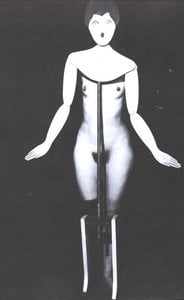
A Surreal Encounter: Deconstructing Identity in Man Ray's "The Coat Stand" Man Ray’s “The Coat Stand” (1920) is a striking black and white photograph that encapsulates the spirit…

Juan Gris af Man Ray
#78

Juan Gris

Oscar Niemeyers Museum

Juan Gris: A Geometric Vision of Surrealism Juan Gris (José Victoriano González-Pérez), born in Madrid in 1887, stands as an enigmatic figure within the vibrant tapestry of early…

Percolator (1917) af Man Ray
#79

Percolator

1917 · Art Institute of Chicago

The work, titled Percolator, is an oil on board painting dating from 1917. It presents a non-representational arrangement of geometric and organic shapes. A vertical, pole-like element occupies…

Departure of Summer (1914) af Man Ray
#80

Departure of Summer

1914 · Art Institute of Chicago

The canvas holds the tension of a moment frozen in 1914. In this oil on canvas work, titled Departure of Summer, the artist Man Ray explores a world…

The Mime (1916) af Man Ray
#87

The Mime

1916 · Metropolitan Museum of Art

Man Rays malerier efter periode

De motiver Man Ray malede mest

De fire motiver, der optræder hyppigst blandt disse mesterværker, med det fineste eksempel på hvert enkelt.

Hvor kan man se Man Ray's malerier

De 8 museer, der rummer flest af malerierne på denne side.

Museum By Værker af Man Ray Malerier fra denne liste
Oscar Niemeyers Museum, CuritibaOscar Niemeyers Museum Curitiba 40 La Galerie Surréaliste, rue Jacques Callot, The Pavillion of Elegance, Tristan Tzara and Jean Cocteau
MoMA - Museum of Modern Art, New York CityMoMA - Museum of Modern Art New York City 3 Rayograph (The Kiss), Indestructible Object (or Object to Be Destroyed), Untitled (Aztec figurine of the goddess Tlazoteotl)
Metropolitan Museum of Art, New YorkMetropolitan Museum of Art New York 3 Ubenavn (D2X7S9), Flying Dutchman, The Mime
Museum Boijmans Van Beuningen, RotterdamMuseum Boijmans Van Beuningen Rotterdam 2 Rayograph - 1925, The Riddle of Isidore Ducasse
Smithsonian American Art Museum, Washington, D.C.Smithsonian American Art Museum Washington, D.C. 2 Tableau (Untitled), Landscape (Paysage Fauve)
Art Institute of Chicago, ChicagoArt Institute of Chicago Chicago 2 Percolator, Departure of Summer
Israel Museum, JerusalemIsrael Museum Jerusalem 4 The Village
Sezon Museum of Modern Art, KaruizawaSezon Museum of Modern Art Karuizawa 2 The couple

Man Ray, årti for årti: det definerende maleri for hvert enkelt

  1. 1900s
    Untitled (1908) af Man Ray
    Rang 83 ud af 100

    Untitled

    Alder 10 – 19
  2. 1910s
    The couple (1914) af Man Ray
    #25 ud af 100

    The couple

    Alder 20 – 29 · Sezon Museum of Modern Art

    Born Emmanuel Radnitzky in 1890 in Philadelphia, Man Ray was a leading artist of 20th century America. Man Ray awakened to the European avant-garde art at Armory Show…

  3. 1920s
    Rayograph (The Kiss) (1922) af Man Ray
    #3 ud af 100

    Rayograph (The Kiss)

    Alder 30 – 39 · MoMA - Museum of Modern Art

    A Dance Between Light and Shadow: Exploring Man Ray’s “The Kiss” Man Ray's "The Kiss," created in 1922 during the heady days of Dada and Surrealism, transcends mere…

  4. 1930s
    Pisces (1938) af Man Ray
    Rang 2 ud af 100

    Pisces

    Alder 40 – 49

    Introduction to Man Ray and Surrealism Man Ray, born Emmanuel Radnitzky in 1890, was an American visual artist who spent most of his career in France. He was…

  5. 1940s
  6. 1960s
  7. 1970s
    Cadeau (1972) af Man Ray
    Nr. 48 ud af 100

    Cadeau

    Alder 80 – 86

Man Rays mesterværker: spørgsmål og svar

Hvilket maleri er Man Ray bedst kendt for?Vis svaret

La Galerie Surréaliste, rue Jacques Callot, Oscar Niemeyers Museum, Curitiba. Derefter følger Pisces (1938) og Rayograph (The Kiss) (1922).

Hvad er Man Rays ti største malerier?Vis svaret

La Galerie Surréaliste, rue Jacques Callot, Pisces, Rayograph (The Kiss), Solarisation, The Pavillion of Elegance, Tristan Tzara and Jean Cocteau, Nusch eluard with mirror, Indestructible Object (or Object to Be Destroyed), Veiled Erotica og (Untitled). Ranglisten ovenfor angiver årstallet og museet for hver af dem.

Hvor mange værker malede Man Ray?Vis svaret

Vores katalog indeholder 142 værker af Man Ray, dateret fra 1908 til 1972.

I hvilke museer kan jeg se Man Rays mesterværker?Vis svaret

De fleste af dem findes i Oscar Niemeyers Museum (Curitiba), MoMA - Museum of Modern Art (New York City) og Metropolitan Museum of Art (New York). Tabellen ovenfor lister museerne enkeltvis.

Hvornår malede Man Ray mesterværkerne?Vis svaret

I 1910s: 19 af de 100 værker på denne side stammer fra denne periode, herunder The couple.

Hvad er de første og sidste berømte malerier af Man Ray?Vis svaret

Det tidligste på denne side er Untitled (1908), det seneste Cadeau (1972).

Hvad var Man Rays foretrukne motiver?Vis svaret

Photography (27), Black and white (10) og Woman (7), blandt de 100 værker på denne side.

Hvilken teknik foretrak Man Ray?Vis svaret

Black and White Photography: 17 ud af de 100 værker på denne side.

Hvilken kunstretning tilhører Man Ray?Vis svaret

Surrealisme og Dadaism, som malerierne på denne side viser.

Hvilke mesterværker af Man Ray hænger på Oscar Niemeyers Museum?Vis svaret

La Galerie Surréaliste, rue Jacques Callot, The Pavillion of Elegance og Tristan Tzara and Jean Cocteau er blandt de 35 værker på denne side, som er i Oscar Niemeyers Museum, Curitiba's samling.

Livet for Man Ray

Emmanuel Radnitzky – En Mystisk Skikkelse i Kunstens Verden

Man Ray, som han blev kendt verden over, var en rastløs ånd, der afveg fra enhver let kategorisering. Hans livsbane, født i 1890 i Philadelphia til russisk-jødiske immigranter, er et vidnesbyrd om den radikale kunstneriske ferment i det tidlige 20. århundrede. Skiftet fra “Manny” Radnitzky til det gådefulde “Man Ray” afspejler en kunstners bestræbelse på at skabe en ny identitet, fri for konventioner. Hans families flytning til New York City var afgørende, og udsatte ham for den blomstrende modernistiske scene og indgydte i ham en livslang fascination med eksperimentering. Tidlige påvirkninger inkluderede det europæiske avantgarde, der blev vist på Alfred Stieglitz’s 291-galleri, og den rå realisme fra Ashcan School – en blanding, der subtilt ville informere hans senere arbejde. Selvom han oprindeligt var dedikeret til maleri, blev fotografi det medium, han i sidste ende mest effektivt brugte til at udforske grænserne for perception og virkelighed. Han optog ikke blot billeder; han opfandt nye måder at *se* på verden. Hans tidlige kunstneriske bestræbelser var præget af et ønske om at bryde med traditionelle stilarter, inspireret af både europæisk modernisme og New Yorks pulserende energi. Ferrer Centre, med sine anarkistiske tendenser og fokus på frihedskunst, fremmede et miljø, hvor eksperimentering blev ikke blot opmuntret, men forventet.

Dada, Surrealismen og Jagten på Det Umulige

Man Rays kunstneriske rejse tog en dramatisk drejning med sit møde med Marcel Duchamp i New York omkring 1915. Denne begivenhed udløste en fælles fascination med at udfordre traditionelle opfattelser af kunst, hvilket førte til udforskninger af “ready-mades” – almindelige fremstillede objekter, der blev hævet til kunstværker. Denne rebelske ånd skubbede ham ind i hjertet af Dada-bevægelsen, en anti-kunst protest født ud af disillusionment efter Første Verdenskrig. Han var med til at grundlægge den amerikanske afdeling af Dada sammen med Duchamp og var med til at publicere det første nummer af New York Dada i 1920. I denne periode eksperimenterede han med forskellige former for kunst, herunder collage og assemblage. Han var en aktiv deltager i de mange udstillinger og demonstrationer, der fandt sted i Paris under Dada-bevægelsens storhedstid. Han forsøgte at skabe et nyt kunstnerisk sprog, der udfordrede traditionelle normer og konventioner. Hans arbejde fra denne periode er karakteriseret af en surrealistisk kvalitet, ofte foruroligende, men uomtvisteligt fængslende. Han var ikke interesseret i at repræsentere virkeligheden som den *er*, men snarere som den *føles* – fragmenteret, fordrejet og fyldt med skjulte betydninger. Denne omfavnelse af det ubevidste tillod ham at bevæge sig ud over blot repræsentation mod en udforskning af psykologiske tilstande og følelsesmæssig resonans i sin kunst. Han var en del af den surrealistiske bevægelse i Paris, hvor han mødte vigtige tænker og kunstnere, herunder André Breton.

Rayographs – Alkemien af Lys

Man Rays mest kendte bidrag til kunstverdenen er sandsynligvis hans opfindelse af “rayografen,” en kameraløs fotografisk teknik, han næsten ved et uheld stødte på omkring 1921. Disse billeder – skabt ved at placere objekter direkte på følsomt fotopapir og eksponere dem for lys – resulterede i etære, spøgelsesagtige kompositioner, der udfordrede konventionel fotografisk repræsentation. Rayografen var ikke blot en alternativ metode; det var en filosofisk erklæring om selve fotografiets natur. Ved at fjerne kameraobjektivet fjernede han illusionen af objektivitet og afslørede mediernes iboende subjektivitet. Disse var ikke repræsentationer *af* ting, men snarere direkte aftryk *fra* dem, indgydet med en følelse af mystik og andreverdslighed. Ud over rayografer er hans portrætter – især dem af kunstnere som Lee Miller – kendt for deres slående kompositioner og psykologiske dybde. Han eksperimenterede utrætteligt med solarisering, flere eksponeringer og mørkrumskabets manipulation, pressede grænserne for, hvad fotografi kunne opnå. *Solarisering* var især en signaturteknik, der skabte dramatiske omvendelser af tone, der tilføjede et element af det uhyggelige til hans portrætter. Han brugte også forskellige former for collage og assemblage i sine værker, ofte med henvisning til opdagelser fra den moderne kunstverden.

Ud over Stilling – Film og Et Vedvarende Arv

Man Rays kunstneriske nysgerrighed udvidede sig ud over statiske billeder ind i filmens verden. Hans eksperimentelle film, såsom *Le Retour à la Raison* (1923) og *L'Étoile de Mer* (1928), var karakteriseret af deres surrealistiske billeder, ukonventionelle redigerings teknikker og afvisning af fortællende konventioner. Disse var ikke historier fortalt i traditionel forstand; de var visuelle digte, udforskninger af form, rytme og det ubevidste. Han brugte innovative teknikker som stop-motion animation og overlejring til at skabe forvirrende og drømmende effekter. Selvom hans filmarbejde var relativt lille i volumen, havde det en dybtgående indflydelse på efterfølgende generationer af avantgarde filmskabere. Han var en pioner indenfor filmmediet og udfordrede konventionelle fortællingsformer.

En Vedvarende Indflydelse

  • Fotografi: Man Rays teknikker, især rayografien og solariseringen, udforskes stadig af nutidige fotografer.
  • Surrealisme: Hans bidrag fastslog bevægelsens visuelle sprog og inspirerede utallige kunstnere på tværs af discipliner.
  • Eksperimentel film: Hans banebrydende arbejde i filmen lagde grundlaget for fremtidige generationer af avantgarde filmskabere.
  • Modefotografi: Rays innovative tilgang til portrætter og komposition påvirkede udviklingen af moderne modefotografi.
Man Rays indflydelse strækker sig langt ud over hans egen levetid, og resonerer fortsat med kunstnere og publikum i dag. Hans villighed til at eksperimentere, hans afvisning af konventioner og hans urokkelige engagement i kunstnerisk frihed tjener som en stærk inspiration for dem, der søger at presse grænserne for kreativt udtryk. Han er en central figur i det 20. århundredes kunst, hvis arbejde fortsat udfordrer, provokerer og behager.

Alle 142 værker af Man Ray →