Émile Bernard, 1868 – 1941

Émile Bernard Paintings: The 100 Most Famous Works, Ranked

Émile Bernard's most famous painting is Iron Bridges at Asnières (1887), in the MoMA - Museum of Modern Art, New York City. With Portrait of Marie Lemasson (1892) and Self-Portrait 1918 (1919), it completes the three works everyone recognises. Our catalogue lists 201 works by Émile Bernard; the 100 below are the ones the world looks at most, each with its year, the museum that holds it and why it matters.

Rangordnet efter vores popularitetsscore, som kombinerer søgninger, besøg og ordrer for hvert værk. Opdateret oktober 2026. Every masterpiece on this page can be ordered as a museum-quality, hand-painted oil reproduction or a fine art print, at the size you choose.

Portræt af Émile Bernard
Émile Bernard · 1868 – 1941
Født · død
1868 – 1941, Lille
Bevægelse
Post-impressionist synthetism
Værker i vores katalog
201
Mest kendte
Iron Bridges at Asnières (1887)
Flest værker hos
Van Gogh Museet

The 10 most famous Émile Bernard paintings

Iron Bridges at Asnières (1887) af Émile Bernard
1

Iron Bridges at Asnières

1887 · Oil On Canvas · MoMA - Museum of Modern Art, New York City

The scene unfolds within the frame of Iron Bridges at Asnières, a work that captures a specific moment in the evolution of modern painting. Created in 1887, this piece emerges from the creative energy of the late nineteenth century. The artist, Émile Bernard, moves away from the fleeting light of earlier movements to find a new way of seeing the world. This Post-Impressionist work marks a departure from simple observation,…

Portrait of Marie Lemasson (1892) af Émile Bernard
2

Portrait of Marie Lemasson

1892 · Oil On Canvas · Israel Museum, Jerusalem

Marie Lemasson sits before the viewer, a quiet presence anchored in a sea of teal and seafoam green. Her gaze is direct, meeting the eye with a stoic, unblinking calm. She wears a pale lavender-white blouse that catches the diffused light, a soft contrast to the deep burgundy of her skirt. The background is a rhythmic arrangement of vertical stripes, creating a shallow space that pushes her figure forward. There…

Self-Portrait 1918 (1919) af Émile Bernard
3

Self-Portrait 1918

1919 · Oil On Paper · Van Gogh Museet, Amsterdam

An intimate study of an aging artist, this oil on paper portrait captures a moment of profound introspection. The subject is positioned in a close-up view, his head and upper torso emerging from a deep, shadowed background. He holds a palette and brush, tools of his trade that anchor the composition in the act of creation. The lighting is highly directional, striking the face from the upper left and casting…

Portrait of a Black Woman (1895) af Émile Bernard
6

Portrait of a Black Woman

1895 · Oil On Canvas · Philadelphia Museum of Art, Philadelphia

The gaze of the subject meets the viewer in Portrait of a Black Woman, a work that captures a quiet, heavy stillness. Painted by Émile Bernard, this piece emerges from a period of intense creative exploration. It exists under the title Portrait of a Black Woman, though some records identify the work as Study Of A Mulatto Woman, 1895. This distinction offers a glimpse into how the subject is perceived…

Night Festival (1888) af Émile Bernard
7

Night Festival

1888 · Oil · Yale University Art Gallery, New Haven

The evening air feels heavy and alive in Night Festival, an oil painting by Émile Bernard. Created about 1888, this work captures a moment of communal celebration suspended in the dark. The scene pulls the viewer into a nocturnal gathering where the glow of light meets the deep shadows of the night. It is a piece that belongs firmly to the Post-Impressionist movement, marking a departure from the fleeting light…

Émile Bernard, paintings 11 to 100

Self-Portrait (1888) af Émile Bernard
#39

Self-Portrait

1888 · Barnes Foundation

This 1888 oil on canvas, titled Self-Portrait, offers an intimate glimpse into the creative environment of Émile Bernard. Painted during his time in the French seaside village of…

Order a reproduction →
The Adoration of the Shepherds (1889) af Émile Bernard
#43

The Adoration of the Shepherds

1889 · Musée de Pont-Aven

In the quiet, evocative depths of Émile Bernard’s 1889 woodcut, The Adoration of the Shepherds, one finds more than a mere retelling of a biblical milestone; one encounters…

Bring it home →

Émile Bernard's paintings by period

The subjects Émile Bernard painted most

The four subjects that return most often among these masterpieces, with the finest example of each.

Where to see Émile Bernard's paintings

De 8 museer, der rummer flest af malerierne på denne side.

Museum By Værker af Émile Bernard Malerier fra denne liste
Van Gogh Museet, AmsterdamVan Gogh Museet Amsterdam 11 Self-Portrait 1918, Woman Sitting in a Field: Brittany, Portrait of Andries Bonger (1861-1936), his wife Annie van der Linden and Emile Bernard (1868-1941)
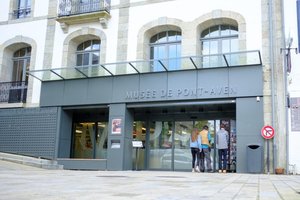
Musée de Pont-Aven, HastenparckMusée de Pont-Aven Hastenparck 7 Landscape at Pont-Aven with Poplars, The Adoration of the Shepherds, Study for The Buckwheat Harvesters
Thyssen-Bornemisza Museum, MadridThyssen-Bornemisza Museum Madrid 4 The Annunciation, Inside a Shop in Pont-Aven, The Cliffs at Le Pouldu
Musée des Beaux-Arts de Quimper, QuimperMusée des Beaux-Arts de Quimper Quimper 4 Funeral palls 1, Funeral palls 2, Orchard at Pont Aven
Wallraf-Richartz-Museum, KölnWallraf-Richartz-Museum Köln 3 Loving Couple, Houses in Pont-Aven
Dallas Museum of Art, DallasDallas Museum of Art Dallas 3 The Salon, Bridge at Pont-Aven
Musée des Beaux-Arts, ReimsMusée des Beaux-Arts Reims 3 Fellah Women at the Bath, Toilet of Venus
Ackland Art Museum, Chapel HillAckland Art Museum Chapel Hill 2 Victorine Lelopin, The Wave

Émile Bernard's most famous painting of each decade

  1. 1880s
    Iron Bridges at Asnières (1887) af Émile Bernard
    No. 1 of 100

    Iron Bridges at Asnières

    Alder 12 – 21 · MoMA - Museum of Modern Art

    The scene unfolds within the frame of Iron Bridges at Asnières, a work that captures a specific moment in the evolution of modern painting. Created in 1887, this…

  2. 1890s
    Portrait of Marie Lemasson (1892) af Émile Bernard
    Rank 2 / 100

    Portrait of Marie Lemasson

    Alder 22 – 31 · Israel Museum

    Marie Lemasson sits before the viewer, a quiet presence anchored in a sea of teal and seafoam green. Her gaze is direct, meeting the eye with a stoic,…

  3. 1900s
  4. 1910s
    Self-Portrait 1918 (1919) af Émile Bernard
    Rank 3 / 100

    Self-Portrait 1918

    Alder 42 – 51 · Van Gogh Museet

    An intimate study of an aging artist, this oil on paper portrait captures a moment of profound introspection. The subject is positioned in a close-up view, his head…

  5. 1920s
    Woman's Head (1920) af Émile Bernard
    No. 35 of 100

    Woman's Head

    Alder 52 – 61 · Harvard Art Museums
  6. 1930s
    Melancholy (1935) af Émile Bernard
    #36 of 100

    Melancholy

    Alder 62 – 71 · Musée d'Art Moderne de la Ville de Paris
  7. 1940s
    Breton Women (1940) af Émile Bernard
    No. 38 of 100

    Breton Women

    Alder 72 – 73 · Musée d'Art Moderne de la Ville de Paris

Questions about Émile Bernard's paintings

What is Émile Bernard's most famous painting?Show the answer

Iron Bridges at Asnières (1887), MoMA - Museum of Modern Art, New York City. Next come Portrait of Marie Lemasson (1892) and Self-Portrait 1918 (1919).

How old was Émile Bernard when Iron Bridges at Asnières was painted?Show the answer

19 years old: Iron Bridges at Asnières dates from 1887 and Émile Bernard was born in 1868.

What are the top 10 paintings by Émile Bernard?Show the answer

Iron Bridges at Asnières, Portrait of Marie Lemasson, Self-Portrait 1918, Buckwheat Harvesters at Pont Aven, Après le bain (les nymphes), Portrait of a Black Woman, Night Festival, The Harvest, Loving Couple og The Harvest at Saint-Briac. The ranking above gives the year and the museum of each.

How many paintings did Émile Bernard make?Show the answer

Our catalogue lists 201 works by Émile Bernard, dated from 1885 to 1940.

Where are Émile Bernard's most famous paintings?Show the answer

Most of them are in Van Gogh Museet (Amsterdam), Musée de Pont-Aven (Hastenparck) og Thyssen-Bornemisza Museum (Madrid). The table above lists the museums one by one.

When did Émile Bernard paint the most famous works?Show the answer

In 1880s: 29 of the 100 works on this page date from then, among them Iron Bridges at Asnières.

What are Émile Bernard's earliest and latest famous paintings?Show the answer

The earliest on this page is Funeral palls 1 (1885), the latest Breton Women (1940).

What did Émile Bernard paint most often?Show the answer

Women (10), People (6) og Woman (4), among the 100 works on this page.

What medium did Émile Bernard use most?Show the answer

Oil On Canvas: 6 of the 100 works on this page.

Which art movement does Émile Bernard belong to?Show the answer

Post-impressionist synthetism, as the paintings on this page show.

Which Émile Bernard paintings can I see at the Van Gogh Museet?Show the answer

Self-Portrait 1918, Woman Sitting in a Field: Brittany og Portrait of Andries Bonger (1861-1936), his wife Annie van der Linden and Emile Bernard (1868-1941) are among the 10 works on this page held by the Van Gogh Museet, Amsterdam.

Can I buy a reproduction of a Émile Bernard painting?Show the answer

Yes. Every painting on this page can be ordered as a museum-quality, hand-painted oil reproduction or a fine art print, in the size you choose, from the painting's own page.

About Émile Bernard

Émile Bernard: En postimpressionistisk pioner

Tidligt liv og uddannelse

  • Født: 28. april 1868 i Lille, Frankrig.
  • Émile Henri Bernards tidlige liv blev formet af sin søsters sygdom, hvilket førte til, at han primært blev opdraget af sin bedstemor, som drev et vaskeri i Lille. Dette støttende miljø fremmede hans kunstneriske tilbøjeligheder.
  • I 1878 flyttede familien til Paris, hvor Bernard gik på Collège Sainte-Barbe.
  • Han påbegyndte formelle kunststudier ved École des Arts Décoratifs og blev senere en del af Atelier Cormon i 1884. Her eksperimenterede han med impressionisme og pointillisme.
  • Hans ekspressive tendenser førte til en suspension fra École des Beaux-Arts, hvilket ansporede til en formativ rejse gennem Bretagne til fods.

Kunstnerisk udvikling og indflydelser

  • Bernards kunstneriske udvikling blev betydeligt påvirket af hans rejser i Bretagne, hvor han mødte lokale traditioner og landskaber, der resonerede dybt i ham.
  • Nøgleforhold: Et vendepunkt indtraf i august 1886, da han mødte Paul Gauguin i Pont-Aven. Dette møde antændte et tæt kunstnerisk venskab og påvirkede begge kunstneres stil gennemgribende.
  • Bernards stil spillede en afgørende rolle i formningen af Gauguins modne værk, især hans udforskning af symbolisme og flade former.
  • Han var også knyttet til Vincent van Gogh og indgik som en del af ”Skolen fra Petit-Boulevard” sammen med Anquetin og Toulouse-Lautrec.

Centrale kunstneriske bevægelser

  • Cloisonnisme: Bernard betragtes som en pioner inden for cloisonnisme, en stil karakteriseret ved dristige, flade former adskilt af mørke konturer – i lighed med farvet glas.
  • Synthetisme: Han spillede også en nøglerolle i udviklingen af synthetisme, som lagde vægt på skabelsen af kunst baseret på subjektive oplevelser og symbolsk betydning frem for direkte observation af naturen.
  • Disse bevægelser repræsenterede et brud med impressionismen og fokuserede i stedet på struktur, symbolik og emotionelt udtryk.

Bemærkelsesværdige værker

  • La Grandmère (1887): Et rørende portræt af hans bedstemor, der fremviser kunstnerens tidlige mestring af ekspressiv form og farve. Dette værk anses for at være et af hans mest ikoniske stykker.
  • Talrige bretonske landskaber, der indfanger essensen af det landlige liv i Bretagne.
  • Religiøse værker såsom ”Hyrdernes tilbedelse”, der demonstrerer hans udforskning af symbolske temaer.

Litterære bidrag og historisk betydning

  • Udover maleriet var Bernard en flittig forfatter, der producerede skuespil, poesi og kunstkritik. Hans skrifter giver værdifulde førstepersonsindsigter i udviklingen af den moderne kunst i hans samtid.
  • Eftermæle: Émile Bernards bidrag til postimpressionismen, især hans rolle i formningen af cloisonnisme og synthetisme, efterlod et varigt aftryk på den moderne kunsts gang.
  • Hans arbejde banede vejen for efterfølgende bevægelser som fauvisme og ekspressionisme og inspirerede generationer af kunstnere til at udforske subjektivt udtryk og symbolsk repræsentation.
  • Han døde i 1941 og efterlod sig et værk, der fortsat fejres for sin originalitet og kunstneriske innovation.

Alle 201 værker af Émile Bernard →