
1
Portrait of Alexandrine Strübe (1859-1920) as a Child
Håndmalet oliereproduktion fra $181 28 × 36 cm
Samme størrelse som originalen $304 63 × 81 cm Bestil i original størrelse →

Portrait of Alexandrine Strübe (1859-1920) as a Child (1862) er det mest berømte maleri af Rudolf Epp, som er i Augustiner Museums samling i Freiburg. painting (1875) og Interieur with girl sleeping (1879) er de næste to værker, som verden kender bedst. Udvalgt fra de 37 værker af Rudolf Epp i vores katalog er her de 36, som samlere og museumsgæster oftest opsøger, inklusiv årstal, museum og historien bag hvert værk.
Rangordnet efter vores popularitetsscore, som kombinerer søgninger, besøg og ordrer for hvert værk. Opdateret november 2026. Hvert mesterværk på denne side kan bestilles som en håndmalet oliereproduktion i museumskvalitet eller som et kunsttryk i den størrelse, du vælger.


De 3 museer, der rummer flest af malerierne på denne side.
| Museum | By | Værker af Rudolf Epp | Malerier fra denne liste |
|---|---|---|---|
 Augustiner Museum |
Freiburg | 1 | Portrait of Alexandrine Strübe (1859-1920) as a Child |
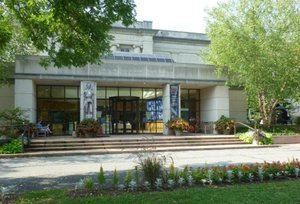 Reading Public Museum |
Reading | 1 | painting |
 Bavarian State Painting Collections |
München | 1 | Still Life with Apple |


Portrait of Alexandrine Strübe (1859-1920) as a Child (1862), Augustiner Museum, Freiburg. Derefter følger painting (1875) og Interieur with girl sleeping (1879).
28 år gammel: Portrait of Alexandrine Strübe (1859-1920) as a Child er fra 1862, og Rudolf Epp blev født i 1834.
Portrait of Alexandrine Strübe (1859-1920) as a Child, painting, Interieur with girl sleeping, Bathing Mother with Child in Forest Pond / Bathing at Forest Pond, In the Tavern, Peasant -Interior. 6 figures: the bride - crown, The Little Sharpener, The Hall of Fame in Munich, Bavaria, Boy with a Crawfish og Badende Frau mit Kind. Ranglisten ovenfor angiver årstallet og museet for hver af dem.
Vores katalog indeholder 37 værker af Rudolf Epp, dateret fra 1862 til 1901.
De fleste af dem findes i Augustiner Museum (Freiburg), Reading Public Museum (Reading) og Bavarian State Painting Collections (München). Tabellen ovenfor lister museerne enkeltvis.
I 1870s: 3 af de 36 værker på denne side stammer fra denne periode, herunder painting.
Det tidligste på denne side er Portrait of Alexandrine Strübe (1859-1920) as a Child (1862), det seneste The Hall of Fame in Munich, Bavaria (1901).
Ja. Hvert maleri på denne side kan bestilles som en håndmalet oliereproduktion i museums kvalitet eller som et kunstprint i den størrelse, du ønsker, direkte fra maleriets egen side.
Born in Eberbach, Grand Duchy of Baden, Rudolf Epp was the son of a decorative painter. His early artistic training began under the landscape painter Karl Ludwig Seeger, followed by studies at the Grand Ducal Art School in Karlsruhe under Johann Wilhelm Schirmer and Ludwig Des Coudres, and later at the Art Academy in Düsseldorf. Due to his talent, he was granted leave from military service by the Regent Friedrich I of Baden. This allowed him to undertake a study trip to the Black Forest, where around 1859, he produced numerous landscape studies in the regions of Freiburg im Breisgau and Landstuhl.
In 1863, Epp moved to Munich, which served as a major center for art. During his time there, he established a reputation as a sought-after painter. He was married to Katharina Steibl in 1862, and they had three children: a son, Franz Ritter von Epp, and two daughters, Helene and Augusta Anna. Augusta Anna frequently served as a model for his various portraits and figurative works. Epp remained an active painter until his death in Munich.
Rudolf Epp is associated with the Munich School and is recognized as a painter of Realism. His body of work consists of hundreds of paintings, many of which were repeated in various motifs. His oeuvre is characterized by:
His paintings gained international appreciation, with many works sold to the USA during his lifetime. His motifs were also featured in early illustrated publications and color lithographs. His work is held in various public collections, including the Neue Pinakothek in Munich and the Kunsthalle Mannheim.